
Innovations
Sensors and Cameras in the Stable: Foaling Alerts, Colic Warnings, Automatic Feeders
Modern technology can detect foalings and colic early and automate feeding. Which systems are available, what they can do, and what matters in daily use.
Equidara editorial team · 27 September 2026 · 3 min read
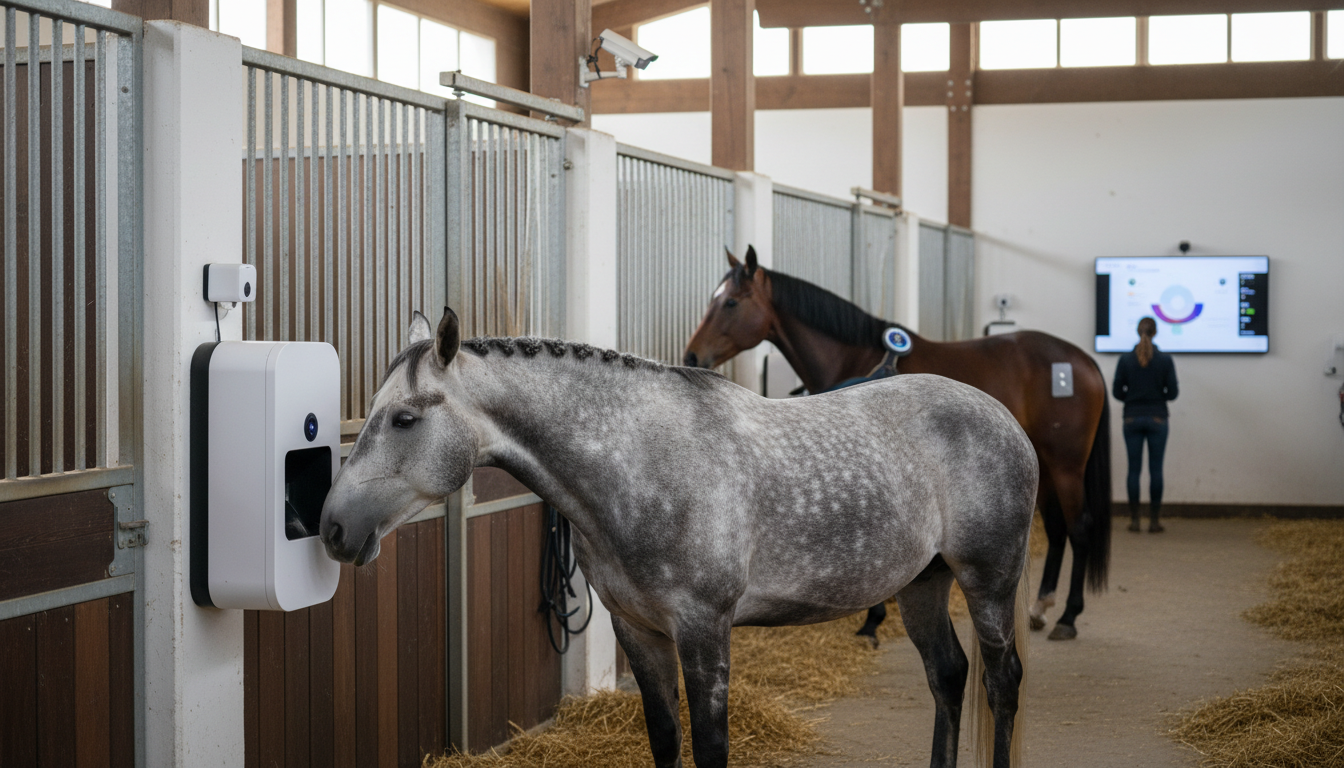
Sensors and cameras can make a real difference in your daily stable routine: they monitor mares during foaling, detect unusual behavior that might indicate colic, and automate feeding. However, they don't replace regular human checks or a veterinarian.
Foaling Monitoring: Camera and Sensor Working Together
Most foalings happen at night, and complications can become critical within minutes. A camera with night vision lets you observe the birth process and intervene if needed. According to a review in Tierärztliche Praxis, continuous camera monitoring is currently the method of choice for detecting the onset of labor. However, the footage still needs to be assessed by a person. Newer AI approaches could make this easier in the future but aren't yet ready for practical use. The safest option right now is combining a camera with a sensor that is stitched into the vulva and activates during the opening phase. For predicting the foaling date, the best indicators are a drop in pH and a rise in calcium levels in the mammary secretion.
One provider claims over 97 percent reliability for its camera-based foaling alarm. Such systems send an alert via phone call and push notification at the first signs. Infrared range varies by model, from 10 to 50 meters.
Colic Warning: Continuous Behavior Analysis
Cameras can do more than just show foalings—they can also pick up changes in behavior. Typical signs like repeated lying down, getting up, or restlessness are factored into the assessment. Providers like ACARiS describe how their AI analyzes individual eating, drinking, lying, and movement patterns and triggers an alarm when something is off. also explains that changes in eating, drinking, or resting behavior can be early signs of illness. Such systems can help you react faster, but only a vet can make a diagnosis.
Automatic Feeders: Less Routine, More Control
Automatic concentrate and roughage feeders with monitoring are among the most common digital upgrades. A study by the University of Natural Resources and Life Sciences, Vienna surveyed horse-keeping operations about their experiences. According to the study, managers generally find the initial technical implementation unproblematic because companies offer on-site training. For simple systems like fence monitoring or basic stable cameras, respondents estimate one to two weeks of familiarization. With complex feeding technology combined with a new housing system, the effort varies widely: from about 18 days (roughly 360 hours per horse) to six months. The biggest challenge is setting individual alarm thresholds for each horse, since daily feed intake fluctuates. Initial mechanical issues—for example with circuit boards or sensors—were usually resolved quickly by manufacturers, according to the study. Operators cite benefits like reduced labor, better communication, optimized feeding, and improved welfare. At the same time, the transition can cause short-term skepticism or mental strain among staff.
Legal Aspects of Cameras: Only Your Own Property, Signage Required
If you want to monitor your stable and yard with video, you need to consider data protection laws. In principle, monitoring your own stable and yard is allowed. However, you must not capture public paths, neighboring properties, or staff changing rooms and break areas. The surveillance must be indicated by visible signs, ideally at the yard entrance and on building doors. Recordings may generally only be stored for 72 hours, unless there is a legitimate interest, such as after a burglary. For cloud storage in the US, GDPR requirements apply. If in doubt, seek legal advice.
Common questions
Can a stable camera reliably detect colic?
It can recognize signs like frequent lying down or restlessness and send an alert. A definitive diagnosis remains the vet's job. These systems analyze behavior but cannot replace a veterinary examination.
How long does it take for digital feeding technology to be up and running in the stable?
For simple technology, operators estimate one to two weeks. Complex automatic feeders with a new housing system can take several weeks to six months because alarm thresholds must be set for each horse.
Am I allowed to video-monitor my stable?
Generally yes, as long as you only capture your own property and put up signs indicating the surveillance. Public paths, neighboring properties, and private areas for staff are off-limits. If you're unsure, consult a lawyer.
What is the safest method for foaling monitoring?
For detecting the onset of labor, continuous camera monitoring is the method of choice. Even safer is combining a camera with a sensor that activates during the opening phase. Predicting the exact foaling date is difficult; pH and calcium levels in the mammary secretion provide the best clues.
Sources
- Welchen Nutzen bringt die Digitalisierung in der deutschen Pferdehaltung? – Erfahrungen pferdehaltender Betriebe bei der Implementierung digitaler Technologien (2026-02)
- Kameraüberwachung im Stall- und Außenbereich
- Kolik Alarm - ACARiS
- Geburtsalarm - ACARiS
- Zur Geburtsüberwachung beim Pferd – Abstract
- Klinik Gesundheitsüberwachung - ACARiS
Written by Equidara editorial team. Last checked: 24 November 2026.
- GPS Trackers for Horses: What the Technology Really Delivers for Pasture Monitoring and Theft Prevention — GPS trackers promise safety for horse and owner. But what can they actually do in the event of an escape, theft, or out on the trail? An overview of features, limitations, and sensible use cases.
- Stable Water Supply: Needs, Waterers, and Frost Protection — Water should always be available. Learn what's important for waterers, pipes, and water quality, and how to correctly interpret technical specifications for frost protection.
- Colic in horses: how to spot the signs and what to do until the vet arrives — Colic is the most common emergency in horses. How to recognise it, what to do and avoid until the vet arrives, which values the vet needs on the phone and what past colic surgery means when buying.
- Digital Equine Passport: What Has Been Tested and Announced, and What the Law States — Digital equine records and platforms do not replace the mandatory equine passport. Find out what EU law requires, how a previous pilot project in Baden-Württemberg operated, and what has been announced for Equipass.
Related
- HorseFinder — Browse horses for sale by swiping, on your phone.
- Buy horses — Horses for sale from all over the world, with transport search.
- All articles in the journal — From guides to breed portraits.