
Innovations
Digital Equine Passport: What Has Been Tested and Announced, and What the Law States
Digital equine records and platforms do not replace the mandatory equine passport. Find out what EU law requires, how a previous pilot project in Baden-Württemberg operated, and what has been announced for Equipass.
Equidara editorial team · 22 October 2026 · 4 min read
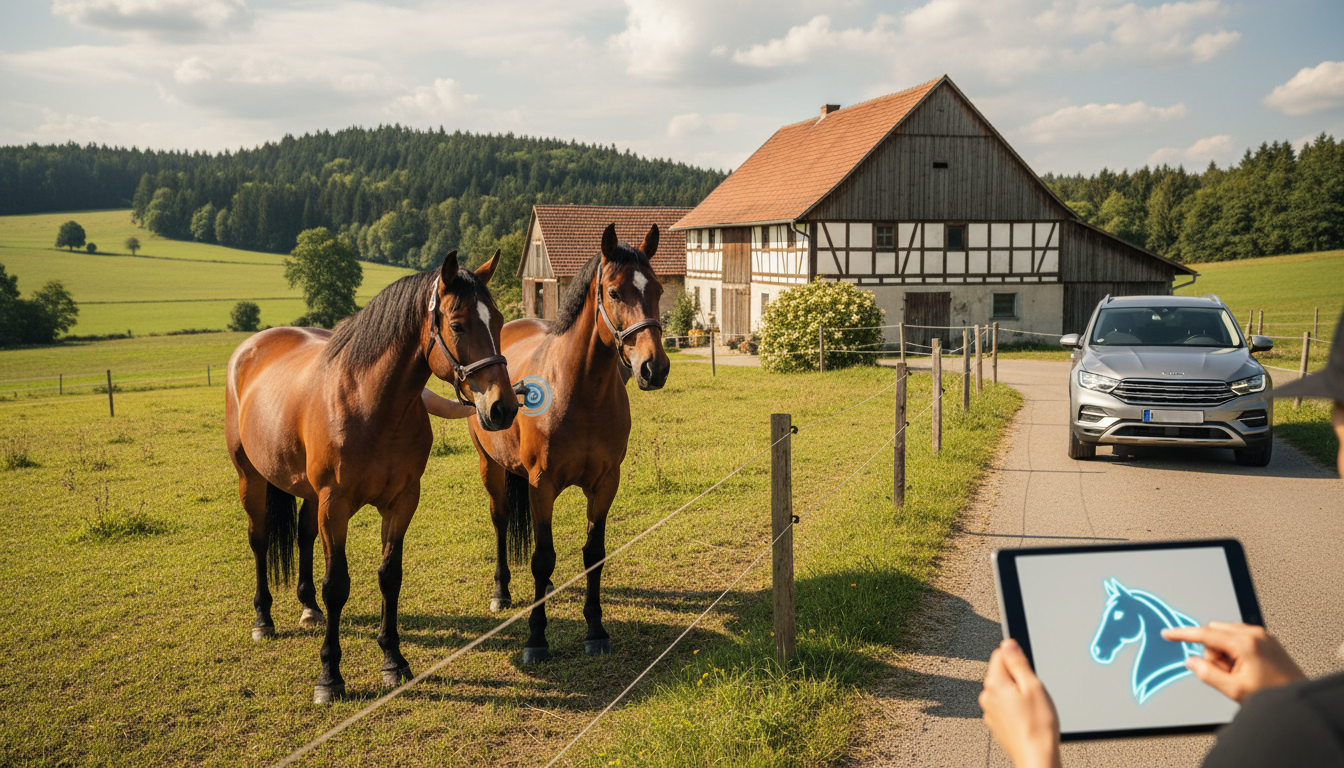
The equine passport remains mandatory in the EU. A digital equine record or a database entry does not replace the required, lifelong identification document. EU law mandates several interconnected components for identification. Therefore, it's important to distinguish between a digital supplement, a tested model, and a legally permissible replacement for the passport.
What EU Law Requires
According to Commission Implementing Regulation (EU) 2021/963, operators keeping equidae must ensure the individual identification of their animals. This includes:
- an individual code,
- a duly completed, lifelong identification document,
- a physical means of identification or another method that uniquely links the animal to the document.
Therefore, another identification method does not render the document superfluous. The Regulation explicitly names the identification document as a distinct component of the identification process.
Furthermore, the electronic equine database must contain certain minimum information: the individual code, the identification method, and the establishment where the animal is usually kept. Thus, the document, identification mark, and database each serve different functions within the same system.
Digital access is also provided for in the Regulation. The recitals foresee tiered access to the database based on security levels. This applies to operators, responsible veterinarians, and competent authorities or delegated bodies from other Member States. The Commission justifies the desired electronic data exchange between Member States by citing the traceability of equidae and the control of food chain integrity.
GOcard: An Early Attempt at Digital Animal Records
A pilot project in Baden-Württemberg tested an internet-based identification and data management system for horses. According to the Baden-Württemberg Agricultural Administration, its aim was to prepare for the introduction of an electronic animal passport. Additionally, applications for origin verification, animal movement, and animal welfare were to be examined.
Participants included the Marbach State Stud, the BW Horse Breeding Association, and the company Generatio. The GOcard and a digital animal record were central to the project.
How the System Was Structured
The GOcard served as a key to an online data locker for the horse. Within its database, animal data could be retrieved, entered, or updated. Studbooks, studs, and horse owners required a card reader and an internet-enabled PC for this.
The so-called Animal-Trust-Infrastructure included a herd book for data maintenance. This was typically operated by a studbook, an equestrian boarding facility, or the breeder. Additional users could be granted access.
The Animal-Trust-Center generated a genetic identity for each animal based on a genotype formula. To ensure comparability of these formulas, it only accepted formulas from accredited laboratories that had disclosed their production methods.
What the Trial Did Not Mean
The project report described the GOcard and the online data locker collectively as a potential replacement for passports and paper forms. This describes the pilot project itself. However, a legal authorization to replace the mandatory passport with this system does not follow from this.
Furthermore, at the time of the report, the electronic animal record was not yet a complete replica of the equine passport. Only data fields applicable to other animal species had been implemented. The report stated that expansion was possible at any time. However, whether a system is technically expandable and whether it is legally recognized are two different questions.
Equipass: Announced as a Supplement to the Physical Passport
According to the HORSEWEB report of November 6, 2025, the FEI presented Equipass as a digital horse passport at its General Assembly in Hong Kong. The platform aims to consolidate important information and integrate it into existing systems.
The report explicitly describes Equipass as a supplement to the physical passport, not a replacement. Among other things, it aims to bring together identification and medical history on one platform.
A three-stage plan was announced:
- A mobile application and management tools for all FEI-registered horses by January 26, 2026.
- An expansion to national horse populations by late 2027 or early 2028, in collaboration with interested national federations.
- Subsequently, an opening to interested studbooks and other stakeholders, with no specific date mentioned. Potential models for partnerships and revenue sharing were noted.
The report describes the announced plan, not its implementation.
Austria: Database and Horse Passport Go Hand-in-Hand
The Austrian Ministry's page on horse identification also distinguishes between the components of identification. The following information applies to Austria.
According to the Ministry, the lifelong valid horse passport, its unique link to the animal via transponder or alternative identification, and the database entries including UELN belong together. The database does not replace the passport.
A platform can consolidate horse data, and a pilot project can test an electronic passport. Neither automatically constitutes a legally permissible replacement for the mandatory document. For specific legal questions concerning your operation or horse, a lawyer can provide assistance.
Common questions
Can a digital equine record replace the equine passport?
According to Implementing Regulation (EU) 2021/963, the lifelong identification document remains a distinct component of identification. For Austria, the Ministry's website states that the database does not replace the horse passport.
What was tested with the GOcard?
In the pilot project in Baden-Württemberg, the GOcard served as access to an online data locker for the horse. Animal data could be retrieved, entered, and updated there.
Is Equipass intended as a replacement for the physical passport?
No. The HORSEWEB report explicitly describes Equipass as a supplement to the physical passport. The platform aims to consolidate identification and medical history, among other things.
What minimum information does the EU require for the equine database?
Implementing Regulation (EU) 2021/963 specifies the individual code, the identification method, and the establishment where the animal is usually kept.
Sources
- Europäische Kommission: Durchführungsverordnung (EU) 2021/963 – Vorschriften zur Nutzung von Plastikkarten, Smartcards und digitalen Anwendu (10.06.2021)
- Landwirtschaftsverwaltung Baden-Württemberg: Modellprojekt zum elektronischen Equidenpass mit GOcard, digitaler Tierakte und zentraler Daten (01.02.2001 - 31.07.2003)
- Österreichisches Bundesministerium, Verbraucher:innengesundheit: Kennzeichnung von Pferden – Zusammenspiel von lebenslangem Pferdepass, Tran
- Equipass will die Pferdeidentifizierung, die Biosicherheit und die globale Mobilität neu definieren - HORSEWEB.DE (06.11.2025)
Written by Equidara editorial team. Last checked: 24 October 2026.
Fachlich geprüft von Melissa Hinze, Pferdezüchterin und Pferdehändlerin, Gründerin von Equidara.
- Modern Open Stable Concepts: Smart Planning of Paths, Footing, and Technology — Free movement, suitable footing, and access to feed and resting areas: Here's how to plan group housing, incorporate mechanical track systems, and integrate complementary automation.
- Artificial Insemination, Embryo Transfer, and OPU in Horses: What You Should Know When Buying a Foal — Artificial insemination is an integral part of modern horse breeding. Learn how it differs from embryo transfer and in-vitro fertilization, and what information you should clarify when purchasing a foal.
- Electric Car as a Towing Vehicle for Your Horse Trailer: Technology, Range, and Charging — Modern electric cars are capable of towing heavy horse trailers. Whether one is right for your hauling needs depends on the vehicle's towing limits, its range with a trailer, and available charging options on your route.
Related
- HorseFinder — Browse horses for sale by swiping, on your phone.
- Buy horses — Horses for sale from all over the world, with transport search.
- All articles in the journal — From guides to breed portraits.