
Innovations
GPS Trackers for Horses: What the Technology Really Delivers for Pasture Monitoring and Theft Prevention
GPS trackers promise safety for horse and owner. But what can they actually do in the event of an escape, theft, or out on the trail? An overview of features, limitations, and sensible use cases.
Equidara editorial team · 27 September 2026 · 3 min read
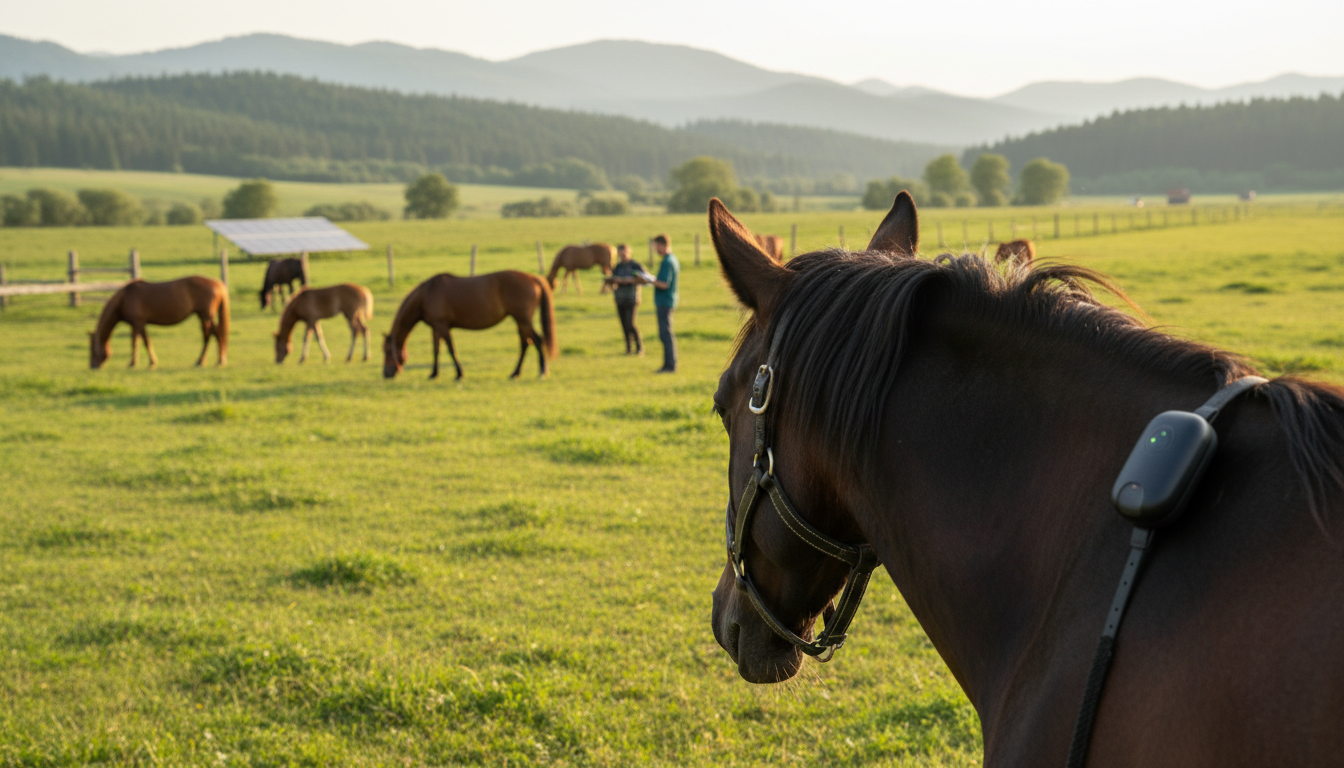
GPS trackers on horses are most helpful when the animal bolts or gets lost after a fall out on the trail. They are only of limited use for theft protection because visible devices are quickly removed. This guide shows what the technology can do, where its limits lie, and what you should look for when buying.
How location tracking works on a horse
Two types of devices are often confused: A GPS logger records the position to internal memory, and you have to read out the data later on your PC. A GPS tracker sends the position in real time via the mobile network – for that it needs a SIM card and a mobile contract. For searching for an escaped horse, only a real-time tracker is suitable.
How long the battery lasts depends on the transmission interval. The following table from a test by testundtipps.de shows the relationship:
| Reporting interval | Approximate battery life | Suitable use for horses |
|---|---|---|
| Every 10 seconds (live mode) | Hours to a few days | Acute search for an escaped horse |
| Every 10 minutes | A few days to just over a week | Grazing season with daily stable visits |
| Hourly | Two to four weeks | Open stable, checking every few days |
| Twice daily | Several weeks to months | Pure presence check, no tracking |
Pasture monitoring and escape alerts
The most important function for everyday use is geofencing. In the app, you draw a digital fence around the paddock or stable. If the horse leaves this zone, you immediately get a push notification on your phone. Modern systems can manage multiple zones with different alarm rules, such as a tight area for night and a wider one for day. This helps reduce false alarms.
For riders who go out alone on the trail, some trackers offer fall detection. The Guardian Horse, for example, detects a fall and automatically sends an emergency message to saved contacts after 60 seconds. A test by mit-pferden-reisen.de confirms that this function works reliably and noticeably increases the feeling of safety when riding out.
Theft protection: What trackers can and cannot do
A GPS tracker cannot prevent theft. It can only help find the horse again – and only if the thief doesn't immediately spot and remove the device. A visible case on the halter or rug is noticed within the first minute of removal and ends up in a ditch shortly after.
A common misconception: The microchip that every horse carries in its neck as required by the Equine Passport Regulation is not a tracking chip. It is a passive RFID transponder that only returns a number when scanned with a reader. An implantable GPS tracker does not exist because a battery, GPS antenna, and SIM card cannot be built into that format.
More effective than a tracker alone, therefore, are unspectacular measures: sturdy pasture fences without an easily opened gate on the public path, a motion detector with camera at the entrance, and complete documentation with current photos for the search. A tracker can supplement these measures if the thief overlooks it.
It's a different story with horse trailers. A hidden tracker such as the Prothelis Meintal immediately reports by call or push when the trailer leaves the defined geofence. The police can then track the journey live. A test by mit-pferden-reisen.de shows that the alarm is triggered within seconds – the thief wouldn't get far.
Data for training and management
In addition to safety, GPS trackers also provide useful everyday data. Automatic route recording documents every ride with distance, speed, and elevation gain. These values can be analyzed in the online portal or app and help guide training.
For pasture management, the position data creates heatmaps that show which areas the horses prefer to use. This lets you recognize early on when an animal is moving unusually little and plan fence maintenance or pasture rotation more specifically.
Common questions
Can a GPS tracker prevent horse theft?
No. A tracker visibly attached to the halter or rug is removed in seconds. It only helps if the thief overlooks it. For theft protection, preventive measures such as secure fences, cameras, and good documentation are more effective.
What is the difference between a GPS logger and a GPS tracker?
A logger records the position to internal memory; you have to read out the data manually later. A tracker sends the position in real time via the mobile network and displays it immediately in an app. To search for an escaped horse, you need a tracker.
Does the microchip in a horse work as a GPS tracker?
No. The transponder is a passive RFID chip that only provides a number when scanned with a reader. It contains no battery, no GPS, and no mobile module, so it cannot be used for location tracking.
How long does the battery of a horse tracker last?
That depends on the transmission interval. With live tracking every 10 seconds, the battery lasts only hours to a few days. With hourly reporting, two to four weeks are possible; with two reports per day, several months. Choose the interval to suit the purpose.
Sources
- GPS-Tracker fürs Pferd: was der Markt hergibt und was nicht
- GPS Tracker für Pferde | Kernkompetenz Pferd
- Produkttest und Tipp: Guardian Horse GPS Tracker- Schutzengel auf allen Wegen
- GPS Tracker Pferd – Kowoma GPS
- Produkt-Test: Prothelis GPS Tracker "Meintal" meldet Pferdeanhänger-Diebstahl
- GPS-Tracker Pferd - für mehr Sicherheit im Reitsport
Written by Equidara editorial team. Last checked: 24 November 2026.
- Sensors and Cameras in the Stable: Foaling Alerts, Colic Warnings, Automatic Feeders — Modern technology can detect foalings and colic early and automate feeding. Which systems are available, what they can do, and what matters in daily use.
- Respiratory Health in Horses: Thyme and Saline Inhalation — Thyme as a tea or dry in feed, plus saline inhalation: Discover the applications recommended by the FN, what applies to competition horses in Germany, and why diagnosis, stable hygiene, and fresh air are crucial.
- Activated Charcoal for Horses: Why the Vet Comes First in Cases of Poisoning — Activated charcoal can bind certain toxins in the gut. For a poisoned horse, its administration should always be handled by a veterinarian. Learn what you can do until the vet arrives and understand the limitations of charcoal.
- Stable Water Supply: Needs, Waterers, and Frost Protection — Water should always be available. Learn what's important for waterers, pipes, and water quality, and how to correctly interpret technical specifications for frost protection.
Related
- HorseFinder — Browse horses for sale by swiping, on your phone.
- Buy horses — Horses for sale from all over the world, with transport search.
- All articles in the journal — From guides to breed portraits.