
Health & Therapies
Scratches in Horses: Pastern Care and Recognizing Warning Signs
Moisture and dirt can contribute to scratches. Here's how to gently care for the affected skin and recognize when to contact your vet.
Equidara editorial team · 29 October 2026 · 2 min read
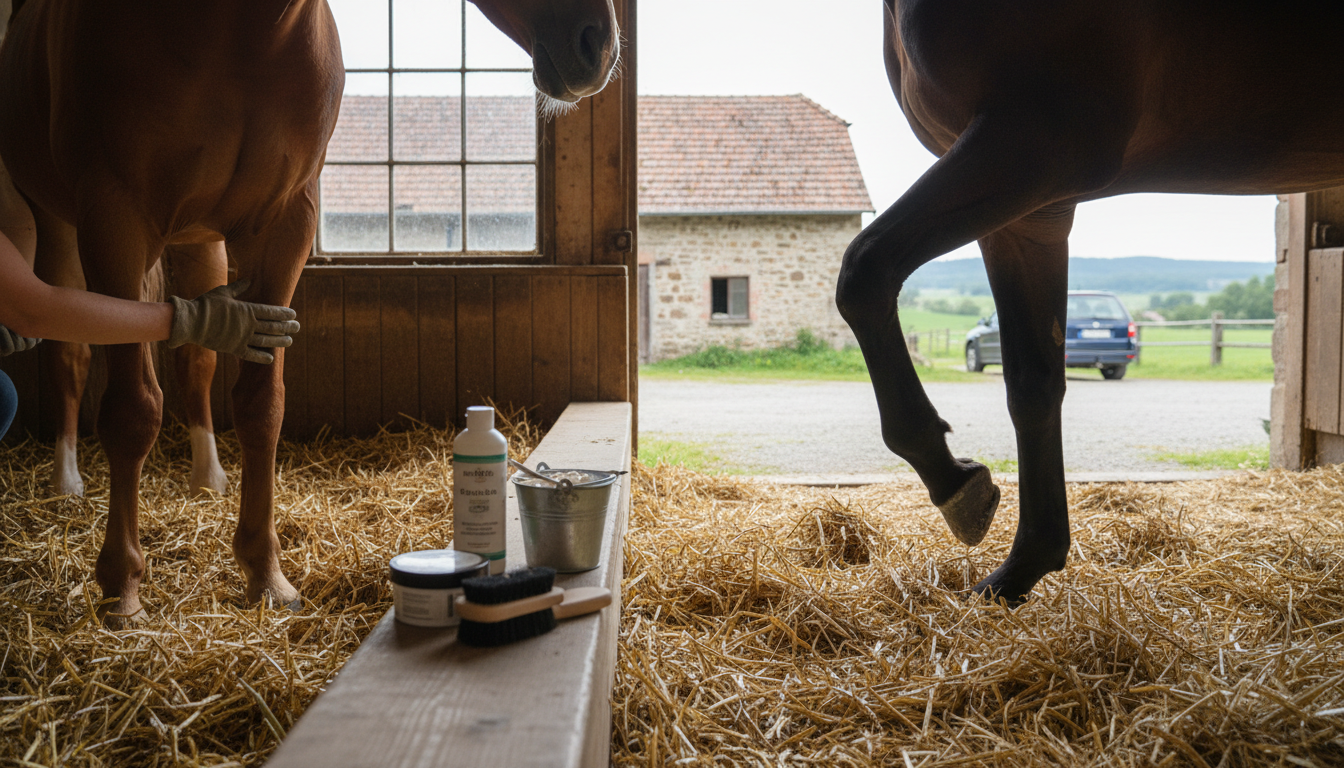
When dealing with scratches, gently clean the affected skin and keep it dry. If your horse is standing on wet or muddy ground, try to provide a dry surface. If the leg becomes hot, swollen, and painful, contact your veterinarian. These signs can indicate a worsening infection. Even if you only suspect scratches, it's best to have your vet examine your horse.
What Are Scratches in Horses?
Scratches is not a single disease. The term encompasses various skin conditions affecting the back of the pastern or the heels. The following care guidelines are from the University of Minnesota Extension in the USA.
According to the university, mild cases can usually be managed with simple cleaning and topical treatment. For more severe cases, you should coordinate treatment with your veterinarian.
Why Moisture and Dirt Affect the Skin
Scratches often occur in horses exposed to prolonged moisture, such as in a muddy pasture or a wet stall. Even continuous moisture can irritate the sensitive skin. This can lead to inflammation, redness, and sores. If mud or a dirty environment is also present, bacteria or fungi find favorable conditions to penetrate the skin.
Therefore, environmental management is also part of the care. Affected horses should ideally not stand on muddy or wet surfaces, and their bedding should be clean and dry.
How to Care for the Affected Pastern
Trim Long Hair
In most cases, trimming long hair on the affected skin is a recommended step. This makes it easier to keep the area clean and dry.
Clean Thoroughly, But Gently
Wash the affected area to remove dirt without further irritating the skin. The University of Minnesota Extension outlines these limits:
- Wash the area no more than once a day. Additional moisture could further exacerbate the inflammation.
- Do not repeatedly use harsh cleansers or disinfectants.
- Gently towel-dry the skin after washing.
Do Not Pick Scabs
Instead of picking off scabs and crusts, loosen them by soaking. According to the university, picking seems to worsen swelling. When soaking, remember that additional moisture could exacerbate the inflammation, and gently dry the skin afterward.
When to Contact Your Veterinarian
If the leg becomes hot, swollen, and painful, contact your veterinarian. The University of Minnesota Extension identifies this combination as a sign of a worsening infection. At that point, the described care steps alone are no longer sufficient, and treatment will need to be coordinated with your vet.
It's difficult to definitively determine yourself whether altered skin on the pastern is scratches or how severe the case is. Therefore, have any suspected case examined by your vet. If it's a mild case, you can also discuss what home care is sufficient.
What to Consider for Ongoing Care
Only hose off pastern joints and pasterns when there's a specific reason, and always dry them completely afterward. Thoroughly clean boots and bandages before reusing them.
Common questions
Is scratches a single disease?
No. Scratches is a collective term for various skin conditions affecting the back of the pastern or the heels of the horse.
How often can I wash the affected area?
The University of Minnesota Extension recommends no more than once daily, as additional moisture could further exacerbate the inflammation. Gently towel-dry the skin afterward.
Should I pick off scabs when my horse has scratches?
No. It's better to loosen crusts by soaking them. According to the University of Minnesota Extension, picking seems to worsen swelling.
When do I need to contact the vet about scratches?
If the leg becomes hot, swollen, and painful. These signs can indicate a worsening infection. Even if you only suspect scratches, it's best to have your vet examine your horse.
Sources
Written by Equidara editorial team. Last checked: 29 October 2026.
- Equine Mites: A Look at Sulfur Powder, Washes, and Lime Sulfur — Flowers of sulfur, daily washing, lime sulfur: Many stables still rely on old remedies for mites on horses' legs. Learn how these traditional methods are used and what modern veterinary medicine offers today.
- Flowers of Sulfur for Horses: The Body's Clean-Up Crew — Part 1 of the 'Forgotten Remedies' series: What flowers of sulfur are, how they are used internally and externally, what dosage has proven effective in my practice, and what you should pay attention to.
- Kissing Spines in Horses: Correctly Interpreting X-ray Findings in the Pre-Purchase Exam — An abnormal X-ray alone doesn't tell you if your horse has back pain. Learn what signs to look for and why a clinical examination is crucial for proper assessment.
- PPID in the Senior Horse: Recognizing Signs, the ACTH Test, and Daily Care — PPID (Equine Cushing's Disease) primarily affects horses over 15 years old. Learn how to recognize the signs, how your vet uses the ACTH test for diagnosis, and what you can do in daily life to help.
Related
- Buy a horse with pre-purchase exam documents — Sale horses where the pre-purchase exam report is available directly in the listing.
- Services and jobs — Farrier, vet, training, horse share.
- Saddles and accessories — For the horse: saddles, rugs, bridles, hoof protection.