
Health & Therapies
PPID in the Senior Horse: Recognizing Signs, the ACTH Test, and Daily Care
PPID (Equine Cushing's Disease) primarily affects horses over 15 years old. Learn how to recognize the signs, how your vet uses the ACTH test for diagnosis, and what you can do in daily life to help.
Equidara editorial team · 6 October 2026 · 4 min read
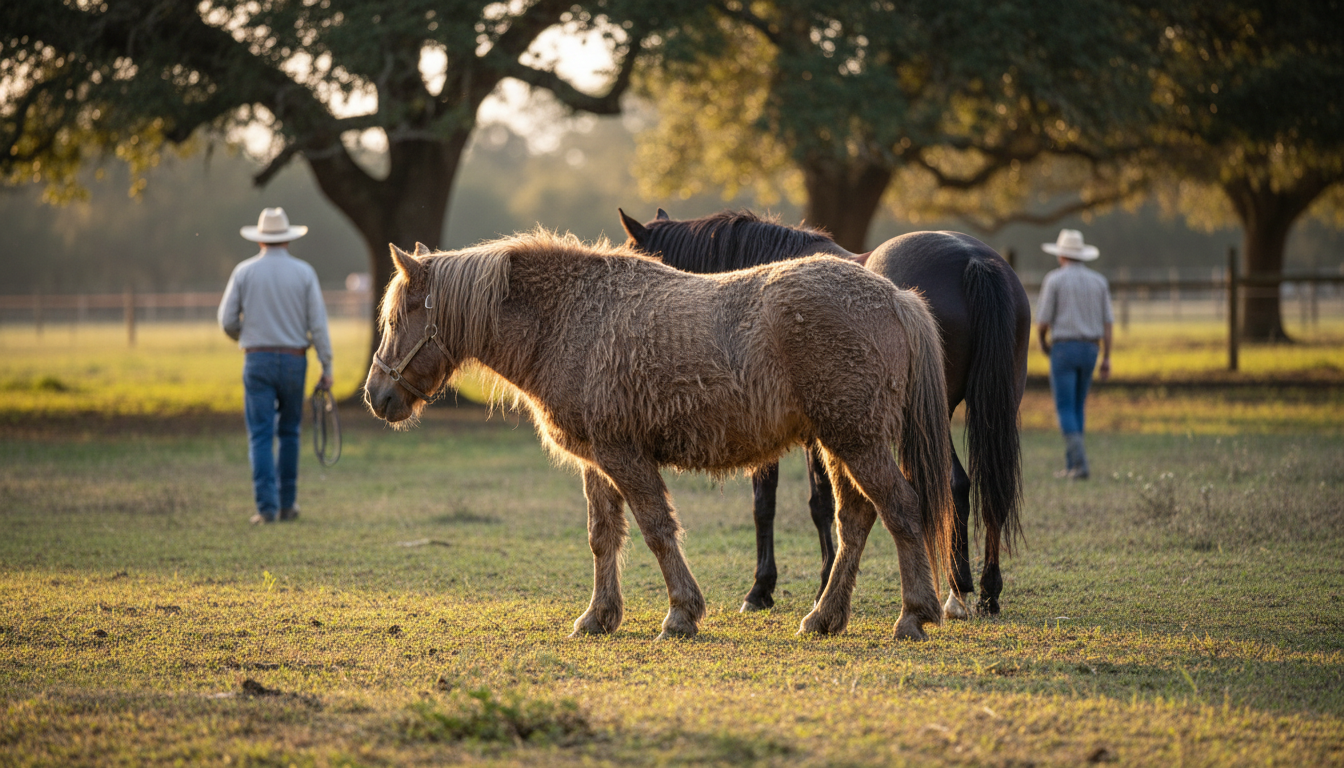
PPID is a hormonal disorder primarily affecting older horses. Characteristic signs include a delayed shed and excessive hair growth. Only your veterinarian can confirm the diagnosis, usually by measuring ACTH levels in the blood. Treatment is lifelong. Daily management focuses on hooves, coat, nutrition, and regular check-ups.
What is PPID?
PPID stands for Pituitary Pars Intermedia Dysfunction, also known as Equine Cushing's Syndrome. According to the Universitäres Tierspital Zürich, the underlying cause is a benign tumor of the pituitary gland. These altered cells produce an excess of hormones, including ACTH.
The condition predominantly affects horses and ponies over 15 years of age, though significantly younger animals can also be affected. The reported prevalence of PPID varies among sources: Universitäres Tierspital Zürich states it affects 15 % of horses over 15, while a review by the Tierärztekammer Österreich suggests 13 to 45 % of horses exhibit one or more clinical signs. These figures depend on the study methodology and population examined.
Recognizing the Signs
Among the signs listed by Universitäres Tierspital Zürich are:
- Delayed coat shedding or excessive hair growth (hirsutism)
- Laminitis
- Increased thirst (polydipsia) and increased urination (polyuria)
- Lethargy and decreased performance
- Weight loss and muscle wasting
- Fat redistribution, often resulting in a pot-bellied appearance
- Excessive sweating
- Increased susceptibility to infections
According to a summary of guidelines on ProPferd.at, excessive hair growth and incomplete coat shedding are considered particularly strong indicators. Other signs mentioned include a sway back, lameness, and recurrent infections. If you notice any of these symptoms in your senior horse, contact your veterinarian.
The ACTH Test
A presumptive diagnosis is often made based on the horse's history and clinical findings. However, according to Universitäres Tierspital Zürich, a definitive diagnosis is established by measuring ACTH levels in the blood.
Basal ACTH and TRH Stimulation Test
In early stages or during certain seasons, a single ACTH measurement may not be sufficient for diagnosis. In such cases, your veterinarian may administer a medication that stimulates the pituitary gland and then measure ACTH levels before and after administration. Universitäres Tierspital Zürich performs the TRH stimulation test for this purpose, noting that it is quick to perform and highly accurate in early-stage cases.
According to a summary of the guidelines, the accuracy of basal ACTH testing ranged from 88 to 92 % in autumn and 70 to 86 % outside of autumn. Following TRH stimulation, accuracy improved to 92 to 98 % in autumn and 90 to 94 % in other months.
Factors Influencing Test Results
The guidelines identify several influencing factors, including season, breed, geographic location, feeding practices, severe illness, and trailer transport. According to the Universität Göttingen, a value below the reference range does not definitively rule out PPID. In horses under 10 years of age, PPID is inherently unlikely, and the authors warn that a positive result in these cases could be a false positive. Therefore, your veterinarian will evaluate the test results in conjunction with the horse's overall clinical picture.
Veterinary Treatment
PPID is not curable. According to Universitäres Tierspital Zürich and the Universität Göttingen, horses require lifelong therapy. The guidelines recommend pergolide as the medication that alleviates most clinical symptoms and lowers basal ACTH levels in the majority of affected animals. It typically does not affect insulin dysregulation. Your veterinarian alone will determine the appropriate medication and dosage.
Regarding monitoring: According to the guidelines, performing additional hormone tests less than a month after starting therapy is generally not beneficial. Whether frequent ACTH monitoring improves outcomes is not yet proven.
Daily Management
Beyond medical therapy, the Universität Göttingen lists hoof care, coat care, good nutrition, and regular blood tests as essential components of management.
- Hooves: Laminitis is a feared secondary complication. Observe your horse's gait and hooves closely.
- Nutrition: If your horse has a history of laminitis or insulin dysregulation, their diet should be low in non-structural carbohydrates. Approximately 30 % of PPID horses also have an insulin regulation disorder, according to Thieme Tiermedizin.
- Weight: Many affected animals lose weight and muscle mass. Monitor their body condition and, if they are losing weight, provide additional feed tailored to their insulin status.
- Teeth and Parasites: Due to the increased risk of dental problems and secondary infections, the guidelines recommend regular dental check-ups and fecal examinations.
- Coat: A dense coat can be clipped if your veterinarian approves. Otherwise, your horse may sweat excessively.
Contact your veterinarian promptly if your horse develops a fever, lameness, or noticeable weakness.
Common questions
At what age does PPID typically occur?
Most commonly in horses and ponies over 15 years old. However, according to Universitäres Tierspital Zürich, significantly younger animals can also be affected.
Can PPID be cured?
No. According to Universitäres Tierspital Zürich and Universität Göttingen, lifelong therapy is necessary to improve symptoms and control laminitis.
Is a single ACTH value sufficient for diagnosis?
Not always. In early stages or during certain seasons, a stimulation test, such as with TRH, is often needed.
What can I do myself?
Keep a close eye on your horse's hooves, coat, weight, and teeth, provide appropriate nutrition, and adhere to scheduled check-ups. Your veterinarian will determine the therapy and dosage.
Sources
- PPID – Equines Cushing-Syndrom, Universitäres Tierspital Zürich
- Leitlinien für Diagnose und Behandlung von Cushing-Pferden veröffentlicht, ProPferd.at
- Update zu PPID, Tierärztekammer Österreich
- Spezielle Endokrinologie Pferd, Universität Göttingen
- EMS: Klinik, Diagnostik, Therapie und Fütterung beim Pferd, Thieme Tiermedizin
Written by Equidara editorial team. Last checked: 6 October 2026.
- Laminitis in horses: causes, warning signs and what to do straight away — Laminitis is an emergency. We explain what happens inside the hoof, which horses are at risk, how to recognise an episode, how to prevent it and what a past bout of laminitis means when you buy.
- Equine Gastric Ulcers: Signs, Causes, and Definitive Diagnosis — Equine Gastric Ulcer Syndrome (EGUS) affects many horses, often without clear symptoms. Learn about the role of feeding and stress, and why only gastroscopy provides a definitive diagnosis.
- Strangles in horses: how it spreads, the signs and what buyers should know — Strangles is a highly contagious infection of the upper airways. We explain the signs, how it spreads and what silent carriers are, and show how to bring a new horse onto your yard safely.
- Equine herpes: what EHV-1 and EHV-4 cause and what to do if you suspect it — Many horses carry equine herpesvirus without showing it. We explain the forms of EHV-1, why the thermometer matters so much, how you can prevent infection and what the 2021 outbreak in Valencia showed.
Related
- Services and jobs — Farrier, vet, training, horse share.
- Saddles and accessories — For the horse: saddles, rugs, bridles, hoof protection.