
Health & Therapies
Equine Osteopathy: Application, Process, and Choosing Your Practitioner
Discover what manual techniques aim to achieve, the reliability of current research, and what to consider regarding practitioner training, treatment limitations, and potential insurance coverage.
Equidara editorial team · 4 November 2026 · 4 min read
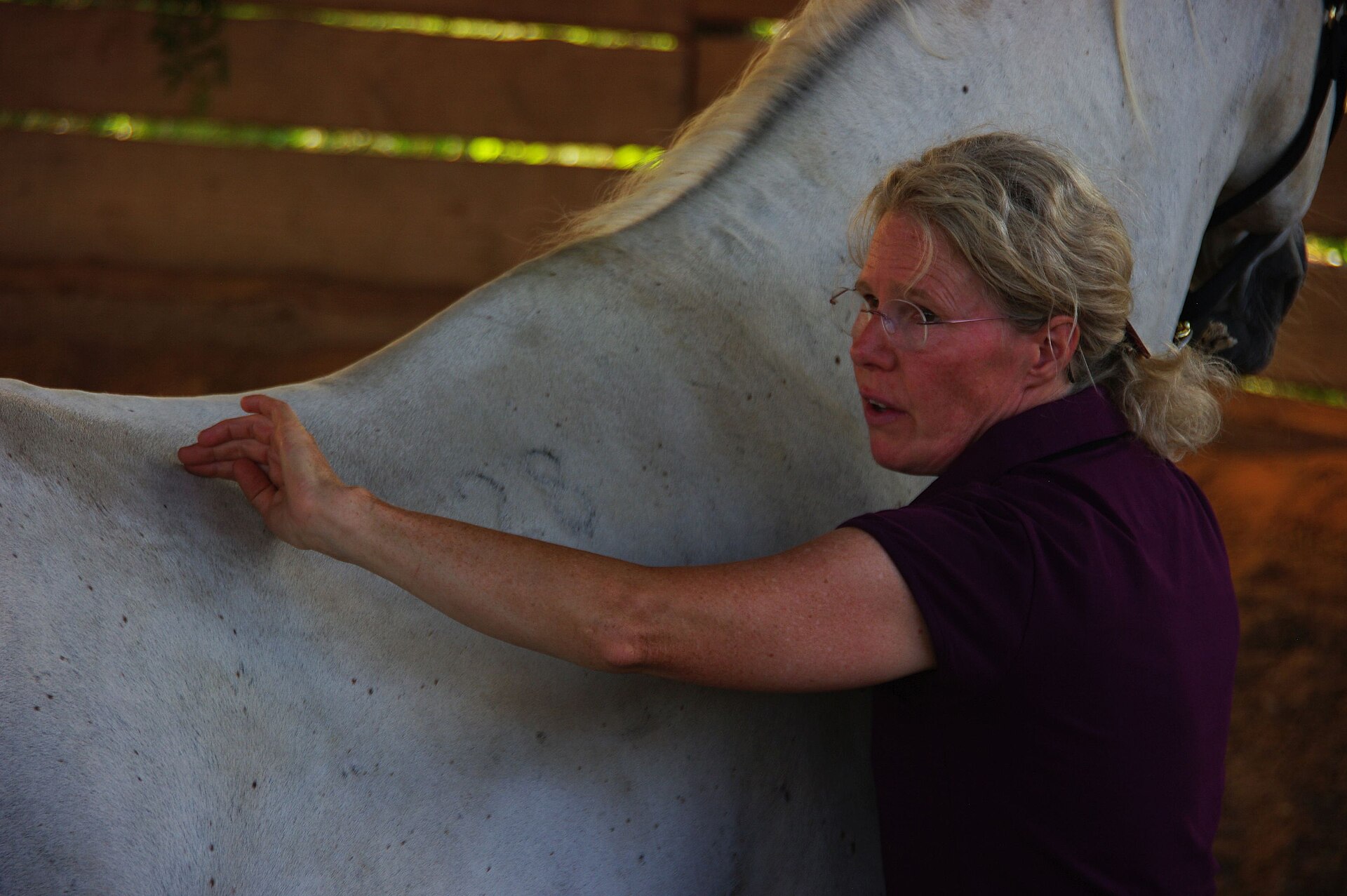
Equine osteopathy may be considered as a complementary assessment for issues like ridden problems, restricted flexion or bending, and back pain. However, there isn't robust evidence to reliably confirm its efficacy for these conditions. It is crucial to remember that osteopathy does not replace a veterinary diagnosis or treatment. Therefore, when choosing a practitioner, verifiable training credentials, clear treatment limitations, and collaboration with your veterinarian are essential.
When to Consider an Osteopathic Assessment
The website of the German practice Pferdeosteopathie Tierarzt Brandenburg, which itself offers equine osteopathy, lists ridden problems, restricted flexion or bending, and back pain as potential reasons for an osteopathic assessment. This list, however, does not prove that osteopathy effectively treats these conditions.
Always have such issues thoroughly examined by a veterinarian. According to the German training institute DIPO, which provides training itself, their courses do not replace a veterinary diagnosis or treatment. Equine osteopaths are expected to work within their scope of practice and in collaboration with veterinarians and other equine professionals.
For dental, chewing, or temporomandibular joint (TMJ) issues, the practice always requires coordination with the treating equine dentist before an osteopathic treatment.
What Happens During a Treatment
Manual therapy involves using the hands for examination or treatment on the body. Mobilization and manipulation techniques are not exclusively used by osteopathically trained individuals but also by those trained in chiropractic and physiotherapy, among others.
The systematic review in Animals differentiates several techniques. To understand a planned treatment, these terms are particularly helpful:
- Soft tissue mobilization: This aims to restore the natural mobility of the skin, underlying fascia, ligaments, and musculotendinous structures. Pain relief and improved function are treatment goals, not guarantees of success.
- Joint mobilization: This involves repeatedly moving joints passively. “Passively” means the movement is performed externally.
- Manipulation: This refers to a single, rapid impulse with a small range of motion applied to joints of the spine or limbs.
Ask your practitioner to explain which of these techniques are planned and what goal they aim to achieve. Not every manual treatment is a manipulation, and not every technique follows the same approach.
How Robust is the Evidence for its Effectiveness?
The review included 14 articles, comprising 13 horse studies and one dog study. It reflects the state of research at the time of its publication. All horse studies investigated passive mobilization or manipulation of the axial skeleton. Therefore, their results cannot be readily transferred to all osteopathic procedures and areas of application.
The authors classified four studies as low quality, seven as medium, and three as high. Different metrics, efficacy levels, and durations of effect prevented further combined statistical analysis.
Although all included studies reported positive effects, the review concluded that no robust conclusions could be drawn. The best areas of application and the dosage of techniques also still needed to be determined. Therefore, positive individual findings are not equivalent to a guaranteed treatment success for your horse.
When Treatment Limitations Apply
The practice distinguishes on its website between the exclusion of individual techniques or situations, and when it advises against osteopathic treatment altogether. These are the statements of a single practice, not a guideline from a professional association.
For pregnancy, spinal ataxia, or vascular changes in the brain such as arteriosclerosis or aneurysm, it excludes certain techniques or maneuvers. This does not imply a blanket exclusion of all osteopathic treatment. Which measures are appropriate should be discussed with your veterinarian.
The practice, however, advises against osteopathic treatment for the following findings:
- Fractures, as well as capsular or ligament tears with joint instability
- Recent muscle fiber tears or fresh bleeding
- Bony fused (ankylosed) kissing spines or bony fused spavin
- Tumors
- Acute febrile infections
How to Verify a Practitioner's Qualifications
According to the DIPO training institute, a provider of such training, entry requirements, training duration, curriculum, and examination standards can vary significantly between training providers due to the lack of state-mandated regulations. In Germany, according to the institute, there is no legally regulated professional profile or state recognition process for animal therapy training. Different rules may apply in other countries.
Therefore, specifically inquire about their training and passed examinations. The name of a training institute alone does not indicate the actual qualification held. At DIPO, for example, examinations are generally voluntary. However, only those who have passed the examinations are permitted to use the institute's own title, DIPO-PferdeosteotherapeutIn (DIPO-Equine Osteopath).
These points are helpful for your conversation with a potential practitioner:
- What training was completed, and what examinations were passed?
- What evidence of qualification and continuing education is available?
- How will the treatment be coordinated with your veterinarian?
- Which findings exclude individual techniques or the treatment altogether?
At DIPO, the final certificate and diploma are valid indefinitely. The practitioner's ID card, however, is valid for three years. For its renewal, the institute requires 20 hours of continuing education within these three years. These requirements apply to the DIPO ID card, not to all practitioners.
Costs: What to Consider for Reimbursement
According to DIPO, some insurers require the practitioner's training certificate. Which proofs are required depends on the individual insurer and policy. However, reimbursement for physiotherapeutic or osteopathic treatments is not generally guaranteed. Therefore, clarify with your insurance company whether they will cover the planned treatment and what proof of qualification they require for it.
Common questions
Does osteopathy help with my horse's back pain?
Back pain is mentioned as a potential reason for an osteopathic assessment. However, this does not reliably prove its effectiveness. Always have such issues thoroughly examined by a veterinarian. Osteopathy does not replace a veterinary diagnosis or treatment.
Can a pregnant mare receive osteopathic treatment?
The German practice Pferdeosteopathie Tierarzt Brandenburg, which offers osteopathy, states on its website that certain techniques or maneuvers are excluded during pregnancy, but not every osteopathic treatment in general. Coordinate the approach with your veterinarian.
How can I recognize verifiable qualifications?
Ask about training content, qualifications, passed examinations, and continuing education credentials. According to the German training institute DIPO, which offers training itself, training programs vary significantly. At DIPO, only those who have passed the examinations are permitted to use the institute's own practitioner title.
Will my insurance cover the treatment costs?
Reimbursement is not generally guaranteed. According to the German training institute DIPO, some insurers require the practitioner's training certificate. The conditions depend on the insurer and policy. Clarify cost coverage and required documentation directly with your insurance company.
Sources
- Animals: Systematischer Review zur Wirksamkeit von Mobilisation und Manipulation in der Tiermedizin – pmc.ncbi.nlm.nih.gov (2021)
- Information • Pferdeosteopathie Tierarzt Brandenburg
- Pferdeosteopathie Ausbildung | NRW & BaWü | DIPO
- Titelfoto: DieterJMartin, Wikimedia Commons
- Lizenz des Fotos: CC BY-SA 4.0

Written by Equidara editorial team. Last checked: 4 November 2026.
- Scratches in Horses: Pastern Care and Recognizing Warning Signs — Moisture and dirt can contribute to scratches. Here's how to gently care for the affected skin and recognize when to contact your vet.
- Kissing Spines in Horses: Correctly Interpreting X-ray Findings in the Pre-Purchase Exam — An abnormal X-ray alone doesn't tell you if your horse has back pain. Learn what signs to look for and why a clinical examination is crucial for proper assessment.
- PPID in the Senior Horse: Recognizing Signs, the ACTH Test, and Daily Care — PPID (Equine Cushing's Disease) primarily affects horses over 15 years old. Learn how to recognize the signs, how your vet uses the ACTH test for diagnosis, and what you can do in daily life to help.
- Equine Gastric Ulcers: Signs, Causes, and Definitive Diagnosis — Equine Gastric Ulcer Syndrome (EGUS) affects many horses, often without clear symptoms. Learn about the role of feeding and stress, and why only gastroscopy provides a definitive diagnosis.
Related
- Buy a horse with pre-purchase exam documents — Sale horses where the pre-purchase exam report is available directly in the listing.
- Services and jobs — Farrier, vet, training, horse share.
- Saddles and accessories — For the horse: saddles, rugs, bridles, hoof protection.