
Forgotten remedies
Honey for Horses: From Ancient Home Remedy to Medical Grade Wound Honey
Honey has a long history in wound care. Learn what sets medical grade wound honey apart, its described applications, and when your horse needs a vet.
Equidara editorial team · 17 October 2026 · 4 min read
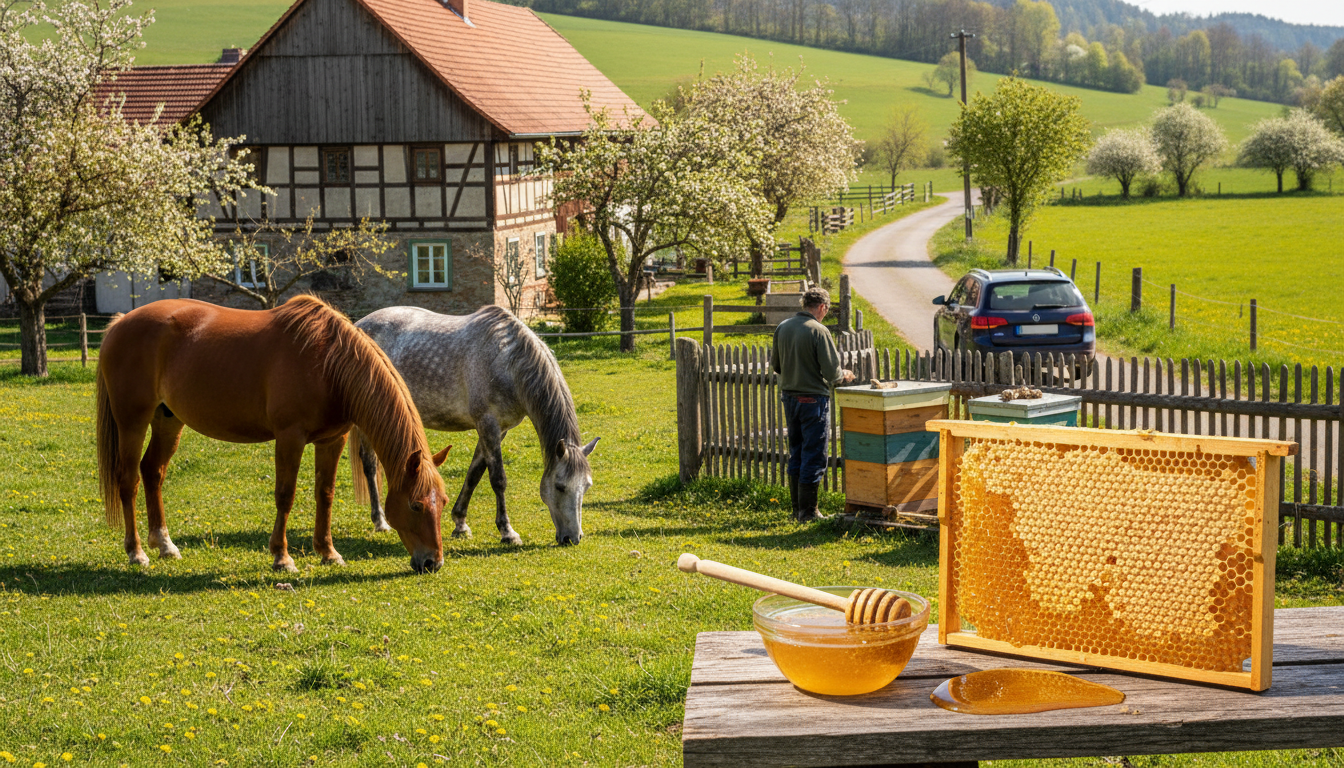
Honey can be used as a supportive measure in equine wound care. Preparation is key: kitchen honey and medical grade wound honey are not the same. Medical grade wound honey is sterilized for wound treatment. For large wounds and injuries, you should call your vet as soon as possible. Honey does not replace veterinary treatment or targeted wound management.
An Ancient Home Remedy
Honey has been known as a healing agent for millennia. According to Pferde Fit Vital, a Sumerian clay tablet dating between 2100 and 2000 BC is considered the oldest known text mentioning honey. It contains recipes for medicines and salves.
Honey is also being used topically again in human medicine. The specialist article from vetline lists wounds, skin ulcers (cutaneous ulcers), burns, and wound infections as applications.
For horses, Pferde Fit Vital primarily mentions fresh injuries and the supportive care of surgical wounds. The magazine recounts the experience of a veterinarian using Manuka honey. Scar tissue that has already formed on old wounds cannot be reversed with it.
What Honey Can Do for Wounds
According to Pferde Fit Vital, honey consists of approximately 80 percent sugar and 20 percent water. Its antibacterial effect, according to vetline, is based on the interplay of several components: high sugar content, hydrogen peroxide, low pH value, methylglyoxal, and the bee protein Defensin-1. Their concentrations can vary considerably, depending on the blossoms from which the honey originates.
The review article generally describes honey as bactericidal, even against multi-resistant wound germs, without reference to a specific animal species. It also lists decongestant, anti-inflammatory, pain-relieving, and wound-moistening properties.
For secondary healing wounds that close over newly formed tissue, honey, according to vetline, can promote the formation of blood vessels, granulation tissue, and new skin layers. Granulation tissue is newly forming wound tissue that fills the wound from the bottom up.
Vetline refers to laboratory studies, in vivo investigations, clinical case reports, and randomized controlled clinical trials. These findings relate to honey in general, not specifically to horses.
Kitchen Honey, Manuka Honey, and Medical Grade Wound Honey
The terms denote different things. Manuka describes the origin of the honey. According to tierärztezeitung, it is harvested in New Zealand from the nectar of the Manuka tree (South Sea Myrtle). The specialist article attributes the so-called Manuka effect to methylglyoxal, or MGO.
Medical grade wound honey, however, refers to a form prepared specifically for wound treatment. In a 2019 article, Pferde Fit Vital describes sterilization with gamma rays. According to the magazine, this process preserves the enzymes crucial for its healing properties, unlike sterilization by heat. The result, according to the article, is a medical product for wound treatment.
The difference from kitchen honey, therefore, lies not only in the variety but also in the medical preparation. According to vetline, honey was first approved as a standardized medical product for wound care in Australia in 1999. Subsequently, wound dressings with medical honey were increasingly used in other countries, including Germany.
How Application is Described
For superficial wounds, Pferde Fit Vital describes applying the honey directly to the previously cleaned area.
For wounds that can be covered with a bandage, the magazine mentions another practical experience: honey keeps the wound moist and prevents the bandage from sticking to it.
Manuka honey can also be used as part of veterinary treatment. The tierärztezeitung mentions it as an option for the period until an antibiogram is available. This applies when a swab sample has been taken for diagnostic purposes and a bacteriological examination initiated. An antibiogram shows which antibiotics the detected bacteria are sensitive to.
What You Should Pay Attention To
For large wounds and injuries on your horse, call your vet as soon as possible. For ongoing care, the Verband Deutscher Tierheilpraktiker in a series of articles on wound care lists these points, which do not replace veterinary treatment:
- For open wounds, use disposable gloves and sterile compresses. Pathogens from your hands can delay healing.
- Assess the wound daily. Ideally, you should decide on the care each day, depending on the progress and phase of wound healing.
- Avoid excessive washing and friction from unsuitable bandaging material. Both can prolong healing.
Whether your horse additionally needs internal antibiotic treatment and which medication will be used is decided by the vet. According to the association, incorrect or omitted treatment can delay healing.
Common questions
What distinguishes kitchen honey from medical grade wound honey?
Pferde Fit Vital describes medical grade wound honey in a 2019 article as a medical product sterilized with gamma rays for wound treatment. The difference lies in this medical preparation.
How is honey applied to a horse's wound?
For superficial wounds, Pferde Fit Vital describes direct application to the previously cleaned area. For wounds that can be covered, the magazine mentions application under a bandage.
Can Manuka honey reverse old scars?
No. The veterinary experience recounted by Pferde Fit Vital lists fresh injuries and the supportive care of surgical wounds as areas of application. Existing scar tissue is not reversed by it.
When does the vet need to come?
For large wounds and injuries on your horse, as soon as possible. Whether additional internal antibiotic treatment is necessary and which medication will be used is decided by the vet.
Sources
- vetline – veterinärmedizinischer Fachartikel zur Geschichte, zu Wirkmechanismen und zur Studienlage: vetline.de (02/2014)
- Pferde Fit Vital – Magazinbeitrag zu Honig und zur Herstellung medizinischen Wundhonigs: pferdefitundvital.de (10/2019)
- tierärztezeitung – Fachartikel zur antibakteriellen Anwendung von Manuka-Honig und zur begleitenden Diagnostik: tieraerztezeitung.com
- Serie Wundversorgung beim Pferd: Störungen der Wundheilung & Zusatzmaßnahmen - Verband Deutscher Tierheilpraktiker e.V. (03/2023)
Written by Equidara editorial team. Last checked: 17 October 2026.
- Herbal Remedies for Your Competition Horse: What You Should Check Before Administration — Even with herbal remedies, competition rules apply. Here's what the FN and FEI say about substances, withdrawal periods, and supplements.
- Calendula for Horses: Salve, Infusion, and Addressing Scratches — What the Phytokodex describes about calendula salve and infusion, and why crusts, pus, or lameness in the pastern area require veterinary attention.
- Linseed and Linseed Mash for Horses: How to Properly Prepare This Traditional Home Remedy — Linseed mash is a time-honored home remedy for digestion and skin health. Here, you'll find preparation instructions from the University of Zurich, the daily dosage for your horse, and important considerations.
- Flowers of Sulfur for Horses: The Body's Clean-Up Crew — Part 1 of the 'Forgotten Remedies' series: What flowers of sulfur are, how they are used internally and externally, what dosage has proven effective in my practice, and what you should pay attention to.
Related
- Services and jobs — Farrier, vet, training, horse share.
- Saddles and accessories — For the horse: saddles, rugs, bridles, hoof protection.