
Forgotten remedies
Calendula for Horses: Salve, Infusion, and Addressing Scratches
What the Phytokodex describes about calendula salve and infusion, and why crusts, pus, or lameness in the pastern area require veterinary attention.
Equidara editorial team · 11 October 2026 · 4 min read
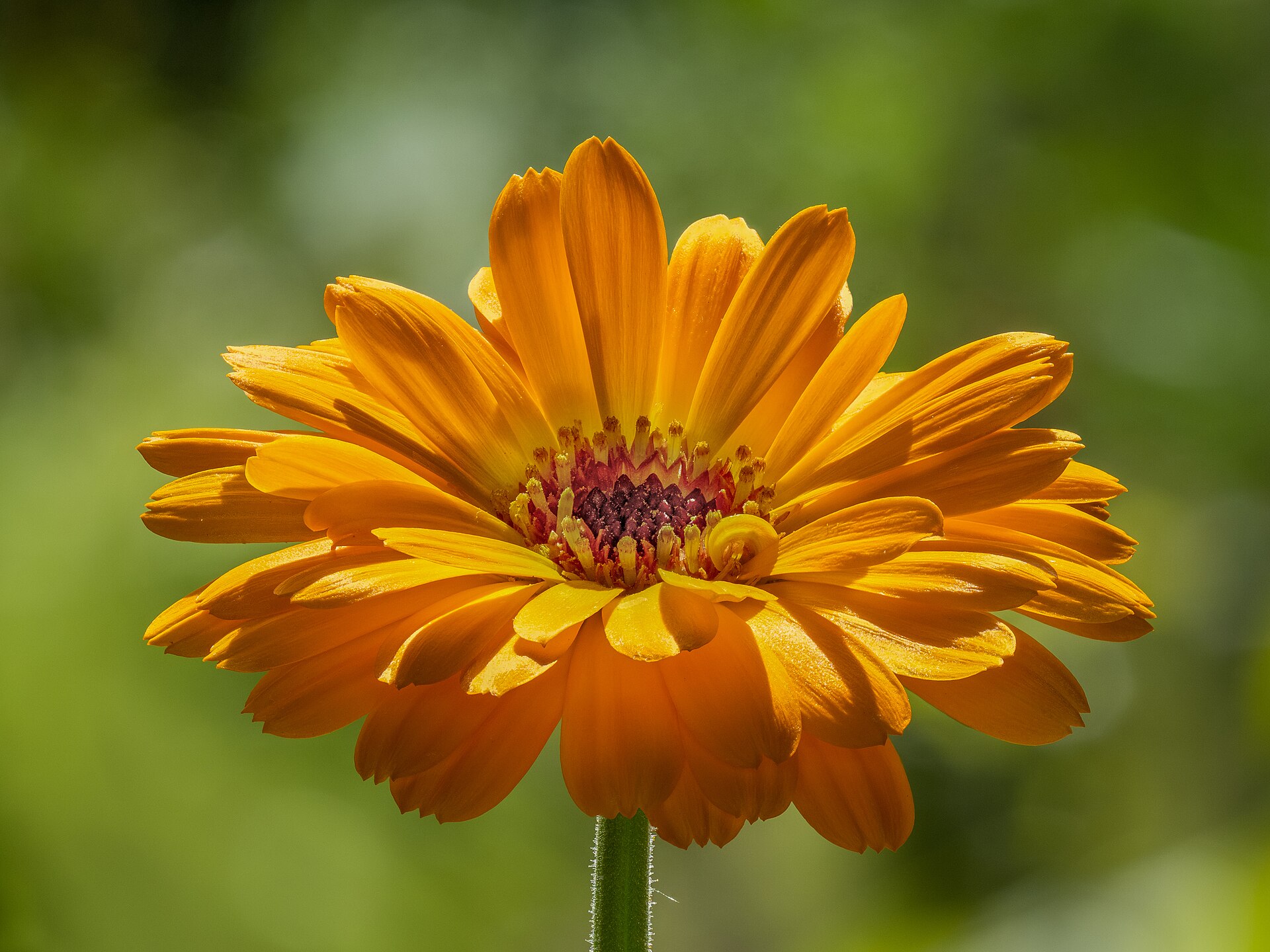
When your horse has scrapes or chafing, you want to ensure their skin is well cared for. The Phytokodex specifies quantities for calendula infusions and salves. However, these details do not include dosages for horses. Therefore, always discuss the application with your veterinarian. For scratches-like changes involving crusts, pus, or lameness, it's crucial to determine the underlying cause before opting for a home remedy.
Which Calendula is Meant
The Phytokodex by Krause & Pachernegg describes calendula as Calendula officinalis L. It belongs to the daisy family (Asteraceae). This means a specific species is referred to, not just any flower that looks similar.
As the plant part used, the Phytokodex specifies the ray florets of fully opened flower heads from cultivated varieties. These are the petals on the outer edge of the flower head. For the herbal drug referred to as "Calendulae flos," it states a minimum content of 0.40 percent flavonoids. Here, "drug" refers to the dried plant raw material used in a preparation.
The following quantities refer to this herbal flower drug. Herbal flower drug, extract, and finished salve are different preparations. Their quantity specifications cannot be interchanged.
Distinguishing Salve, Infusion, and Tincture
Quantities Specified by the Phytokodex
For an infusion, the Phytokodex specifies approximately 1 to 2 grams of the herbal flower drug per about 150 milliliters of water. For salves, it correspondingly mentions 2 to 5 grams of the drug in 100 grams of salve. These details describe the composition of the preparations.
Therefore, when discussing an application for your horse, differentiate between the concentration of a preparation and the amount to be applied to a skin area. Even the term "calendula salve" alone doesn't clarify the intended composition.
An infusion is an aqueous preparation. A tincture, on the other hand, is an alcoholic plant extract. Therefore, the quantity given for an infusion is not a recipe for a tincture.
Described Effects
According to the Phytokodex, a salve containing 5 percent calendula extract promoted natural regeneration and epithelialization of wounds in animal studies. Epithelialization refers to the formation of a new covering cell layer. The animal species is not mentioned in this passage.
Furthermore, the Phytokodex describes an anti-inflammatory effect of calendula compounds extracted with ethanol. This was studied on a rat paw, in a model with artificially induced inflammatory swelling. This description pertains to an extract and is not an instruction to treat a horse's wound with an alcoholic tincture.
Addressing the Cause of Scratches
Not every crusty skin change in the pastern area can be addressed solely with a salve. The MSD Veterinary Manual describes dermatophilosis, a possible infectious cause of scratches-like lesions. It is a globally occurring bacterial skin infection affecting various animal species. The pathogen is called Dermatophilus congolensis.
According to the technical text, young or immunocompromised animals, as well as those exposed to prolonged damp conditions, are particularly often affected. In horses, persistent moisture on the pasterns, such as in wet turnout areas, stables, or pastures, promotes dermatophilosis of the lower limbs. White legs and white-skinned areas on the lips and nose are more severely affected.
In horses with long winter coats, hair can become matted. Brush-like tufts of hair with crusts or scabs may form. Yellow-green pus can be found under larger crusts. Severe dermatophilosis in the pastern area can also cause lameness and reduced performance.
According to the MSD Veterinary Manual, diagnosis is confirmed by pathogen detection in cell preparations, by culture, and/or a skin biopsy. For treatment, the manual mentions systemically acting antimicrobial medications, local treatment, and management changes to keep the animals dry.
What You Should Pay Attention To
Coordinate the preparation and application with your veterinarian. A home remedy does not replace a veterinary diagnosis. Have crusts with pus or lameness in the pastern area examined by a veterinarian, rather than just treating them as chafing.
Also, consider the plant family: The Phytokodex does not rule out cross-allergies with other daisy family plants. However, at the time of the source, it states that none were known.
The MSD Veterinary Manual lists direct contact between animals, a contaminated environment, and possibly biting insects as suspected transmission routes for dermatophilosis. Therefore, in addition to the individual skin area, your horse's environment also matters. If there is persistent dampness, the management practices should be reviewed.
Common questions
What quantities does the Phytokodex specify for calendula?
For an infusion, the Phytokodex specifies approximately 1 to 2 grams of herbal flower drug per about 150 milliliters of water, and for salves, 2 to 5 grams of the drug in 100 grams. The passage does not contain a dosage for horses.
Can I use the infusion quantity for a tincture?
No. An infusion is an aqueous preparation, while a tincture is an alcoholic plant extract. Therefore, the infusion quantity specified by the Phytokodex is not a tincture recipe.
When should a veterinarian examine scratches-like areas?
Have crusts with pus or lameness in the pastern area examined by a veterinarian. According to the MSD Veterinary Manual, such changes can occur with dermatophilosis. Diagnosis is confirmed by pathogen detection in cell preparations, culture, and/or skin biopsy.
Are cross-allergies possible with calendula?
The Phytokodex does not rule out cross-allergies with other daisy family plants. However, at the time of the source, it states that none were known.
Sources
- Krause & Pachernegg, medizinischer Fachverlag: Phytokodex Ringelblume – Inhaltsstoffe, Pharmakologie und Zubereitungen. kup.at (2012)
- MSD Veterinary Manual: Dermatophilosis in Animals – tierärztlicher Fachtext zu einer möglichen infektiösen Ursache maukeähnlicher Hautveränd (02/2026)
- Titelfoto: Ermell, Wikimedia Commons
- Lizenz des Fotos: CC BY-SA 4.0

Written by Equidara editorial team. Last checked: 11 October 2026.
- Herbal Remedies for Your Competition Horse: What You Should Check Before Administration — Even with herbal remedies, competition rules apply. Here's what the FN and FEI say about substances, withdrawal periods, and supplements.
- Honey for Horses: From Ancient Home Remedy to Medical Grade Wound Honey — Honey has a long history in wound care. Learn what sets medical grade wound honey apart, its described applications, and when your horse needs a vet.
- Linseed and Linseed Mash for Horses: How to Properly Prepare This Traditional Home Remedy — Linseed mash is a time-honored home remedy for digestion and skin health. Here, you'll find preparation instructions from the University of Zurich, the daily dosage for your horse, and important considerations.
- Flowers of Sulfur for Horses: The Body's Clean-Up Crew — Part 1 of the 'Forgotten Remedies' series: What flowers of sulfur are, how they are used internally and externally, what dosage has proven effective in my practice, and what you should pay attention to.
Related
- Services and jobs — Farrier, vet, training, horse share.
- Saddles and accessories — For the horse: saddles, rugs, bridles, hoof protection.