
Forgotten remedies
Apple Cider Vinegar in Horse Feed: What Stable Wisdom Promises
Apple cider vinegar is traditionally used both internally and externally in equine practice. Here you'll find the mentioned applications, a recipe, and the limitations of dosage recommendations.
Equidara editorial team · 22 October 2026 · 4 min read
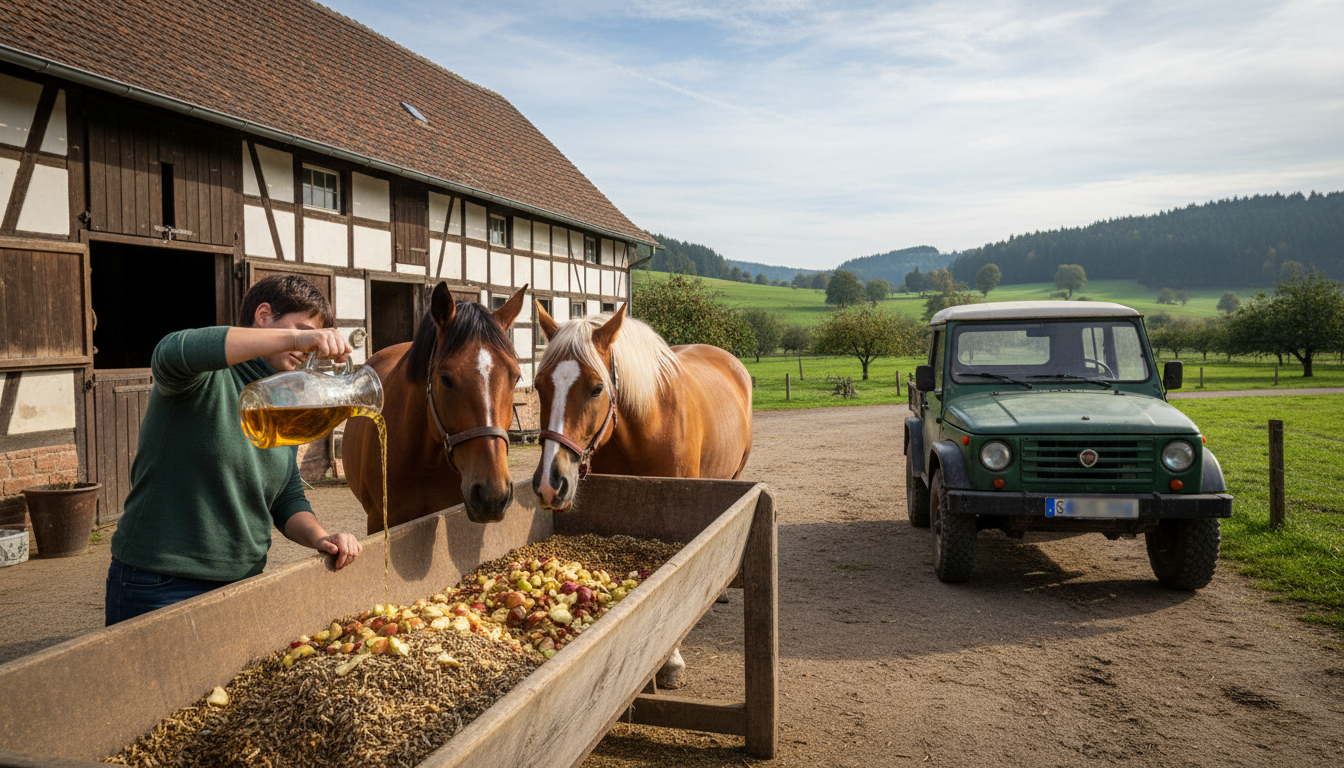
In traditional equine practice, apple cider vinegar is used for weight management and with the aim of reducing insulin resistance. The underlying source describes these applications as potential goals for internal administration. It's important for you to distinguish between such a practical goal and a proven effect. Furthermore, the quantities mentioned there are source recommendations, not verified safe dosages for horses.
What Stable Wisdom Says About Apple Cider Vinegar
The practical article Apple Cider Vinegar for Horses: An All-Round Helper! describes both internal and external applications. When fed, it mentions weight management and a reduction in insulin resistance as possible goals. These claims are part of traditional use, not research findings.
Here's how to understand stable wisdom: it describes what apple cider vinegar is used for. An intended change is different from a measured change. Therefore, when you read about its use, keep the phrase 'possible goal' in mind. It does not guarantee any specific effect on your horse's weight or metabolism.
The practical article also mentions pasture management as a reason for internal use. Especially for spring and autumn, it describes four-week courses of treatment. This is a practical recommendation from the source. The four weeks refer to the application period and should not be confused with the vinegar's production time.
Making Your Own Apple Cider Vinegar
According to the practical article's recipe, apple cider vinegar can be made from apple pieces and scraps. Apple cores are also used. If you prepare this mixture, the preparation of the container and handling the floating apple parts are explicitly part of the recipe.
The source describes the following steps:
- Sterilize the container by boiling and let it cool. Then fill it with apple pieces, scraps, and cores.
- Do not use rotten apples. Cut whole apples into small pieces before adding them.
- Add approximately two tablespoons of sugar per kilogram of apples. According to the recipe, this is to kickstart fermentation.
- Cover the apple pieces with cold water. Cover the container with a cloth to prevent attracting insects.
- Stir occasionally with a clean spoon. Peels and cores initially float on the surface; stirring is meant to prevent them from molding.
- The source states four to six weeks until the vinegar is ready. After that, it is filtered through a fine cloth or sieve and bottled in sterile containers.
The sugar amount is part of the production recipe. It is not a quantity for feeding. Similarly, the four to six weeks describe the process to finished vinegar, not the duration of a feeding regimen.
What Quantities Does the Source Mention?
For internal use, the dosage recommendation in the practical article starts with one to two tablespoons per day. Later, it suggests an increase up to a maximum of 250 milliliters.
The initial amount, the later upper limit, and the four-week course are different recommendations. Do not read them as interchangeable quantities or periods. Most importantly, the mentioned upper limit is not a personalized feeding plan for your horse. Discuss any internal application with your veterinarian, rather than deriving an appropriate amount yourself from the source's information.
Traditional External Applications
In addition to feeding, the practical article describes other applications. These also belong to the practices detailed there.
- Fly Repellent: Apple cider vinegar is mentioned along with lavender, eucalyptus, and citronella. This information does not include a mixing ratio.
- Early Thrush: The source recommends apple cider vinegar and water in a 1:1 ratio. After hoof care, the mixture should be applied to all hoof areas with a spray bottle.
- Skin Irritations: A paste made from healing clay, apple cider vinegar, and water is mentioned. It is applied to insect bites or hives and then allowed to dry. The source does not specify proportions for this.
What You Should Pay Attention To
Keep the different preparations separate: the vinegar starter, the mixture for hooves, and the paste for skin each have a different purpose. Therefore, do not apply the 1:1 ratio to feeding or to the skin paste.
For thrush, skin changes, or questions about insulin resistance, your veterinarian is the right contact person. A home remedy does not replace a veterinary diagnosis. For making the vinegar, the specific recipe instructions remain important: no rotten apples, a clean spoon for stirring, and sterile bottles for bottling.
Common questions
What is apple cider vinegar used for internally in horses?
The practical article mentions weight management and a reduction in insulin resistance as possible goals. It describes these claims as traditional uses.
What quantity does the source mention?
It starts with one to two tablespoons per day and later suggests an increase up to a maximum of 250 milliliters. This is a source recommendation, not a verified safe dosage for horses. Discuss its use with your veterinarian.
How long does production take?
The recipe states four to six weeks until the vinegar is ready. Afterwards, it is filtered through a fine cloth or sieve and bottled in sterile containers.
What mixture is described for early thrush?
The source recommends apple cider vinegar and water in a 1:1 ratio. The mixture is sprayed onto all hoof areas after hoof care. For thrush, you should involve your veterinarian.
Sources
Written by Equidara editorial team. Last checked: 22 October 2026.
- Herbal Remedies for Your Competition Horse: What You Should Check Before Administration — Even with herbal remedies, competition rules apply. Here's what the FN and FEI say about substances, withdrawal periods, and supplements.
- Nettle in Horse Feed: Tradition, Ingredients, and Limitations — Nettles have a long history as animal feed. Discover what this tradition entails, which ingredients are described, and what you should consider when using them in your horse's diet.
- Linseed and Linseed Mash for Horses: How to Properly Prepare This Traditional Home Remedy — Linseed mash is a time-honored home remedy for digestion and skin health. Here, you'll find preparation instructions from the University of Zurich, the daily dosage for your horse, and important considerations.
- Equine Gastric Ulcers: Signs, Causes, and Definitive Diagnosis — Equine Gastric Ulcer Syndrome (EGUS) affects many horses, often without clear symptoms. Learn about the role of feeding and stress, and why only gastroscopy provides a definitive diagnosis.
Related
- Services and jobs — Farrier, vet, training, horse share.
- Saddles and accessories — For the horse: saddles, rugs, bridles, hoof protection.