
Feeding & Care
How to Identify Good Hay: Smell, Color, Dust, Mold, and Hay Analysis
You can identify good hay by its color, smell, and texture – but only a lab analysis can confirm whether it's truly healthy for your horse. Here's how to check quality step by step.
Equidara editorial team · 27 September 2026 · 3 min read
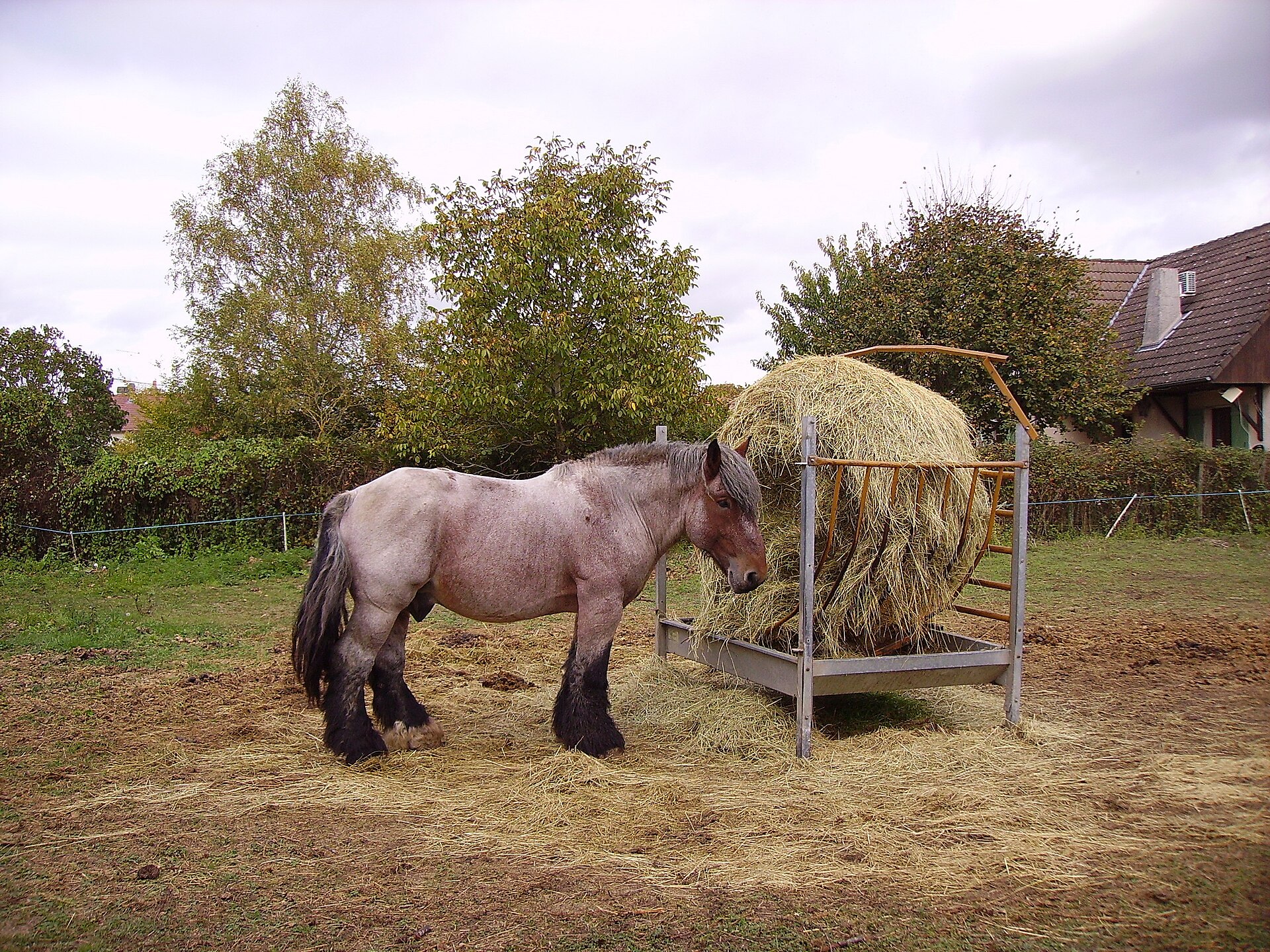
Whether your hay is healthy isn't decided by first glance alone. A sensory evaluation gives you important clues, but a lab analysis provides certainty. Good hay is green, aromatic, soft, and low in dust – and it contains only low germ counts.
Sensory Evaluation: Smell, Color, Feel, and Dust
The Vetmeduni Vienna describes ideal hay as harvested at bloom, with a stem-to-leaf ratio of about 65:35, green color, and aromatic smell. Using a systematic sensory test according to ÖAG (1999), you can assess structure, color, smell, and contaminants and classify the hay into four quality grades.
Smell
Good hay smells aromatic, floral, or spicy – depending on the herb content. A musty, smoky, sour, or strongly earthy smell indicates spoilage or improper storage.
Color
Light to dark green, even olive green after longer storage – that's how hay should look. Bleached, gray, brown, or black spots point to overheating, mold, or too late a cut.
Structure and Feel
Soft hay with a high leaf content and fine stems is a quality marker. Many grasses, herbs, and some clover, along with preserved flowers and buds, indicate an early, gentle cut. If the hay feels coarse, straw-like, and low in leaves, it was harvested too late and is lower in nutrients.
Dust and Contaminants
Shake a handful of hay in front of a light source. Good quality produces hardly any dust. Heavy dust development indicates mold spores and bacteria that strain the respiratory tract. Soil, stones, or manure have no place in hay.
Mold and Spoilage: Warning Signs
A musty smell, white or gray spots on the stems, and dark discoloration are typical signs of mold. Mold irritates the mucous membranes of the digestive tract and lungs and can trigger allergies in the long term. Although mycotoxins are rarer in hay than in concentrates, any moldy hay is a risk and does not belong in the feed trough. Hay that feels damp or clammy is also suspicious: dry matter should be above 87%, otherwise microbial spoilage threatens.
When a Hay Analysis Is Useful
A lab test is recommended if horses cough after feeding, have diarrhea, or refuse the hay. It also provides clarity after uncertain sensory evaluation or after unfavorable harvest conditions (rain, too late mowing).
Microbiological Analysis
It determines the germ levels of bacteria, molds, and yeasts. The VDLUFA reference values classify the results into germ count levels:
| Germ Count Level | Meaning |
|---|---|
| I | Safe, reference values met |
| II | Moderately elevated, concerning for young animals and sensitive horses |
| III | Clearly elevated, no longer recommended for horses |
| IV | Severely elevated, spoiled – do not feed |
For best quality (Level I), the following apply: spoilage-indicating bacteria <2 million CFU/g, molds (field and storage fungi) <200,000 CFU/g, yeasts <150,000 CFU/g. Good hay is never germ-free, but low in germs.
Nutrient Analysis
Crude nutrient analysis (crude fiber, crude protein, energy) and dry matter determination help you adjust your horse's ration. Dry matter below 87% promotes spoilage. Mineral analysis can be useful for specific issues like fertility problems. For nutrient determination, the cheaper near-infrared reflectance spectroscopy (NIRS) is usually sufficient; for extreme qualities, the wet chemistry method is more accurate.
Taking a Hay Sample Correctly
To ensure the result is meaningful, take samples from several bales, including from the outer layers. Mix the hay in a tub and take about 500 g. For microbiology, fill the sample into a paper bag – no plastic, otherwise the hay will mold under airtight conditions.
Storage: How to Keep Hay Healthy
Horse hay is particularly susceptible to storage fungi because the stems are often lignified and release moisture slowly. Therefore, bale hay loosely – with round bales, you should be able to stick your hand in. Store bales on pallets so air can circulate underneath. In the first weeks after harvest, do not stack bales so residual moisture can escape.
If your horse shows health issues, always consult a veterinarian.
Common questions
How can I detect mold in hay without a lab?
A musty smell, white or gray coatings on the stems, and dark discoloration are warning signs. Such hay must not be fed.
When is a hay analysis useful?
If your horse is coughing, has diarrhea, or refuses the hay. Also after a poor harvest or if you're unsure from the sensory evaluation.
What do the germ count levels in the analysis mean?
Level I: safe. Level II: concerning for young animals and sensitive horses. Level III: no longer recommended for horses. Level IV: spoiled, do not feed.
How should I store hay properly to prevent mold?
Store it in an airy place on pallets, don't compress too tightly. In the first weeks after harvest, don't stack the bales so residual moisture can escape.
Sources
- Was ist drinnen im Heu? Heuanalyse für eine sichere Pferdeernährung
- Pferdefütterung: Wie gut ist unser Heu wirklich? Teil 1: Mikrobiologie (2023)
- Heuqualitäten in der Praxis
- Heuanalysen interpretieren - Eine Einstiegshilfe
- Heu für Pferde: Qualität, Schnittzeitpunkt
- Heuqualität
- Titelfoto: Cjp24, Wikimedia Commons
- Lizenz des Fotos: CC BY-SA 3.0

Written by Equidara editorial team. Last checked: 4 October 2026.
- Linseed and Linseed Mash for Horses: How to Properly Prepare This Traditional Home Remedy — Linseed mash is a time-honored home remedy for digestion and skin health. Here, you'll find preparation instructions from the University of Zurich, the daily dosage for your horse, and important considerations.
- Equine Gastric Ulcers: Signs, Causes, and Definitive Diagnosis — Equine Gastric Ulcer Syndrome (EGUS) affects many horses, often without clear symptoms. Learn about the role of feeding and stress, and why only gastroscopy provides a definitive diagnosis.
- Hoof Care Through the Seasons: What Dry and Wet Hooves Need — Too dry and the horn crumbles; too wet and it softens. Here's how to keep your horse's hooves balanced throughout the year: with proper management, mucking out, regular checks, and scheduled appointments.
Related
- Saddles and accessories — For the horse: saddles, rugs, bridles, hoof protection.
- Available stalls — Boarding, open stable, self-care, with monthly price.