
Feeding & Care
Equine Coat Change: What's Normal and How to Adjust Your Horse's Diet
Your horse sheds its coat in spring and autumn. Here, you'll discover what triggers this change, how the coat protects the skin, and what's crucial for their diet during this time.
Equidara editorial team · 17 October 2026 · 4 min read
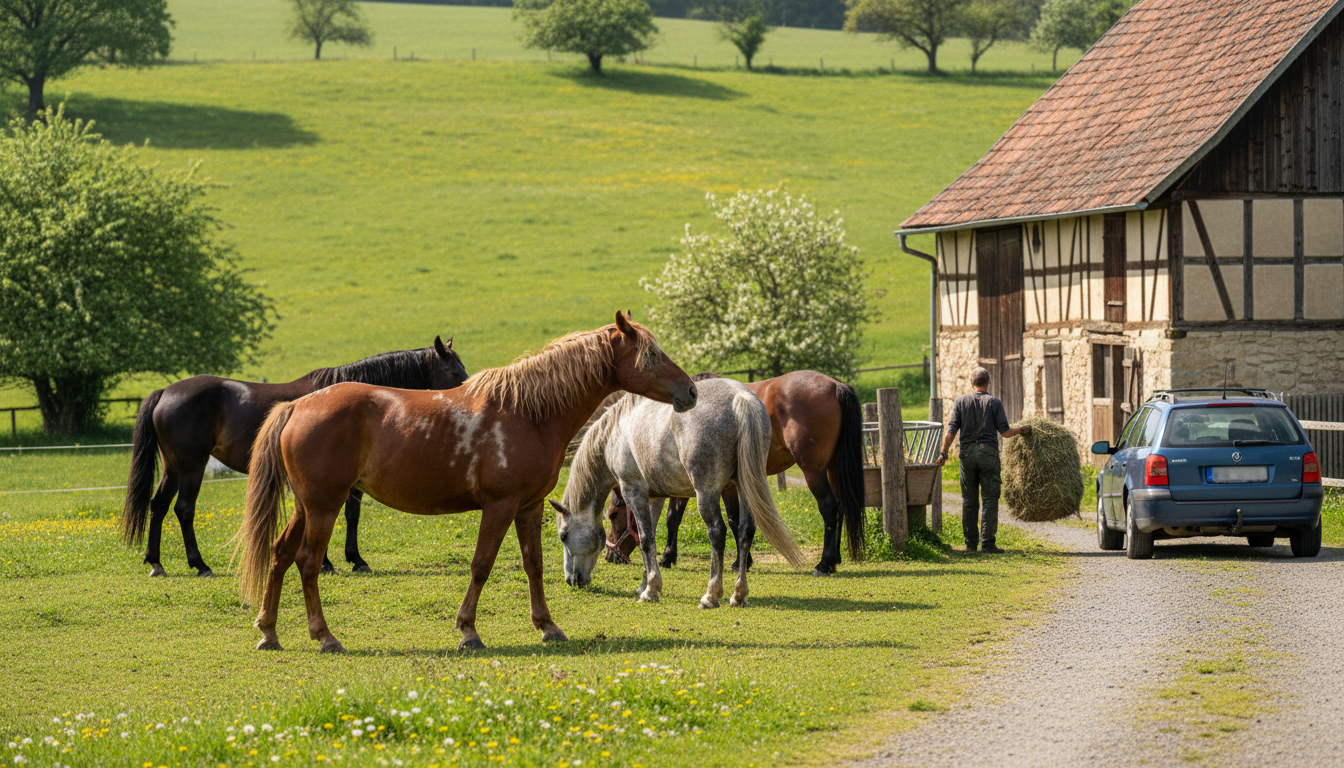
It's completely normal for your horse to shed its coat in spring and autumn. Daylight is considered the primary trigger. According to several sources, temperature also plays a role. During this period, their energy and nutrient requirements increase. The extent of this increase varies from horse to horse. You can support your horse with a diet tailored to their needs and by making gradual feed changes. It's also important to know: the coat is more than just a covering. It protects the skin and helps regulate body temperature.
What's Normal During Coat Change
The MSD Veterinary Manual on the Structure of the Skin and Hair Coat is a veterinary reference work from the USA. It states that animals typically shed their coats in early spring and early autumn. This occurs in response to changes in temperature and day length. According to the Pferdegesundheitsakademie seminar document 'Skin, Hair, Hoof', the coat is completely replaced in both seasons. Horses grow varying amounts of hair depending on the season. The document primarily identifies the duration of daylight as the trigger.
The scientific study on the influence of daylight duration and heat on hair growth and coat change deals with animals in general. It also considers daylight duration to be the most important seasonal environmental stimulus. Temperature is regarded as another significant stimulus. For horses, the study assumes that both factors interact in adapting the coat.
Not every horse has the same coat. According to the MSD Veterinary Manual, genetics and hormones control the size, shape, and length of the hair. Nutrition, environment, diseases, and medications also affect hair health. Therefore, differences in coats are not solely related to the season.
The Purpose of the Coat
According to the MSD Veterinary Manual, the hair coat protects the skin from mechanical injuries and damage from ultraviolet light. It also helps regulate body temperature.
Warmth is primarily retained by the air trapped between the secondary hairs. For this to work, the hairs must be dry and water-repellent. The summer coat is structured differently: it has shorter, thicker hairs and fewer secondary hairs. This allows air to flow through more easily, helping to cool the horse.
Sebum also has a role. It keeps the skin soft, moist, and supple, gives the coat shine, and acts against microbes.
Feeding: Considering Your Horse's Individual Needs
The Pferdegesundheitsakademie seminar document describes coat change as a stress factor that affects hair and hoof quality. According to the document, during this time, the need for energy, as well as proteins, fatty acids, vitamins, and trace elements, increases. Whether your horse needs more or different feed depends on the individual case.
There isn't a single feeding amount that suits all horses. According to the MSD Veterinary Manual on Nutritional Requirements of Horses, energy requirements vary significantly between individual animals. Some require considerably more feed. Others digest or utilize their feed much more efficiently.
General caloric recommendations are therefore only a starting point. Your horse's actual needs are crucial. The Manual recommends adjusting feed amounts to maintain a body condition score between 4 and 6 on the nine-point Henneke scale. This scale is used to assess a horse's nutritional status.
Forage and Water as a Foundation
The MSD Veterinary Manual provides the following general guidelines for feeding:
- Horses should receive at least 1.5 to 2 percent of their body weight in forage daily. This refers to dry matter, not the weight of the feed including its water content.
- Free, unlimited access to clean water is recommended.
- Horses can also adapt to fixed watering times, provided the amount of water is not restricted during these times.
How much additional energy your horse needs depends on their individual requirements and body condition. You can discuss whether these guidelines are appropriate for your horse with your veterinarian.
Introduce Feed Changes Gradually
If you're changing your horse's diet, for example during coat change, the MSD Veterinary Manual advises making the transition slowly over approximately 10 to 14 days. This reduces the risk of disrupting the microbial balance and causing digestive problems.
If you suspect a medical condition behind changes in your horse's coat, have your horse examined by a veterinarian.
Common questions
Does a horse only shed its coat in spring?
No. According to the MSD Veterinary Manual, animals typically shed their coats in early spring and early autumn. The Pferdegesundheitsakademie seminar document describes a complete coat change for horses in both seasons.
Does temperature trigger the coat change?
Daylight duration is considered the primary trigger. The MSD Veterinary Manual mentions changes in temperature and day length. The scientific study on daylight duration and heat suggests an interaction of both factors in horses.
Does every horse need the same amount of feed during coat change?
No. According to the MSD Veterinary Manual, energy requirements vary significantly between individual horses. General caloric recommendations are only a starting point for feeding an individual horse.
How slowly should I change the feed?
The MSD Veterinary Manual suggests approximately 10 to 14 days. A gradual transition is meant to reduce the risk of disturbing the microbial balance and causing digestive problems.
Sources
- Wissenschaftliche Studie: Einfluss von Tageslichtdauer und Wärme auf Haarwachstum und Fellwechsel – pmc.ncbi.nlm.nih.gov (14.01.2020)
- FN-Pferdegesundheitsakademie: Haut, Haar, Horn – Fellwechsel und Nährstoffversorgung – pferdegesundheitsakademie.de (11/2021)
- MSD Veterinary Manual: Nährstoffbedarf von Pferden als Grundlage bedarfsgerechter Fütterung – msdvetmanual.com (02/2026)
- MSD Veterinary Manual: Aufbau und Funktion von Haut und Haarkleid beim Pferd – msdvetmanual.com (07/2026)
Written by Equidara editorial team. Last checked: 24 October 2026.
Fachlich geprüft von Melissa Hinze, Pferdezüchterin und Pferdehändlerin, Gründerin von Equidara.
- Linseed and Linseed Mash for Horses: How to Properly Prepare This Traditional Home Remedy — Linseed mash is a time-honored home remedy for digestion and skin health. Here, you'll find preparation instructions from the University of Zurich, the daily dosage for your horse, and important considerations.
- Calculating Concentrate Requirements: How Weight, Workload, and Breed Make a Difference — Energy requirements alone don't tell you how much concentrate to feed. Here's how to factor in weight, breed, and workload, and account for the energy provided by forage.
- Mash and Hay Cobs: When They Make Sense for Your Horse — Mash provides energy and can be beneficial after digestive issues or illness. Hay cobs are helpful when a horse can no longer chew hay adequately. The key factors are your horse's needs, preparation, and the overall diet.
- Stable Water Supply: Needs, Waterers, and Frost Protection — Water should always be available. Learn what's important for waterers, pipes, and water quality, and how to correctly interpret technical specifications for frost protection.
Related
- Saddles and accessories — For the horse: saddles, rugs, bridles, hoof protection.
- Available stalls — Boarding, open stable, self-care, with monthly price.