
Buying & Selling
Trial Riding a Horse: What to Ask and How to Prepare for a Second Visit
Clarify your intended use, observe the horse's behavior during saddling and mounting, and discuss any open questions before a second trial ride. Expert guidance and a pre-purchase examination are crucial.
Equidara editorial team · 13 October 2026 · 3 min read
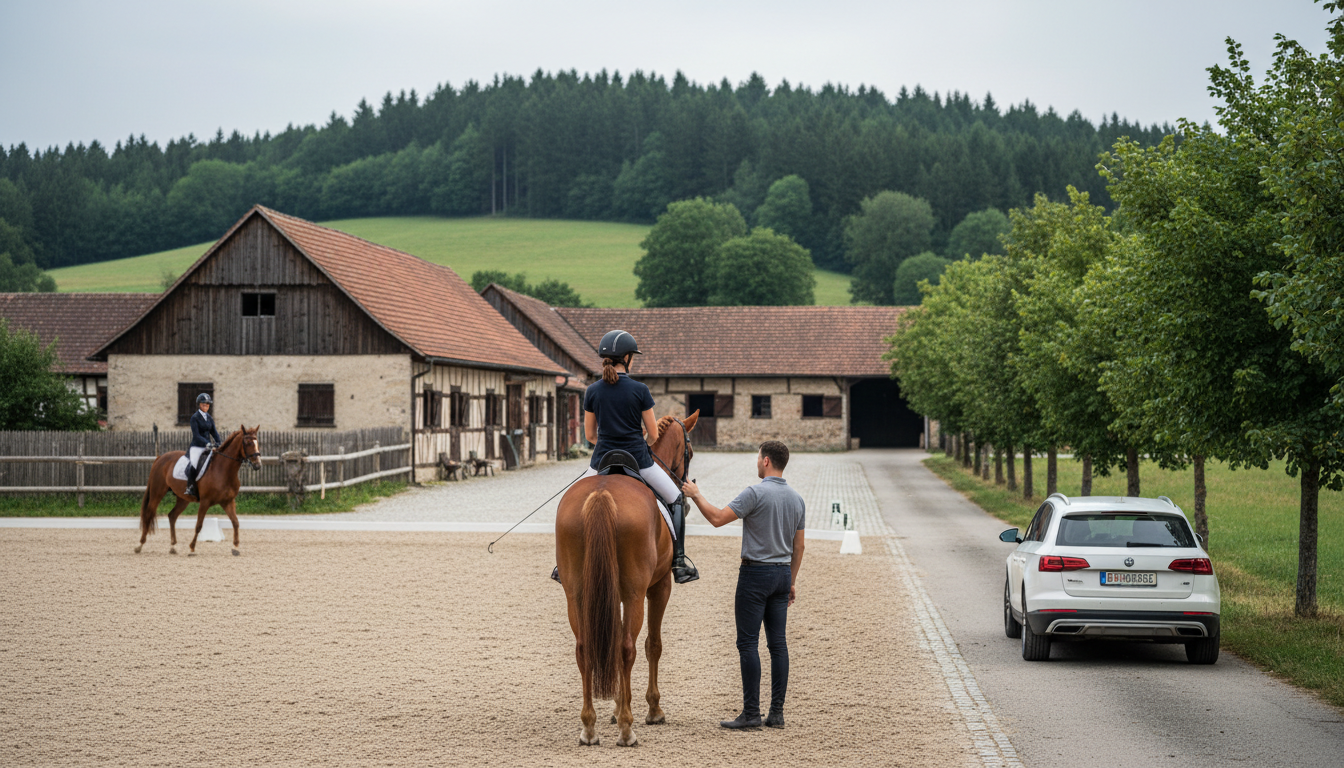
During a trial ride, you'll determine if the horse suits your intended purpose. Ask about its temperament, any known health issues, and potential medication treatments. Also pay attention to how it behaves during saddling and mounting. During a second appointment, you'll discuss any questions that remained unanswered after your initial visit. Expert accompaniment and a pre-purchase examination are important throughout this process.
What Questions to Ask the Seller
Does the Horse Suit Your Intended Purpose?
First, clearly state what you intend to use the horse for. According to the Schleswig-Holstein Bar Association, a German legal body, there's a risk that a horse may prove unsuitable for its intended purpose after purchase. They cite examples such as a riding pony for a child or a show jumper for competitive sport.
You can base your questions on this:
- “Is the horse suitable for the purpose I intend to buy it for?”
- “Are there any known health problems?”
- “Are there any known lameness issues or chronic illnesses?”
- “Has the horse been sedated or treated with medication?”
- “Are back problems known?”
Suitability for your purpose is not the same as the impression that the horse appears calm and healthy. According to the Bar Association, its temperament can completely change just a few days after handover, even if it seems docile and perfectly healthy at the time of purchase.
What's Known About Saddling and Mounting?
Specifically ask if the horse has ever bucked or reared while being saddled or when someone attempted to mount. The Schleswig-Holstein Bar Association describes such reactions in horses that change after handover: According to the Bar Association, bucking or rearing during saddling or mounting often indicates that the horse was previously sedated or medicated, for example, due to back pain.
This is not a diagnosis for an individual horse. A veterinarian will clarify whether there are underlying health reasons. The seller's statement and your observations do not replace a veterinary examination.
What to Look For During Your Trial Ride
The appointment doesn't just start with the riding. Observe how the horse reacts during saddling and mounting.
Separate your impression from the seller's statements: How does the horse behave during this appointment? What does the seller say about its behavior? Are there any open questions regarding treatment? A calm impression alone does not rule out a later change in temperament.
The Schleswig-Holstein Bar Association advises professional accompaniment when buying a horse. They emphasize that a pre-purchase examination by a specialist veterinarian is particularly important. The trial ride does not replace this examination.
According to the Bar Association, prior sedation or medication treatment can usually be detected through a blood sample. This analysis is not part of the standard scope of a pre-purchase examination. You should explicitly request it from your veterinarian.
How to Prepare for a Second Trial Ride
Arrange the second appointment with the seller and mention any points that remained open after the first visit. Your intended use, observed behavior, and health questions remain the starting point.
For the discussion, you can group these points:
- Reiterate what you intend to use the horse for.
- Discuss any open questions about its behavior during saddling and mounting.
- Ask about any unresolved information regarding illnesses or treatments.
- Coordinate the participation of your expert companion.
- Discuss the pre-purchase examination with the veterinarian and explicitly commission any desired blood test.
Even during the second appointment, keep questions about suitability and health separate from the good feeling you get while riding.
Clarify Documents Before Purchase
In Germany, a horse purchase by handshake is theoretically possible, according to the Schleswig-Holstein Bar Association. However, if defects appear later, this can create an almost insurmountable problem of proof for the buyer. The Bar Association recommends having the purchase contract reviewed by a lawyer beforehand.
Have the examination protocol handed over immediately after the examination and the purchase contract immediately after signing. The Bar Association justifies this advice by stating that lameness or chronic illnesses can be retrospectively entered into documents.
Common questions
Is a calm impression during the trial ride sufficient?
No. According to the Schleswig-Holstein Bar Association, the horse's temperament can completely change just a few days after handover, even if it appears docile and perfectly healthy at the time of purchase.
What could bucking during saddling or mounting after purchase mean?
According to the Schleswig-Holstein Bar Association, bucking or rearing during saddling or mounting often indicates that the horse was previously sedated or medicated, for example, due to back pain. The health assessment is the veterinarian's responsibility.
Is a blood test for medication part of the pre-purchase examination?
According to the Schleswig-Holstein Bar Association, this analysis is not part of the standard scope. However, prior sedation or medication treatment can usually be detected through a blood sample. You should therefore explicitly request it from your veterinarian.
What should I discuss before the second trial ride?
State your intended use and any open questions regarding behavior, health, and potential treatments. Also, coordinate the participation of your expert companion with the seller.
Sources
- Einem geschenkten Gaul… Beim Pferdekauf Rat einholen - Rechtsanwaltskammer Schleswig-Holstein (23. April 2026)
Written by Equidara editorial team. Last checked: 24 October 2026.
Fachlich geprüft von Melissa Hinze, Pferdezüchterin und Pferdehändlerin, Gründerin von Equidara.
- Monthly Horse Costs: Board, Feed, Farrier, and Other Expenses — Boarding fees, feed, and hoof care can be estimated within certain cost ranges. On top of that, you'll need to factor in vet bills, insurance, and potential extra services. Here's how to differentiate between monthly costs and per-appointment expenses.
- Buying Your First Horse: Checklist and Questions for the Seller — Proper preparation and asking the right questions will help you find the perfect first horse. Use this practical checklist for the viewing, trial ride, and vet check.
- Finding the Right Livery Yard: How to Compare Services and Prices Effectively — From stable type to indoor arenas and extra services: A 2015 Swiss study revealed the factors influencing livery prices. Here's how to compare different yards using consistent criteria.
- The Horse Pre-Purchase Exam: Explaining the Basic and Extensive PPE — The basic Pre-Purchase Exam (PPE) covers the clinical examination, while the extensive PPE includes X-rays. Learn what's examined and how to clarify the scope, commission, and cost coverage in advance.
Related
- Buy horses — Horses for sale from all over the world, with transport search.
- Purchase contract template — Template for horse and saddle to fill out.
- List your horse internationally — Post your horse distributes the listing to many portals.