
Buying & Selling
The Horse Pre-Purchase Exam: Explaining the Basic and Extensive PPE
The basic Pre-Purchase Exam (PPE) covers the clinical examination, while the extensive PPE includes X-rays. Learn what's examined and how to clarify the scope, commission, and cost coverage in advance.
Equidara editorial team · 10 October 2026 · 4 min read
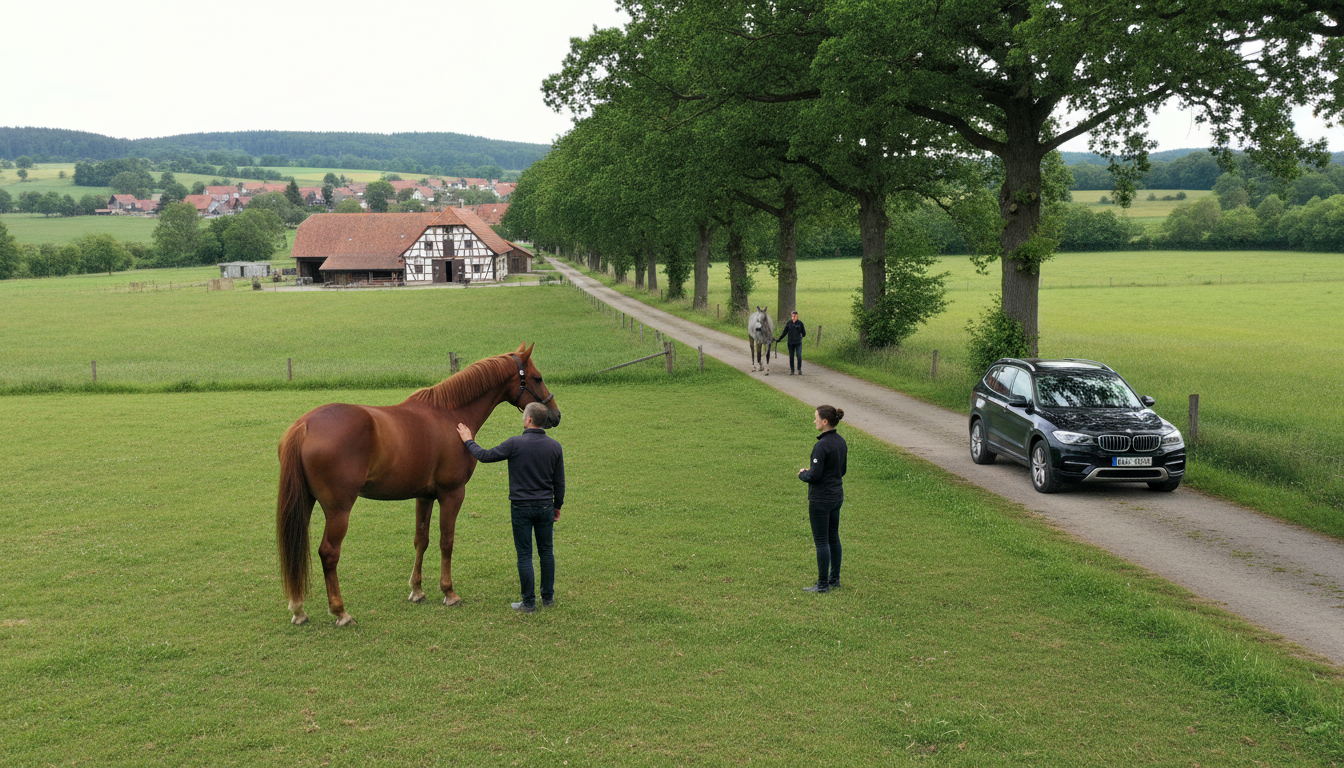
The basic Pre-Purchase Examination (PPE) is a clinical examination without X-rays. The extensive PPE supplements this with a radiological examination, according to Praxis Tierarzt Bauer. It can be commissioned by either the buyer or the seller. Typically, the buyer, as the commissioning party, pays, but a different cost distribution is possible. It's important to understand the limitations of the examination. According to Kanzlei Fritz, the PPE reflects the horse's current health status. It is not a prognosis for the horse's future development. All sources mentioned here are from Germany.
Basic and Extensive PPE: What's Included?
Initially, these terms only indicate whether X-rays are part of the examination's scope. The specific components to be commissioned are individually agreed upon by the owner or buyer with the veterinarian, explains Praxis Tierarzt Bauer. Therefore, don't just discuss the terms "basic" or "extensive PPE," but rather the precise scope.
The Clinical Examination
The specialist magazine WESTERNREITER of the Erste Westernreiter Union Deutschland describes several components of the clinical examination. It begins with identity verification using the equine passport and microchip, as well as the known medical history. Age, sex, breed, color, and markings are also documented.
According to this description, the examination includes:
- General Condition: Vital signs, mucous membranes, lymph nodes, overall condition, body condition score, skin, and coat.
- Heart and Respiration: Examination of the respiratory system and auscultation of the heart and lungs.
- Locomotor System: Assessment of conformation, palpation of the limbs, hoof examination, and observation of movement in a straight line and on a circle. Flexion tests are performed if necessary.
- Eyes and Teeth: Examination of the eyes with an ophthalmoscope, if necessary in a darkened room. The teeth are checked for alignment, dental age, wear, and anomalies.
The clinical examination program at Praxis Tierarzt Bauer additionally includes neurological examinations and an examination of the external genitalia. The Pferdeklinik, whose guide appears at pferde-klinik.de, describes its standardized clinical examination as an unalterable basis following a special form. Therefore, the basic clinical part cannot be reduced there.
X-rays in the Extensive PPE
According to this Pferdeklinik, 18 specific X-ray views have been recommended in Germany since January 1, 2018. Additional views can be supplemented individually. The standard package listed by Praxis Tierarzt Bauer includes:
- 4 lateral views of the digits or fetlocks of all legs.
- 2 lateral views of the digits focusing on the front coffin joints.
- 6 hock views.
- 4 stifle views.
- 2 navicular bone views (Oxspring method).
According to Kanzlei Fritz, X-rays of the back are no longer part of the current standard. Therefore, clarify with your veterinarian which views your commission includes and which additional ones are planned.
What Additional Examinations Are Possible?
Additional examinations depend on the horse's intended use or any suspected issues. The specialist magazine WESTERNREITER mentions laboratory tests, advanced imaging, and stress tests for this purpose. Kanzlei Fritz lists ultrasound, endoscopy, a complete blood count (CBC), and a semen sample for breeding stallions as possible additions. Therefore, these examinations are not automatically part of every PPE.
The Pferdeklinik recommends, regardless of the horse's value, an additional blood sample for potential medication control. The reason given is that some medications can significantly alter a horse's appearance. According to their statement, the sample is usually not examined immediately. It is sent sealed to a specialized laboratory and stored there for six months.
For the selection of examinations and for specific questions, your veterinarian is your point of contact. Praxis Tierarzt Bauer explicitly refers to a discussion with their veterinarians for this purpose.
Who Commissions and Pays for the PPE?
Not only you as the buyer can commission the examination. The seller can also be the commissioning party. The Pferdeklinik therefore distinguishes between a buyer's PPE, a seller's PPE, and a general purchase examination. The commissioning party confirms the scope of the examination with their signature. Regardless, according to the clinic's statement, the buyer also has a right to be presented with the findings.
According to the article "Ankaufsuntersuchung (AKU): Röntgenbefunde, Klassen & Haftung," cost coverage is a matter of negotiation. Typically, the buyer pays if they are the commissioning party. However, buyers and sellers can agree otherwise.
The specialist magazine WESTERNREITER advises documenting the scope of the examination and cost coverage in writing before the PPE. Furthermore, a contract between the buyer and the veterinarian should be in place before the examination begins. This contract should regulate the scope, purpose, liability agreements, and costs. For legal questions regarding such agreements, consult a lawyer.
Clarify Procedure and Documents in Advance
The specialist magazine WESTERNREITER recommends the PPE after viewing and test riding, but before the final purchase agreement. The examination should take place in a calm environment, preferably in the horse's familiar surroundings and in daylight.
After the examination, WESTERNREITER advises that you should receive a complete written report, all X-ray images, and other findings. Keep these documents for future comparisons and discuss the findings with your veterinarian.
Common questions
What is the difference between the basic and extensive PPE?
According to Praxis Tierarzt Bauer, the basic PPE includes the clinical examination without X-rays. The extensive PPE supplements this with a radiological examination. You agree on the specific scope with your veterinarian.
Can the seller also commission the examination?
Yes. A Pferdeklinik therefore distinguishes in its guide between a buyer's PPE, a seller's PPE, and a general purchase examination. According to their statement, the buyer also has a right to be presented with the findings.
Who pays for the Pre-Purchase Examination?
According to the article "Ankaufsuntersuchung (AKU): Röntgenbefunde, Klassen & Haftung," the buyer typically pays as the commissioning party. Deviating agreements are possible. The specialist magazine WESTERNREITER advises documenting cost coverage in writing beforehand.
Does the PPE say anything about future health?
According to Kanzlei Fritz, the PPE is a snapshot of the current health status and not a prognosis for future development. Your veterinarian is your point of contact for interpreting the findings.
Sources
- Ankaufuntersuchung (AKU) - Kanzlei Fritz
- Erste Westernreiter Union Deutschland e. V. – Fachmagazin WESTERNREITER: Die Ankaufsuntersuchung beim Pferd
- Pferde-Kaufuntersuchung - Tierarzt Bauer
- pferde-klinik.de
- Ankaufsuntersuchung (AKU): Röntgenbefunde, Klassen & Haftung
Written by Equidara editorial team. Last checked: 10 October 2026.
- The Pre-Purchase Exam: Why X-ray Grades Are a Thing of the Past (Since 2018) — "What class is the horse?" is the most common question when buying a horse, and since 2018, it's the wrong one. The X-ray guidelines have abolished these classes. Here's what you'll find in the report instead, who pays for the exam, and what should be included in the purchase contract.
- Kissing Spines in Horses: Correctly Interpreting X-ray Findings in the Pre-Purchase Exam — An abnormal X-ray alone doesn't tell you if your horse has back pain. Learn what signs to look for and why a clinical examination is crucial for proper assessment.
- Buying Your First Horse: Checklist and Questions for the Seller — Proper preparation and asking the right questions will help you find the perfect first horse. Use this practical checklist for the viewing, trial ride, and vet check.
- What is my horse worth? How to arrive at a justifiable price — A horse's value isn't determined by what you've invested. It's shaped by training, health, character, documentation, and demand. Learn how to evaluate these points individually, back them up with comparable listings, and create a price range that buyers will take seriously.
Related
- Buy horses — Horses for sale from all over Europe, with transport search.
- Purchase contract template — Template for horse and saddle to fill out.
- List your horse internationally — Post your horse distributes the listing to many portals.