
Animal welfare
Horse Sanctuaries: Checking Forever Homes, Funding, and Care
A permanent home requires clear agreements. Here's how to check what a farm promises, what you should clarify regarding payment, and which care regulations apply to an organic farm in Germany.
Equidara editorial team · 13 October 2026 · 4 min read
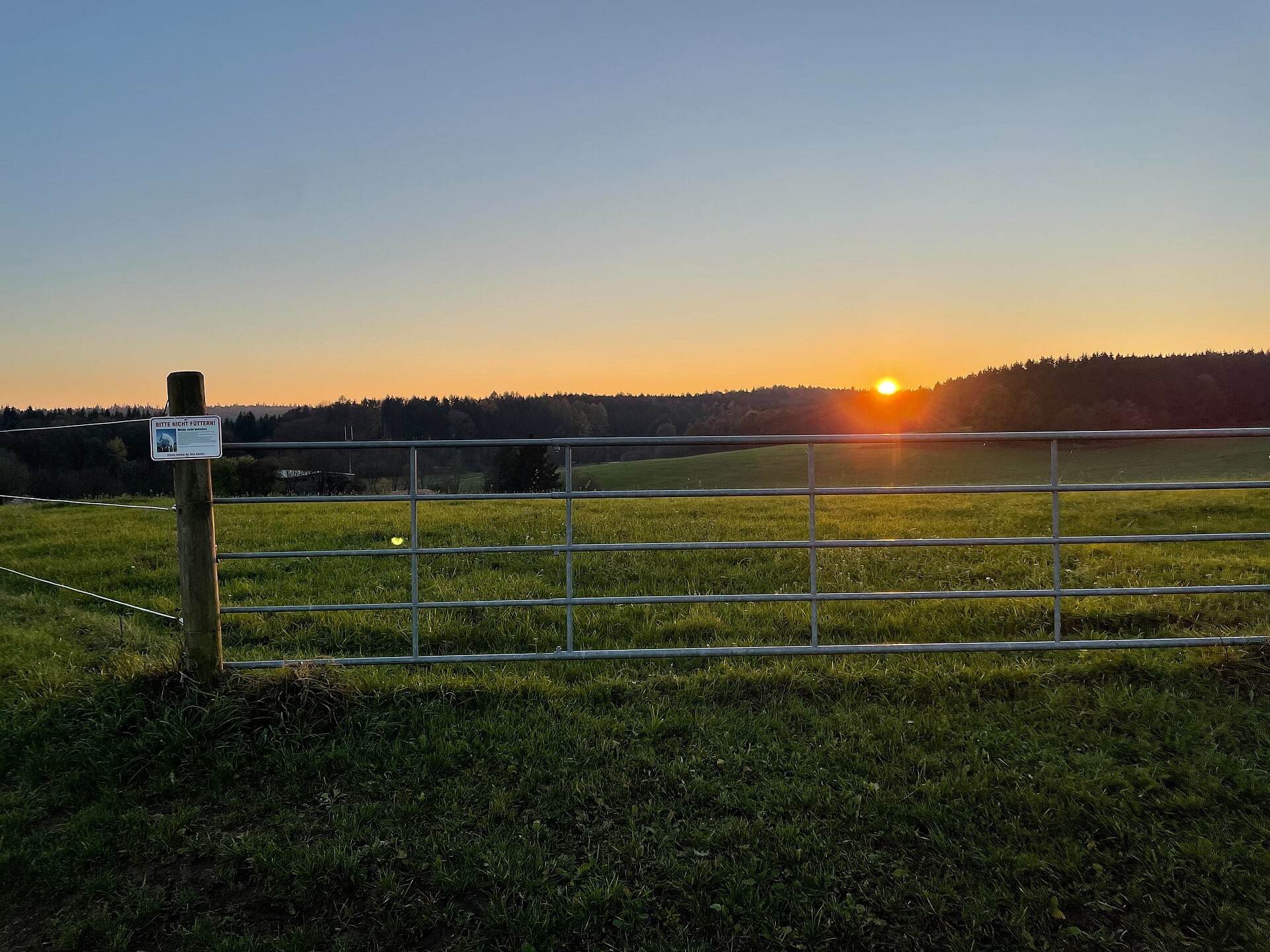
A horse sanctuary is intended to offer a horse a permanent home. If you are looking for such a place, clarify three things: what the farm understands by 'permanent,' how the boarding will be paid for, and how your horse is expected to live there. To assess the care, specific details about stabling, feed, social contact, and turnout are helpful. Organic regulations do not universally apply to every horse sanctuary.
What a Permanent Home Means
A permanent home refers to boarding that is not intended merely as a temporary solution. What the farm actually promises your horse is crucial. The term alone does not specify who will provide care or what conditions are attached to admission.
Have the offer explained to you before you make a decision. Distinguish between the commitment to duration and the payment arrangements: one concerns the intended duration of the boarding, the other its financing.
For the discussion, you can note down these points:
- What does 'permanent home' mean at this farm?
- Who will be responsible for your horse's boarding and care?
- What conditions apply to admission and continued stay?
- What payments are expected from you?
- What provisions are in place if the agreed-upon funding cannot be continued?
For legal questions regarding an agreement, consult a lawyer.
Funding: Livery is a Distinct Model
According to the Federal Agency for Agriculture and Food, paid boarding of external horses can be a profitable income alternative for agricultural businesses. Prerequisites include suitable conditions, such as pastures, stables, and farm-produced feed.
If a farm offers you paid boarding, have them explain what services the payment covers, such as accommodation and feeding. Payment for a livery spot is not yet a guarantee of a lifelong stay. Nor does a description of the farm replace these agreements.
Checking Care: What Applies to Organic Farms
The following information refers to organic horse keeping in Germany as described by the Federal Agency for Agriculture and Food. These are not general regulations for all horse sanctuaries.
According to the Federal Agency, horses not used for food production are generally exempt from the EU Organic Regulation and organic certification. This exception does not apply to farms that receive funding for an organic farming program. Such farms must keep livery and leisure horses according to the EU Organic Regulation. For farms affiliated with an organic farming association, the respective association guidelines apply. The Federal Agency also points out that the federal states differ in their organic control of horses.
Stabling, Social Contact, and Lying Area
For the described organic keeping, the stables must provide sufficient freedom of movement, according to the Federal Agency. They cite an open stable system with group housing as the most suitable. Individual stalls are permitted if they allow social contact.
Further requirements include:
- ample daylight and natural ventilation,
- unimpeded access to feeding and watering stations,
- a dry, bedded lying area.
Tethered stabling is not permitted in this organic keeping. The area requirements of the organic regulations are minimum standards. For animal-friendly stable dimensions, experts, according to the Federal Agency, recommend the more extensive guidelines of the Federal Ministry of Food and Agriculture (BMEL) for assessing horse keeping from an animal welfare perspective. According to these, the minimum stable area is calculated as twice the wither height squared. For a horse with a wither height of 1.7 meters, the Federal Agency specifies a minimum stable area of 11.5 square meters.
Feed and Outdoor Exercise
In the described organic livery horse keeping, roughage and regularly administered concentrated or mineral feed must be entirely of organic quality. At least 60 percent of the roughage must be produced on the farm itself or in cooperation with other farms in the region.
In summer, regular pasture access must be provided. If this is not possible, the horse must have constant access to a sufficiently large turnout area. Only organically managed areas may be used as pasture.
Assessing the Offer Based on Specific Details
During your visit, have them show you how the care details are implemented. Compare them with what the farm offers for your horse: Where does it lie, how does it access feed and water, how does it get social contact, and what outdoor areas are available?
Distinguish verifiable information from general terms. 'Sanctuary' describes the intended purpose of a place, but neither the care nor the agreements regarding duration and payment.
Common questions
Is a paid livery spot the same as a permanent home?
No. Payment concerns the financing of the boarding. The promise of a permanent home concerns its intended duration. Clarify both separately with the farm.
Do organic regulations apply to every horse sanctuary?
Not universally. According to the Federal Agency for Agriculture and Food, horses not used for food production are generally exempt from organic certification in Germany. This exception does not apply to farms with funding for an organic farming program. For farms of an organic farming association, the respective association guidelines apply. In addition, the federal states differ in their organic control of horses.
Are individual stalls permitted in the described organic keeping?
Yes, if they allow social contact. According to the Federal Agency for Agriculture and Food, the stables must provide sufficient freedom of movement. They cite an open stable system with group housing as the most suitable.
What applies there if no pasture access is possible in summer?
In the described organic horse keeping, the horse must then have constant access to a sufficiently large turnout area. Only organically managed areas may be used as pasture.
Sources
- Bundesanstalt für Landwirtschaft und Ernährung, Informationsportal Ökolandbau.de: Pensionspferdehaltung auf dem Öko-Betrieb – ergänzende Que (11.10.2024)
- Titelfoto: Jason912, Wikimedia Commons
- Lizenz des Fotos: CC BY-SA 4.0

Written by Equidara editorial team. Last checked: 24 October 2026.
Fachlich geprüft von Melissa Hinze, Pferdezüchterin und Pferdehändlerin, Gründerin von Equidara.
- EU Animal Transport Regulation: Travel Times and Controls for Slaughter Horses — In Germany, strict transport regulations apply to slaughter horses. Find out what travel times are permitted, which authorities conduct checks, and what documents you need to carry with you.
- Illegal Horse Trading: How to Verify Provenance and Documents — Official and media reports describe cases where equine passports and lab reports are alleged to have been manipulated. Here's what you can check regarding identity, provenance, and health records, and what a suspicion does not yet prove.
- Wild Horses in Europe: Populations, Conservation Status, and Management — Not every free-roaming horse herd automatically holds legal wild status. Discover how populations differ and how the Dülmen Wild Horses are preserved and managed.
- Equine Passport: Who Issues It for Sport Horses, Breeding Stock, and Leisure Horses — Every horse kept in the EU requires registration and an equine passport. The issuing authority depends on whether your horse is registered as a breeding animal or a sport horse. This also includes transponders and entry into the database.
Related
- Wanted — Who is currently looking for something — from horse to stall.
- Find animal transport — Move your animal arranges transports in Europe.
- Buy and pay safely — How to recognize fraud schemes.