
Animal welfare
Illegal Horse Trading: How to Verify Provenance and Documents
Official and media reports describe cases where equine passports and lab reports are alleged to have been manipulated. Here's what you can check regarding identity, provenance, and health records, and what a suspicion does not yet prove.
Equidara editorial team · 21 October 2026 · 5 min read
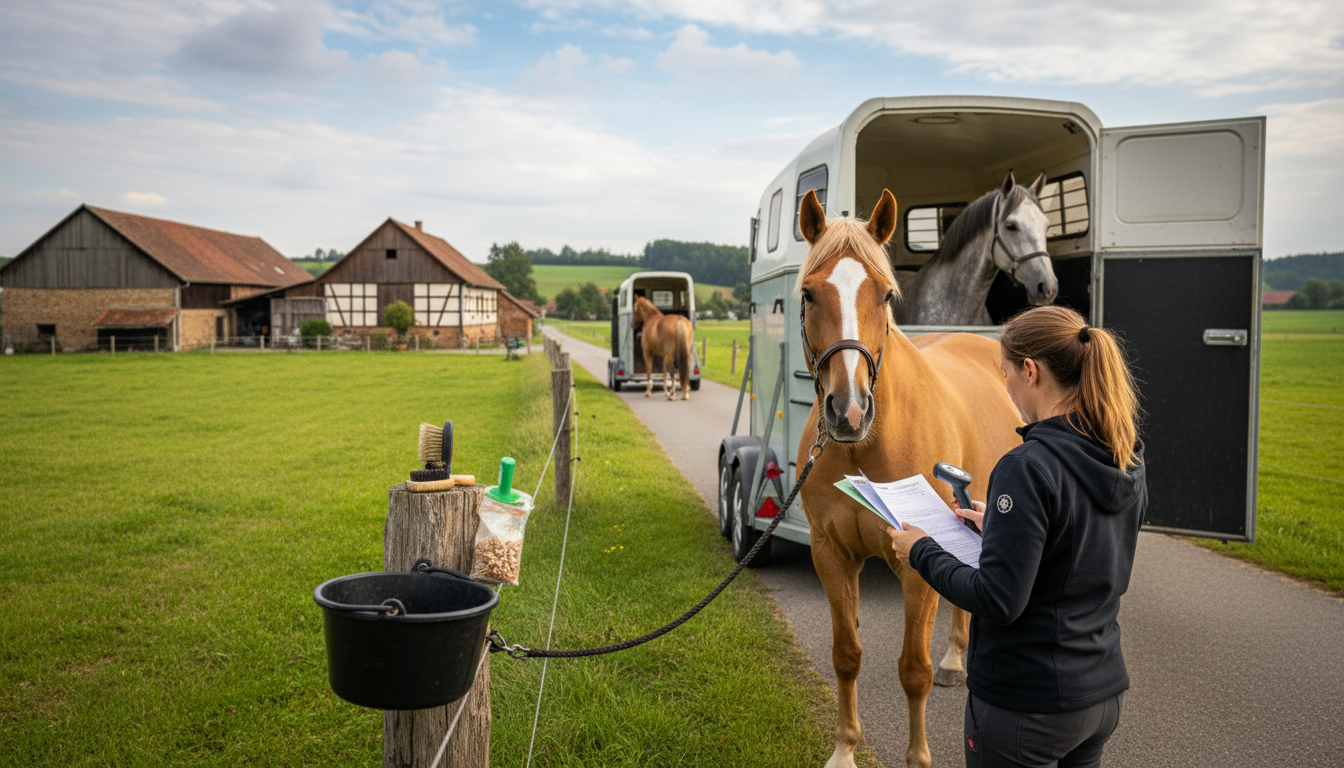
When buying a horse, check whether the equine passport truly belongs to the animal. For cross-border transport within the EU, also verify that health documents are present. Chip verification, comparison of the markings diagram, and the TRACES certificate are crucial for this. The Austrian Consumer Health Portal cites missing TRACES certificates and an unclear passport assignment as indicators of suspected fraud. Such an indicator is not yet proof of forgery.
What You Can Check Before Buying
The Austrian Consumer Health Portal describes identity checks and accompanying documents for horse purchases and transport. The regulations explained here apply to movements within the EU.
Does the Passport Belong to This Horse?
A presented passport alone does not answer this question. The crucial factor is whether it can be unequivocally assigned to the animal. The portal specifies checking the microchip and the markings diagram for this. This diagram illustrates the horse's markings.
For your verification, these points arise:
- Have it checked whether the microchip and equine passport match.
- Compare the characteristics recorded in the markings diagram with the horse.
- Treat an ambiguous assignment as a warning sign, not as proven fraud.
Which Documents Accompany EU Transport?
According to the portal, the provisions of Regulation (EU) 2016/429 apply to the movement and transport of horses, donkeys, zebras, and their crosses within the EU. This applies regardless of whether the purpose is commercial or private.
For these movements, the portal names two accompanying documents: the equine passport and the TRACES certificate, which the authority issues upon request. The certificate accompanies the animal throughout the entire transport. According to this explanation, a private purchase is generally no reason to omit the health certificate. Your local veterinary office can inform you if any special conditions apply to your specific transport.
According to the portal, the TRACES certificate includes:
- the premises of origin and the destination,
- the means of transport,
- a precise description of the animal,
- proof of the required health requirements.
Check this information along with the horse's identity. It's not just about whether a document exists, but also which animal, which origin, and which transport it describes. Before issuance, according to the portal, the official veterinarian inspects the animals, their identity, and the documents. Only healthy, disease-free, and transport-fit animals may be transported.
How Documents Are Alleged to Have Been Manipulated
Official and media reports describe various methods. Not every case is closed. In some instances, authorities describe investigation results; in others, it concerns allegations that are not proven.
Netherlands: Altered Information on Suitability for Slaughter
The Dutch Public Prosecution Service reported in April 2015 on investigations against a business and its owner. The suspicion concerned document forgery as well as irregular trade and transport involving dozens of horses without valid passports.
According to the reported suspicion, the accused purchased horses unsuitable for human consumption at markets. He is alleged to have altered their passports so that they appeared suitable on paper. Subsequently, the horses were exported and sold.
The Public Prosecution Service described forged equine passports as a potential risk to food safety. They also saw it as a distortion of competition, as horses suitable for human consumption fetch higher prices than unsuitable ones.
France: Description and Document Did Not Match
According to the French Ministry of Agriculture, an investigation began in February 2020 with a report from the competent authority in the Jura department. A horse had been brought to a slaughterhouse. Its description did not match the accompanying document.
According to the Ministry's report, investigations confirmed that false documents were produced and used. Those investigated included a dealer and a veterinarian. Four suspects were brought before the judiciary, according to the report, to be formally charged in the investigative proceedings. The report thus describes the status of an ongoing investigation, not a conviction. Until a final judgment, the presumption of innocence applies to the accused.
Germany: Allegedly Forged Lab Reports
The NDR reported on a trial before the Regional Court in Lower Saxony. The public prosecutor accuses a 59-year-old woman of particularly serious document forgery in 335 cases, involving 335 horses.
The accused is alleged to have submitted forged lab results between 2020 and 2023 to save on examination costs and obtain export certificates from the veterinary office of the Grafschaft Bentheim district. According to court information reported by the NDR, an employee of the veterinary office filed a complaint after noticing identical values in the reports over several years. The report describes the status during the ongoing trial, meaning an indictment and not a proven guilt. Until a final judgment, the presumption of innocence applies.
Why Health Status Must Also Be Checked
The Dahme-Spreewald district in Brandenburg reported in 2010 on investigations into cases of infectious anemia. Connections to legal and illegal horse movements from Romania had emerged. Horses were brought to Germany without the prescribed animal health certificates and examinations. The case exemplifies why missing health documents pose a risk.
According to this district information from 2010, infected animals remain lifelong virus carriers and can infect other equids. The district recommended closely examining the health status when purchasing and checking documents for authenticity. You should discuss which examinations are appropriate for your horse and its origin with your veterinarian. Identity, provenance details, and health records are separate checkpoints: none should be omitted just because another document is present.
Common questions
Is the equine passport sufficient for horse transport within the EU?
For movements within the EU, the Austrian Consumer Health Portal specifies an official TRACES certificate in addition to the equine passport. It accompanies the animal throughout the entire transport. According to the portal, these provisions apply regardless of whether the purpose is private or commercial. Your local veterinary office can inform you if any special conditions apply in individual cases.
How do I check if the passport belongs to the horse?
The Austrian Consumer Health Portal mentions microchip verification and comparison of the markings diagram. According to the portal, an ambiguous assignment is an indicator of suspected fraud. However, it is not yet proof of forgery.
What information does a TRACES certificate contain?
According to the Austrian Consumer Health Portal, it contains the premises of origin, destination, means of transport, a precise description of the animal, and proof of the required health requirements.
Do forgeries only affect equine passports?
No. In the trial described by the NDR in Lower Saxony, the accusation concerns forged lab reports, which were allegedly used to obtain export certificates. The report describes the status during the ongoing trial, meaning an indictment and not a proven guilt.
Sources
- Österreichisches Verbrauchergesundheitsportal: Pferdekauf im Internet – Warnung; Identitätskontrolle, Gesundheitsbescheinigung und grenzüber
- Niederländische Staatsanwaltschaft: Ermittlungsbericht zu mutmaßlich gefälschten Pferdepässen und verschleierter Schlachteignung – prosecuti (25.04.2015)
- Französisches Landwirtschaftsministerium: Behördenbericht über Ermittlungen zu Pferdehandel und gefälschten Identifizierungsdokumenten – agr (13.04.2022)
- Landkreis Dahme-Spreewald: Vorsicht beim Kauf von Pferden – behördliche Warnung vor illegalen Verbringungen und infektiöser Anämie – dahme-s (10.12.2010)
- Prozess: 335 Pferde mit gefälschten Unterlagen ins Ausland verkauft? | ndr.de (13.01.2026 (genannter Sendetermin))
Written by Equidara editorial team. Last checked: 24 October 2026.
Fachlich geprüft von Melissa Hinze, Pferdezüchterin und Pferdehändlerin, Gründerin von Equidara.
- Equine Passport: Who Issues It for Sport Horses, Breeding Stock, and Leisure Horses — Every horse kept in the EU requires registration and an equine passport. The issuing authority depends on whether your horse is registered as a breeding animal or a sport horse. This also includes transponders and entry into the database.
- Buying a Horse Abroad: Essential Questions to Ask Before Your Deposit — Within the EU, the paperwork is straightforward: an equine passport, health certificate, and TRACES. But the questions you ask *before* that are far more critical. Clarifying who is selling you the horse, which legal jurisdiction applies, who arranges the pre-purchase exam, and the payment schedule will determine your legal standing should a dispute arise.
- Cross-Border Horse Transport: Paperwork, Haulers, and Liability in Case of Damage — Transporting a horse across an internal EU border requires an equine passport, an animal health certificate, and a TRACES entry. Equally important is your choice of hauler, as legal liability only covers a fraction of a valuable horse's worth.
- Equine Passport and Slaughter Exclusion: What Treatment and Sale Mean — A necessary treatment can permanently alter your horse's slaughter status. Here, you'll learn how exclusion differs from a withdrawal period and which passport entries are crucial when selling.
Related
- Wanted — Who is currently looking for something — from horse to stall.
- Find animal transport — Move your animal arranges transports in Europe.
- Buy and pay safely — How to recognize fraud schemes.