
Animal welfare
Equine Passport: Who Issues It for Sport Horses, Breeding Stock, and Leisure Horses
Every horse kept in the EU requires registration and an equine passport. The issuing authority depends on whether your horse is registered as a breeding animal or a sport horse. This also includes transponders and entry into the database.
Equidara editorial team · 6 October 2026 · 2 min read
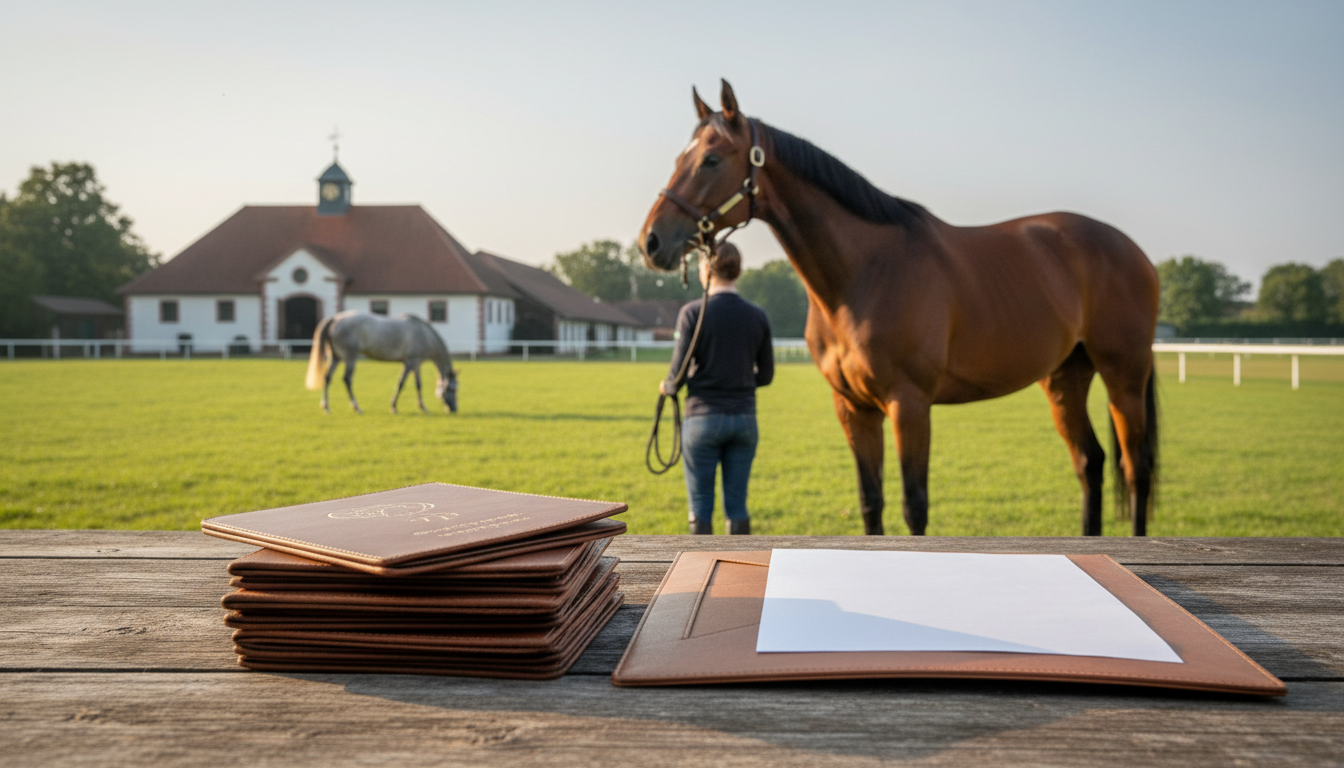
Your horse is identified through its registration and equine passport. According to the Bayerische Landesanstalt für Landwirtschaft, every equine kept in the European Union has been required to be registered since July 1, 2009. This applies to both horses and donkeys. Upon registration, an equine passport is issued as the sole identification document. The authority that issues it depends on whether your horse is registered as a breeding animal, a sport horse, or is considered a leisure horse.
Registration, Passport, and Transponder
The Bayerische Landesanstalt für Landwirtschaft outlines not only the equine passport but also the identification and entry into the database. Every equine born after July 1, 2009, must be identified with a transponder. The details for each registered equine are entered into the central HITier database.
The registration requirement applies to all equines kept in the European Union. The transponder requirement, however, depends on the date of birth: it affects equines born after July 1, 2009.
Who Issues Passports for Sport Horses
If a horse is registered with the Fédération Équestre Internationale, or FEI, as a competition or racehorse, the Deutsche Reiterliche Vereinigung e. V., or FN, issues the equine passport in Germany. This responsibility is tied to registration with the FEI. Therefore, it does not automatically apply to every horse that is ridden or participates in races.
What Rules Apply to Breeding Horses
According to the Bayerische Landesanstalt für Landwirtschaft, equine passports for registered breeding horses are issued exclusively by recognized breeding associations. These passports include a zootechnical certificate with details on breed and pedigree.
A breeding association may only issue such a passport under two conditions:
- The breeding horse belongs to a member of the association.
- It is entered in the association's studbook or will be entered there as part of the registration process.
These rules also apply to imported breeding horses.
Which Authorities Are Authorized to Issue Leisure Horse Passports
Leisure horses are considered those not registered as either breeding or sport horses. Their equine passports may only be issued by authorities commissioned by the veterinary administration for this purpose.
For leisure horses kept in Bavaria, the Landesverband Bayerischer Pferdezüchter e. V., based in Munich, is commissioned. This also applies to imported horses kept in Bavaria after customs clearance.
An equine passport for leisure horses must not contain a zootechnical certificate with details on breed or pedigree.
Common questions
Does every horse in the European Union need to be registered?
Yes. According to the Bayerische Landesanstalt für Landwirtschaft, every equine kept in the European Union has been required to be registered since July 1, 2009. This applies to both horses and donkeys.
Which horses must be identified with a transponder?
According to the Bayerische Landesanstalt für Landwirtschaft, every equine born after July 1, 2009, must be identified with a transponder.
Who issues passports for FEI-registered sport horses in Germany?
For sport horses registered with the FEI as competition or racehorses, the Deutsche Reiterliche Vereinigung e. V. issues the equine passports, according to the Bayerische Landesanstalt für Landwirtschaft.
Does a leisure horse passport contain a zootechnical certificate?
No. According to the Bayerische Landesanstalt für Landwirtschaft, an equine passport for leisure horses must not contain a zootechnical certificate with details on breed or pedigree.
Sources
Written by Equidara editorial team. Last checked: 6 October 2026.
- EU Animal Transport Regulation: Travel Times and Controls for Slaughter Horses — In Germany, strict transport regulations apply to slaughter horses. Find out what travel times are permitted, which authorities conduct checks, and what documents you need to carry with you.
- Life After the Finish Line: Retraining, Rehoming, and Sanctuary Projects for Ex-Racehorses — Thoroughbreds often retire from racing at a young age, requiring expert retraining before they can transition into new careers as riding horses. We take a closer look at the dedicated retraining programs, rehoming efforts, and sanctuary projects that give these incredible athletes a second chance at life.
- Buying a Horse Abroad: Essential Questions to Ask Before Your Deposit — Within the EU, the paperwork is straightforward: an equine passport, health certificate, and TRACES. But the questions you ask *before* that are far more critical. Clarifying who is selling you the horse, which legal jurisdiction applies, who arranges the pre-purchase exam, and the payment schedule will determine your legal standing should a dispute arise.
- Your Horse Purchase Agreement: What to Include and Where Templates Fall Short — Even a verbal agreement is legally binding when buying a horse. But putting it in writing is crucial for proving what was agreed upon later. We'll cover the eight essential points for every horse purchase agreement, explain why a warranty disclaimer isn't a catch-all, and when it's smart to consult an attorney.
Related
- Wanted — Who is currently looking for something — from horse to stall.
- Find animal transport — Move your animal arranges transports in Europe.
- Buy and pay safely — How to recognize fraud schemes.