
Animal welfare
Equine Passport and Slaughter Exclusion: What Treatment and Sale Mean
A necessary treatment can permanently alter your horse's slaughter status. Here, you'll learn how exclusion differs from a withdrawal period and which passport entries are crucial when selling.
Equidara editorial team · 22 October 2026 · 4 min read
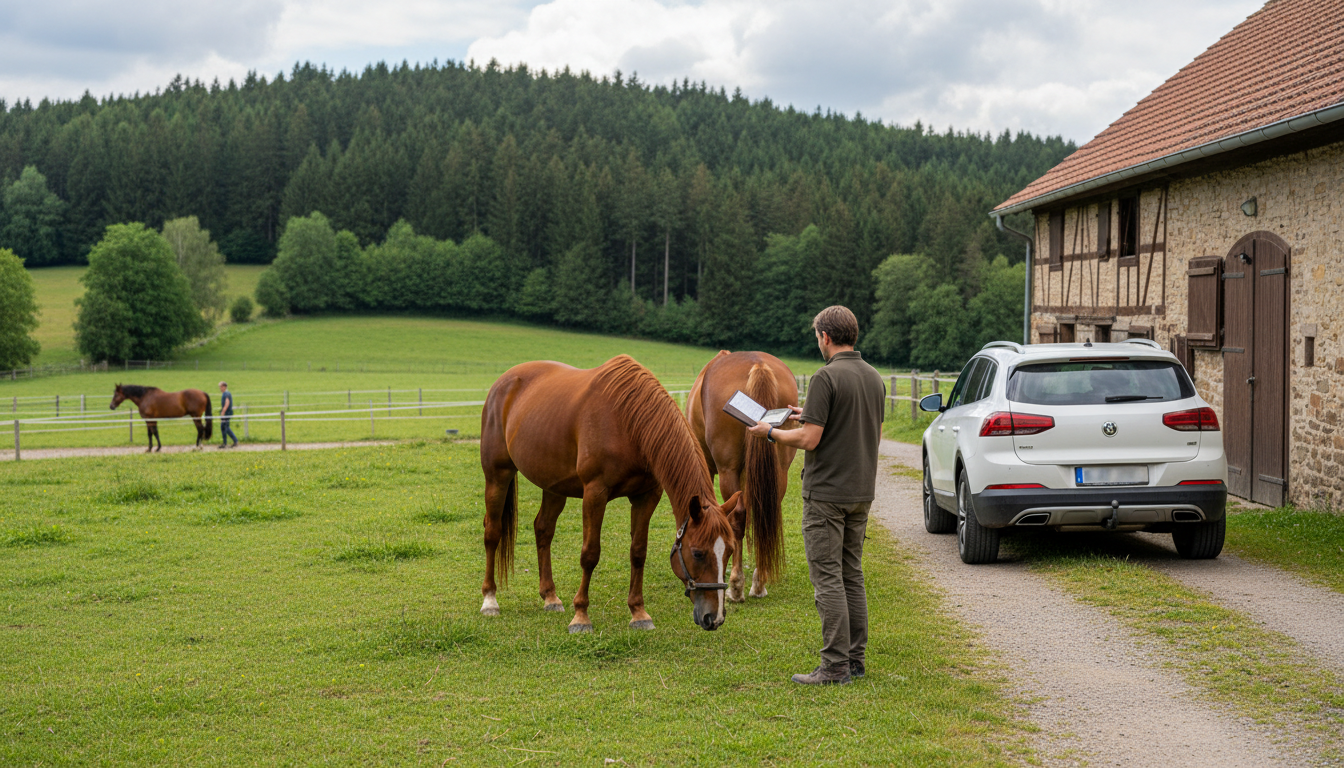
Administering medication can lead to your horse being permanently excluded from the food chain. Not every treatment has this consequence. Depending on the medication, a six-month withdrawal period with a specific passport entry may apply instead. According to the Paint Horse Club Germany, a recorded slaughter exclusion is irrevocable. Therefore, a sale does not revoke it. It's crucial to distinguish between the slaughter status and other entries in the Equine Passport.
What Legal Basis Applies in the EU
Commission Implementing Regulation (EU) 2021/963 of 10 June 2021 governs the identification and registration of equidae in the EU, as well as the templates for their identification documents. Articles 38 and 39, among others, are particularly relevant for slaughter status.
According to Recital 1, operators keeping equidae must ensure their individual identification. This includes an individual code, a properly completed identification document valid for life, and a uniquely linked physical identification method or other identification means.
However, the Equine Passport is not just for identifying a horse. According to the Paint Horse Club Germany, it is also part of the food chain information. The German association explains the EU requirements. Its information regarding the passport issuing body and the HI-Tier database applies to procedures in Germany.
Slaughter Exclusion and Withdrawal Period Are Not the Same
According to the Paint Horse Club Germany, equidae are generally considered destined for slaughter for human consumption under Article 38(1). The exception is irrevocable exclusion through a completed and signed entry in Section II Part II of the passport, in accordance with Annex II Part 1.
This describes the legal slaughter status. It does not mean that a horse is actually intended for slaughter.
When a Treatment Permanently Changes the Status
According to the Paint Horse Club Germany, the responsible veterinarian must check, in accordance with Article 39, whether the horse is intended for slaughter for human consumption or excluded from it. Depending on the medication, they may then have to record a slaughter exclusion in the Equine Passport.
According to the association's explanation, the exclusion is carried out by the responsible veterinarian or the competent authority, in accordance with Article 38(1)(a) and (b). Owners or representatives of an owner community can therefore no longer determine the status themselves. Furthermore, according to the association, the veterinarian may not declare the horse a non-food-producing animal solely at the owner's request. For this to happen, a necessary treatment must require the exclusion in accordance with Article 38 in conjunction with Article 39.
When a Six-Month Withdrawal Period Applies
Recital 5 of the EU Regulation describes a six-month withdrawal period for medicinal products containing substances considered essential for the treatment of equidae or offering additional clinical benefit compared to other available treatments.
According to the Paint Horse Club Germany, in this case, the date of the last administration is entered in the passport. This entry is not a permanent slaughter exclusion. You should clarify with your veterinarian how a specific treatment is to be classified.
What Is Important When Selling
As a buyer or seller, you should look at two separate entries in the passport:
- Is the horse irrevocably excluded from slaughter for human consumption?
- Is the date of the last administration recorded for a six-month withdrawal period due to a treatment?
A change of ownership alters the passport data but does not reverse a slaughter exclusion. Conversely, you should not confuse a recorded withdrawal period with a permanent exclusion.
According to the Paint Horse Club Germany, keepers must report changes to passport data to the passport issuing body within the specified timeframe. The association explicitly mentions changes to slaughter status, change of ownership, slaughter, and the death of the animal.
Reporting Status Changes to the Passport Issuing Body
For procedures in Germany, as described by the Paint Horse Club Germany, the owner or operator, as the keeper, must submit the Equine Passport to the competent issuing body for a status change within a maximum of seven days. This allows the association to enter the data into HI-Tier.
According to their explanation, the passport issuing bodies are responsible for entering data into HI-Tier. However, ensuring that the necessary information reaches them is the responsibility of the animal keeper, not the breed association. Therefore, the entry in the passport and the notification to the passport issuing body are two separate steps. For legal questions regarding a specific sale, a lawyer can assist you.
Common questions
Does every medication administration lead to permanent slaughter exclusion?
No. According to the Paint Horse Club Germany, depending on the medication, a slaughter exclusion may be entered, or, for a six-month withdrawal period, the date of the last administration.
Can I have my horse excluded solely at my own request?
According to the Paint Horse Club Germany, no. The veterinarian may not enter the exclusion solely at the owner's request, but only if a necessary treatment requires it under Article 38 in conjunction with Article 39 of Implementing Regulation (EU) 2021/963.
Does a sale revoke the slaughter exclusion?
No. According to the Paint Horse Club Germany, the exclusion is irrevocable. A change of ownership is a change in passport data and must be reported to the passport issuing body within the specified timeframe.
What deadline does the Paint Horse Club Germany specify for status changes?
For procedures in Germany, the keeper must, according to the association, submit the passport to the competent issuing body for a status change within a maximum of seven days.
Sources
- Europäische Union – Durchführungsverordnung (EU) 2021/963, insbesondere Artikel 38–42 zu Schlachtstatus und Arzneimittelbehandlung (eur-lex. (10.06.2021)
- Paint Horse Club Germany – Änderungen beim Equidenpass; unwiderruflicher Schlachtausschluss, Wartezeit und Meldung an die Passstelle (phcg.i (16.10.2022)
Written by Equidara editorial team. Last checked: 24 October 2026.
Fachlich geprüft von Melissa Hinze, Pferdezüchterin und Pferdehändlerin, Gründerin von Equidara.
- Equine Passport: Who Issues It for Sport Horses, Breeding Stock, and Leisure Horses — Every horse kept in the EU requires registration and an equine passport. The issuing authority depends on whether your horse is registered as a breeding animal or a sport horse. This also includes transponders and entry into the database.
- Illegal Horse Trading: How to Verify Provenance and Documents — Official and media reports describe cases where equine passports and lab reports are alleged to have been manipulated. Here's what you can check regarding identity, provenance, and health records, and what a suspicion does not yet prove.
- Stallion Licensing and Horse Purchase: What Breeding Value, Registration, and Papers Tell You — In Germany, a licensed riding horse stallion is not yet definitively approved for breeding. Here's how to understand licensing, studbook registration, performance tests, breeding certificates, and breeding value when buying a stallion.
- Buying a German Warmblood: Hanoverians, Rhinelanders, and Breeding Documents — Hanoverians and Rhinelanders are described as sport horses and versatile all-rounders. Discover which contacts and breeding documents the Hanoverian Verband offers.
Related
- Wanted — Who is currently looking for something — from horse to stall.
- Find animal transport — Move your animal arranges transports in Europe.
- Buy and pay safely — How to recognize fraud schemes.