
Health & Therapies
Equine herpes: what EHV-1 and EHV-4 cause and what to do if you suspect it
Many horses carry equine herpesvirus without showing it. We explain the forms of EHV-1, why the thermometer matters so much, how you can prevent infection and what the 2021 outbreak in Valencia showed.
Equidara editorial team · 22 September 2026 · 7 min read
Equine herpesvirus 1 (EHV-1) can cause respiratory disease in horses, abortion in pregnant mares and a neurological form with paralysis. The first sign is usually fever. If you take the temperature when you suspect something, separate the horse and call the vet straight away, you slow the spread. To prevent it, keep stress low, keep new horses apart at first and pay attention to hygiene in the yard.
EHV-1 and EHV-4
According to the Merck Veterinary Manual, EHV-1 and EHV-4 are among the most important causes of viral respiratory disease in horses. EHV-4 almost always stays in the respiratory tract. EHV-1, on the other hand, enters the bloodstream and can reach the spinal cord or the uterus from there. The guidelines of the American Association of Equine Practitioners (AAEP) describe these forms:
- respiratory disease with fever, coughing and nasal discharge, mainly in weaned foals and yearlings
- abortion, usually from the seventh month of pregnancy and without warning, two weeks to several months after infection
- the neurological form, equine herpesvirus myeloencephalopathy (EHM), with an unsteady gait mainly in the hind limbs, dribbling urine and, in severe cases, inability to get up
- rarely, disease in newborn foals infected in the womb; they usually die within three days
According to the consensus statement of the American College of Veterinary Internal Medicine (ACVIM), about ten percent of infected horses develop EHM, older horses more often.
Transmission and latency
EHV-1 spreads through nasal secretions, direct contact and droplets when horses cough and snort. According to the FEI investigation report on the 2021 outbreak, such droplets can travel up to five metres. Buckets, tack, hands and clothing also carry the virus. Aborted foetuses and placentas contain particularly large amounts of it.
Most horses are infected in their first months of life. After that the virus stays in the body, according to the ACVIM probably for life. Stress can reactivate it, for example transport, mixing horses from different yards or competition. The horse then sheds virus again, even without looking ill.
Fever comes first
According to the FEI report, raised temperature is the most common early sign of EHV-1 infection. The AAEP defines fever as above 38.6 °C. It often comes in two waves: one to two days after infection, before coughing and nasal discharge, and again after six to seven days. Sometimes fever is the only sign. Neurological signs are often, but not always, preceded by fever. That is why the AAEP recommends taking the temperature twice a day in horses at risk of infection.
If a horse sways, moves unsteadily behind, dribbles urine or cannot get up, call the vet immediately.
What to do if you suspect a case in the yard
- Call the vet. For the PCR test they will usually take a nasal swab and a blood sample.
- Move the horse to a separate stable or area, ideally an isolation stable.
- Stop all horse movements until the results are in.
- Take the temperature of every horse in the yard twice a day and write the readings down.
- Use separate buckets, head collars and grooming kit for each horse. Wash your hands between horses.
The ACVIM recommends lifting quarantine 28 days after the last new case. According to the AAEP, this period starts again with every new fever, abortion or neurological case. According to the ACVIM, no medicine has been shown to prevent EHM once symptoms have started. Your vet decides how to treat.
Prevention in everyday life
Because stress can reactivate the dormant virus, the Merck Veterinary Manual advises avoiding stress caused by housing and management. The ACVIM names weaning, mixing horses from different groups and transport as triggers. So avoid unnecessary journeys, moves to new yards and changes of group.
According to Merck, new horses and horses returning from a competition or another yard should be kept apart for 21 days before they join the others, especially pregnant mares. Merck also advises keeping pregnant mares as a group of their own, away from weanlings, yearlings and horses coming out of training. The ACVIM recommends dividing them into small, physically separated groups for the whole pregnancy.
For competition horses, the FEI requires good hygiene at all times, including at home and during transport. Under its rules, head collars, lead ropes, rugs, tack and buckets belong to one horse only, and each horse drinks and eats from its own buckets rather than from a shared trough. According to the ACVIM, EHV-1 can remain infectious in water for up to 14 days. Wash your hands before touching another horse. Horses that are not normally kept together should have as little nose-to-nose contact as possible. Transporters and stables are cleaned and disinfected before another horse uses them.
Also make sure the stable is well ventilated. According to the FEI report, the risk of infection rises with the number of horses sharing the same airspace, and poor ventilation makes it worse.
Take the temperature twice a day before a competition or a journey and when a new horse arrives. The FEI report calls daily temperature checks an important preventive measure because they give early warning and allow a horse with fever to be isolated in time. If a horse has a fever, separate it at once and call the vet.
What the FEI requires at competitions
International competitions are governed by the FEI Veterinary Regulations in their 2026 edition. The FEI Veterinary Committee considers stricter biosecurity measures the best way to prevent and contain EHV-1 outbreaks, the FEI stated in 2022. In addition to the hygiene rules in the previous section, the rules include:
- In the three days before travelling and on the showground, the temperature is taken twice a day and recorded in the FEI HorseApp.
- Horses with more than 38.5 °C or neurological signs are tested by PCR for EHV-1 and equine influenza.
- If a horse arrives with more than 38.5 °C, all horses from the same transporter count as in-contacts and go to the isolation stables.
- Horses with neurological EHV-1 and their in-contacts are not admitted.
National competitions follow the rules of the national federation, in Germany for example the FN.
The 2021 outbreak in Valencia
On 20 February 2021 the FEI learned that eleven horses had fever at the CES Valencia Spring Tour; by the end of the same day there were 20. Horses with fever had been on the showground as early as 14 February, and on that same day 57 horses left the event without the required EU health certificates.
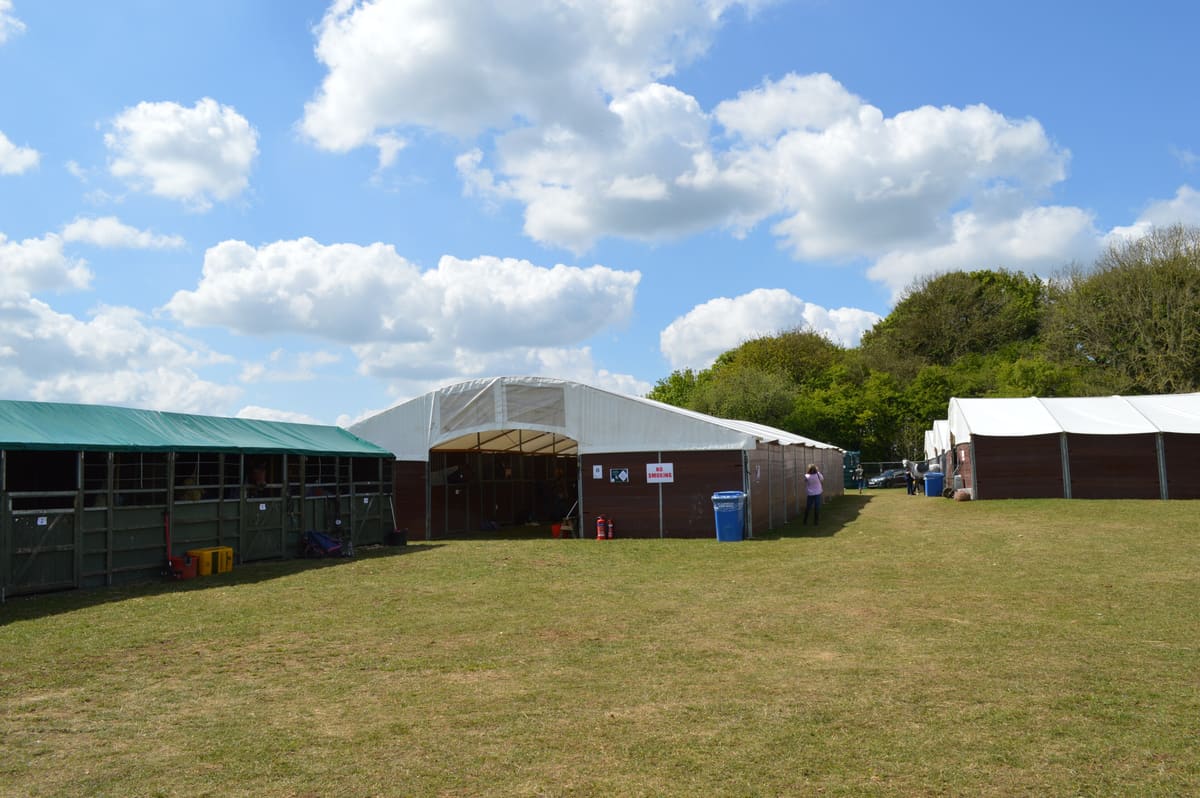
The outbreak began in tented stables with more than 400 boxes and closed walls, where the air circulated poorly. According to information received by the FEI, the examination on arrival was not carried out correctly. In mainland Europe 18 horses died, and there were confirmed cases in ten countries. The FEI cancelled all international events in mainland Europe from 1 March to 11 April 2021. Its report states that the disease itself was not the problem, but the way it was managed. Since 2022, daily temperature checks have been compulsory at FEI events worldwide.
Buying and transport
Neither the ACVIM nor the AAEP recommends an EHV test as part of the pre-purchase examination: for horses without signs, both advise against PCR screening. Instead, ask whether the yard has recently had fever, abortions or EHV cases. If the horse comes from a yard whose EHM quarantine has just been lifted, the AAEP advises keeping it separate for 28 days.
Transport means stress. Take the temperature twice a day in the days before loading, as the FEI requires before competitions. If the horse has a fever, call the vet and postpone the journey. When you book transport, for example through Move-your-animal, ask whether horses from other yards will travel on the same vehicle.
In the new yard, keep the horse apart for 21 days and keep taking its temperature twice a day.
Common questions
How do I recognise an EHV-1 infection?
The most common early sign is fever, above 38.6 °C according to the AAEP. Coughing and nasal discharge may follow, and in the neurological form an unsteady gait behind, dribbling urine or inability to get up. If there is fever with a suspicion of EHV, or any neurological sign, call your vet at once.
How can I prevent EHV-1 in the yard?
Keep stress low, because stress can reactivate the virus in a horse that carries it. Give every horse its own buckets, head collar and grooming kit, wash your hands between horses and make sure the stable is well ventilated. Keep pregnant mares as a group of their own, away from the other horses.
What does the FEI require at competitions to prevent EHV-1?
In the three days before travelling and on the showground, the temperature is taken twice a day and recorded in the FEI HorseApp. Horses with more than 38.5 °C or neurological signs are tested by PCR for EHV-1 and equine influenza. Hygiene rules also apply, such as separate buckets and equipment for each horse.
How long should a newly bought horse be quarantined?
The Merck Veterinary Manual gives 21 days before a new horse joins the others, especially pregnant mares. If it comes from a yard whose EHM quarantine has just been lifted, the AAEP recommends 28 days. Take its temperature twice a day during this time.
Sources
- Equine Herpesvirus Infection (Merck Veterinary Manual, Kara M. Lascola, Stand Juli 2026)
- AAEP Infectious Disease Guidelines: Equine Herpesvirus (EHV-1 & EHV-4) (American Association of Equine Practitioners)
- Updated ACVIM consensus statement on equine herpesvirus-1 (Journal of Veterinary Internal Medicine, ACVIM) (18.03.2024)
- Report into outbreak of Neurological Equine Herpes Virus (EHV-1) in Mainland Europe, Part 1 (FEI)
- FEI publishes final part of EHV-1 Report on 2021 outbreak in mainland Europe (FEI) (30.06.2022)
- FEI Veterinary Regulations 2026, gültig ab 1. Januar 2026 (FEI) (01.01.2026)
- Titelfoto: Jonathan Hutchins, Wikimedia Commons
- Lizenz des Fotos: Creative Commons CC BY-SA 2.0

Written by Equidara editorial team. Last checked: 30 September 2026.
- Strangles in horses: how it spreads, the signs and what buyers should know — Strangles is a highly contagious infection of the upper airways. We explain the signs, how it spreads and what silent carriers are, and show how to bring a new horse onto your yard safely.
- Commission on Horse Purchases: When it Arises, Who Pays It, and When It's Forfeited — A commission isn't simply earned because someone offered assistance. It requires a brokerage agreement, a clear link between the activity and the successful sale, and a contract that is actually concluded. If you're working for both parties, you must disclose this, or your claim to the commission is at risk.
- Rescinding a Horse Purchase: Deadlines, Burden of Proof, and How the Reversal Process Works — Rescinding a contract requires a defect that was already present at the time of handover. This is almost always preceded by a deadline for the seller to remedy the defect, followed by a reversal process where the buyer doesn't just return the horse. Learn what applies when, and which mistakes can cost you your claim.
- Warranty in Horse Sales: Private, Commercial, and When You're Considered a Professional Seller — Between private individuals, warranties can be excluded, but not when selling to a consumer. The grey area lies in determining when someone is considered a professional seller, a decision not made by a form, but by the overall circumstances.
Related
- Services and jobs — Farrier, vet, training, horse share.
- Saddles and accessories — For the horse: saddles, rugs, bridles, hoof protection.