
Buying & Selling
Crafting Your Horse Ad: Structure, Honest Descriptions, and Phrases to Avoid
Potential buyers decide in mere seconds whether to read on. You won't capture their attention with superlatives, but with immediately visible key data and verifiable qualities. Here's a five-block structure, complete with a copy-and-paste template.
Equidara editorial team · 6 October 2026 · 3 min read
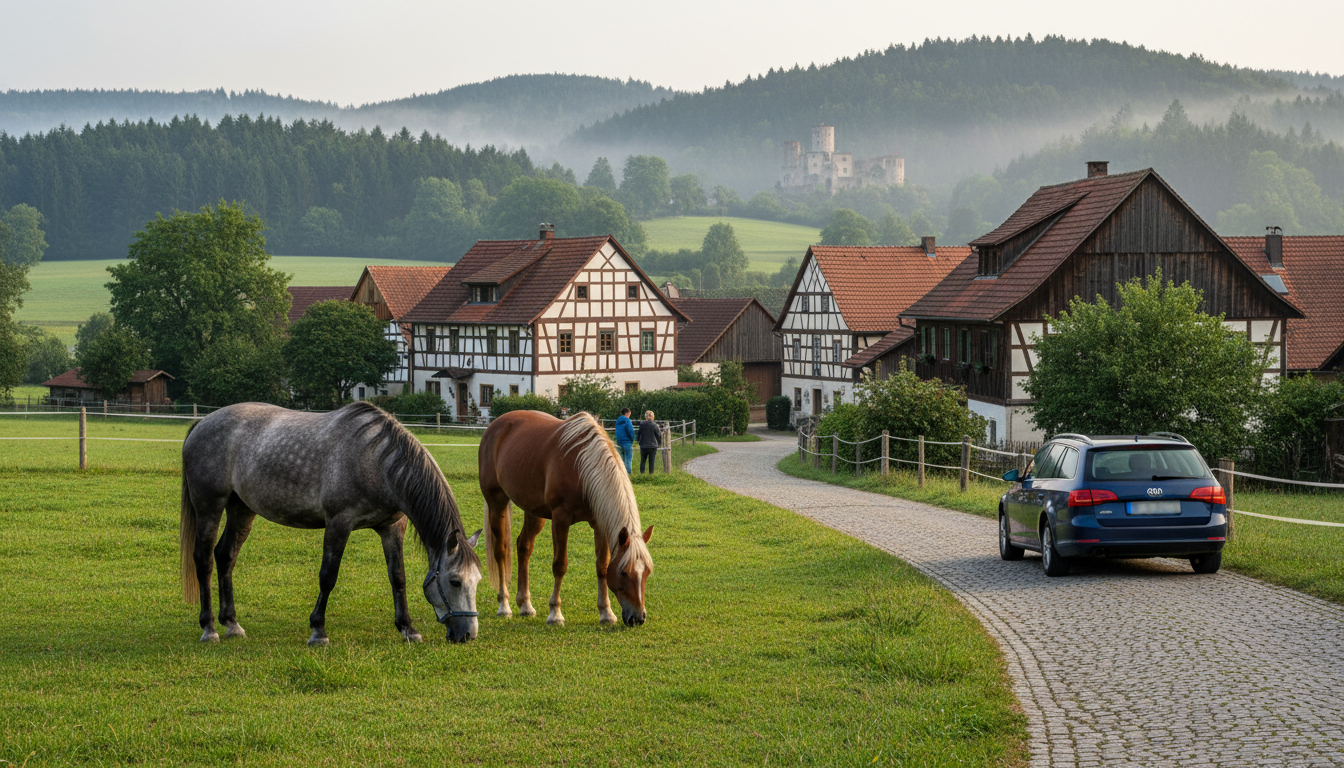
A well-crafted ad doesn't just sell a horse; it ensures the right people call and the wrong ones don't. This is more valuable than it sounds: every viewing can take up half your day, and disappointment on the yard can significantly reduce your negotiating power.
The Five-Block Structure
1. The Headline. A single line that clearly states the essentials: breed, sex, age, training level, and discipline. 'Six-year-old Hanoverian Gelding, Show Jumping up to L-level' communicates more in seven words than any 'Dream horse seeks forever home.'
2. Key Details. Include breed, year of birth, height in centimeters, color, discipline, training level, price, and location with postcode. These details belong at the top, not buried at the end, and they should be complete. Any missing information will lead to questions, often only from those truly invested.
3. Temperament and Rideability. Who is this horse suitable for? What has it experienced, and what hasn't it? Think about loading, farrier, hacking, traffic, interaction with other horses, and behavior with different riders. This is also where you should honestly address any areas that aren't perfect, in a straightforward manner.
4. Training and Achievements. List previous trainers, competition results with dates and locations, and current training status. Be specific, not subjective: 'Placed twice in A-level show jumping in 2025' is verifiable; 'very successful' is not.
5. Health and Documentation. Include details like the passport (Equidenpass), life number, studbook registration, vaccination status, and any existing veterinary examinations. If a pre-purchase examination (PPE) has been performed, state when, by whom, and that the documentation is available upon request.
A Template to Copy
``` [Age]-year-old [Breed] [Sex], [Discipline] [Level]
Breed: Year of Birth: Height: cm Color: Discipline: Training Level: unbroken / backed / Novice / Elementary / Medium / Advanced / Grand Prix Price: Location: Postcode, City, Country
Temperament and Rideability: … Training and Achievements: … Health and Documentation: …
Contact: Name · Phone · Email · Languages ```
Words That Speak Volumes
These terms are specifically sought after by buyers because they describe rather than merely advertise: 'safe to hack (alone/in company)', 'suitable for beginners', 'good to load', 'good for the farrier', 'experienced competitor', 'easy to handle in the stable', 'goes barefoot', 'can be turned out alone'.
Each of these words is a promise. What you write becomes an agreed-upon characteristic if it's included in the contract, and you'll be liable for it, even with a warranty exclusion. Therefore, only include what you can demonstrate during a viewing.
Phrases That Harm Your Ad
- 'Dream horse,' 'one of a kind,' 'heart horse.' These convey emotion but no actual information, and you'll find them in almost every other ad.
- 'Only to the best of homes.' While well-intentioned, this phrase often deters serious buyers as it can suggest a difficult or overly emotional sale process.
- 'Price Negotiable' (VB) without a figure. This leads to wasted inquiries because potential buyers can't gauge if a conversation is worthwhile.
- 'X-ray Class 1.' X-ray grading classes no longer exist following the 2018 guidelines. Advertising with this primarily indicates that your documentation is outdated. Instead, state when the examination was performed and that the findings are available.
- Sugar-coating known issues. 'Needs an experienced rider' is fine if it's true. Omitting it will only bring the issue to light during the viewing, often negatively.
Photos and Contact
Your ad is found through its pictures and the horse is 'bought' through its text. Which shots to include is covered in the article on Sales Photos and Videos.
For contact, it helps to immediately state how and when you can be reached and which languages you speak. If you're advertising internationally, be prepared for inquiries in other languages, using correct equestrian terminology: an automatic translation can quickly turn a 'Wallach' into a 'Gelding' and 'angeritten' into something nobody understands.
After Publication
Ads get outdated. If the training level, price, or health status changes, update it before anyone travels to view the horse. And once the horse is sold, take the ad down: nothing frustrates potential buyers more than a horse that's no longer available.
Common questions
What should be included in the first part of a horse ad?
A headline with breed, sex, age, training level, and discipline, immediately followed by key details: year of birth, height, color, training, price, and location. Anything missing will lead to questions, and many interested parties won't bother to ask, they'll just scroll on.
Are statements in the ad legally binding?
They can become so. What is promised about the horse and included in the contract becomes an agreed-upon characteristic, and the seller is liable for it, even with an agreed-upon warranty exclusion. Therefore, only include what you can demonstrate during a viewing.
Should I include known weaknesses in the ad?
Yes, phrased objectively. They will come up during the viewing or the pre-purchase examination anyway, but then with the impression that you tried to conceal them. Honest limitations also filter out inquiries that won't lead anywhere.
Why shouldn't I advertise with 'X-ray Class 1'?
Because these classes no longer exist since the 2018 X-ray guidelines. Today, findings are described and assessed in relation to the planned use. It's more useful to state when the examination was performed and that the documentation is available.
Is it better to state a price or 'Price Negotiable' (VB)?
A specific figure. 'Price Negotiable' without an amount leads to wasted inquiries because potential buyers can't assess if a conversation is worthwhile. State a price you can justify, and determine your negotiation margin for yourself beforehand.
Sources
- § 434 BGB – Sachmangel und vereinbarte Beschaffenheit (gesetze-im-internet.de)
- § 5 UWG – Irreführende geschäftliche Handlungen (gesetze-im-internet.de)
- Röntgenleitfaden-2018 bringt einige Neuerungen (Bundestierärztekammer) (26.10.2017)
- Durchführungsverordnung (EU) 2021/963 zur Identifizierung und Registrierung von Equiden (EUR-Lex)
Written by Equidara editorial team. Last checked: 8 October 2026.
- Selling Photos & Videos: Showcasing Your Horse Without Hiding Anything — What buyers expect to see, why midday sun is the most common pitfall, how perspective can distort a horse's conformation, and what your video needs to show to be taken seriously.
- Selling Your Horse: The Order That Saves Time and Trouble — Ten steps from decision to handover. Following them in this sequence will help you craft better ads, receive more suitable inquiries, and avoid being caught without essential documents during viewings.
- Auction or Private Sale: Which Suits Which Horse — An auction promises pace and competition; a private sale gives you control over price and buyer. Which route pays off depends less on the horse than you might think, and more on time, nerves and your willingness to accept a fixed date.
- Your Horse Purchase Agreement: What to Include and Where Templates Fall Short — Even a verbal agreement is legally binding when buying a horse. But putting it in writing is crucial for proving what was agreed upon later. We'll cover the eight essential points for every horse purchase agreement, explain why a warranty disclaimer isn't a catch-all, and when it's smart to consult an attorney.
Related
- Buy horses — Horses for sale from all over Europe, with transport search.
- Purchase contract template — Template for horse and saddle to fill out.
- List your horse internationally — Post your horse distributes the listing to many portals.