
Buying & Selling
Auction or Private Sale: Which Suits Which Horse
An auction promises pace and competition; a private sale gives you control over price and buyer. Which route pays off depends less on the horse than you might think, and more on time, nerves and your willingness to accept a fixed date.
Equidara editorial team · 4 October 2026 · 3 min read
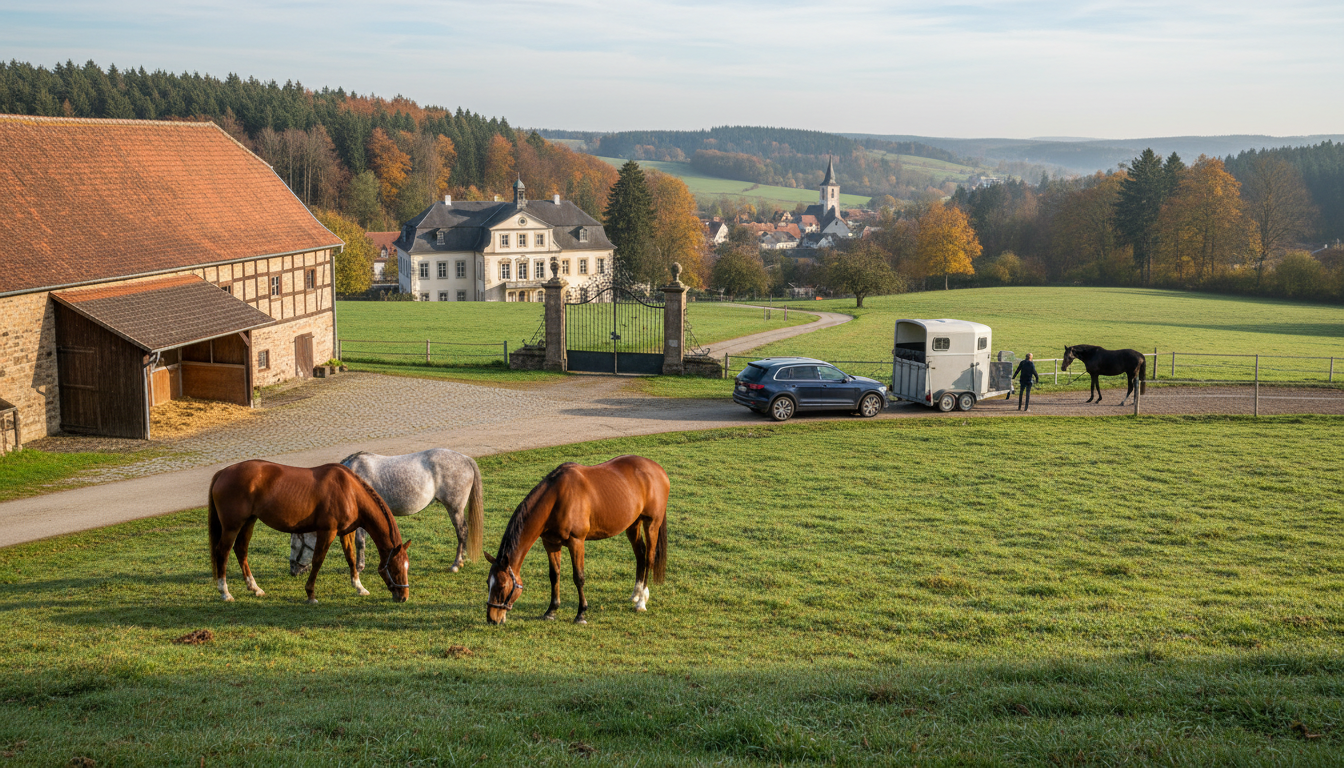
Both routes work, and both carry costs that are seldom fully on the table beforehand. The honest decision therefore doesn't start with “Which brings more money?”, but with “What happens if it doesn't work out?”.
What defines an auction
A contract is formed at the hammer fall (§ 156 BGB). Before that, a procedure set out in the terms of the auction house applies, and those terms vary considerably.
Typical sequence:
- Application. You register the horse with its papers and a video. The auction team decides whether to accept it. For higher-level auctions, horses are selected, not simply accepted.
- Preparation. The horse moves into the auction stables for several weeks, is schooled there, filmed and prepared for the catalogue.
- Presentation. Interested buyers view and try the horse in the days beforehand.
- Auction day. The highest bidder wins the hammer, provided any agreed reserve is met. Settlement runs through the auction house, which retains its commission.
An honest look at costs
Auctions typically incur several items: an entry or catalogue fee, stabling and preparation at the auction yard, transport there, veterinary checks and X‑rays for the catalogue, and a commission on the hammer price.
How high these items are is set by each auction house and published in its terms. Read them before you register — in full: they also say what happens if the reserve isn't met, who then bears the costs and whether the horse may be sold afterwards.
With a private sale these items disappear. Instead you bear the time: answering enquiries, coordinating appointments, accompanying viewings, negotiating.
What speaks for an auction
- Competition. Several interested parties on one day create a dynamic you don't get in a one‑to‑one negotiation.
- A fixed date. If you must sell for a specific reason, an auction gives you planning certainty.
- Professional presentation. Pros present the horse, which helps especially if you're not confident presenting it yourself.
- Reach. A catalogue reaches buyers who would never have found you.
What speaks for a private sale
- You choose the buyer. At the hammer it's the bid that decides, not your assessment of the person.
- No reserve risk. If a minimum price isn't reached the horse remains unsold, yet preparation costs have still been incurred.
- No commission.
- The horse stays at home. For sensitive horses, several weeks in unfamiliar surroundings is a real factor.
Which horse suits which route
An auction is a serious option for horses with a clear sporting profile, pedigree and results that a catalogue can highlight. The same applies to foals and yearlings from sought‑after lines, which have dedicated auctions.
For solid leisure horses, older horses and anything that needs explanation, a private sale is usually the better route. Conversation matters there, and an auction is the wrong format for that.
And for horses with limitations: a private sale lets you look for the right person instead of taking the highest bidder.
It’s worth preparing for both anyway
Whether auction or not, the preparatory work is the same: complete papers, current examinations, an honest video, a justified price. If you have that, you can decide. If you don't, you'll waste time either way.
How to arrive at a price you can justify is covered in the article Was ist mein Pferd wert. What should be in the contract is explained in the article about the Pferdekaufvertrag — because even after a hammer fall it applies: what was guaranteed counts.
Common questions
When does the purchase contract come into being at a horse auction?
With the hammer fall (§ 156 BGB). Before that, the procedure set out in the auction house’s terms applies. Those terms also govern what happens if an agreed reserve isn't met.
What costs are incurred at an auction?
Typically an entry or catalogue fee, stabling and preparation in the auction yard, transport, veterinary records for the catalogue and a commission on the hammer price. Each auction house sets the amounts itself and publishes them in its terms.
What happens if my reserve isn't reached?
Then the horse remains unsold, but the preparation costs have already been incurred. Whether a subsequent sale is possible and on what terms is stated in the auction terms. This point should be read carefully before registration.
For which horses is an auction worthwhile?
For horses with a clear sporting profile, pedigree and results a catalogue can point to, and for foals and yearlings from sought‑after lines. For horses that need explanation, a private sale is usually better.
Am I liable for defects after the hammer fall?
That depends on the auction terms and on who becomes the buyer’s contractual partner. Regardless, what was guaranteed in the catalogue or during the presentation can become the agreed condition.
Sources
- § 156 BGB – Vertragsschluss bei Versteigerung (gesetze-im-internet.de)
- § 433 BGB – Vertragstypische Pflichten beim Kaufvertrag (gesetze-im-internet.de)
- § 434 BGB – Sachmangel und vereinbarte Beschaffenheit (gesetze-im-internet.de)
Written by Equidara editorial team. Last checked: 6 October 2026.
- Selling Your Horse: The Order That Saves Time and Trouble — Ten steps from decision to handover. Following them in this sequence will help you craft better ads, receive more suitable inquiries, and avoid being caught without essential documents during viewings.
- Crafting Your Horse Ad: Structure, Honest Descriptions, and Phrases to Avoid — Potential buyers decide in mere seconds whether to read on. You won't capture their attention with superlatives, but with immediately visible key data and verifiable qualities. Here's a five-block structure, complete with a copy-and-paste template.
- Buying a Horse at Online Auction: Process, Deposit, Bidding and Fees — Want to buy a horse at an online auction? We walk you through the entire process – from registration and the deposit to bidding, the final hammer and all the fees involved.
- Selling Photos & Videos: Showcasing Your Horse Without Hiding Anything — What buyers expect to see, why midday sun is the most common pitfall, how perspective can distort a horse's conformation, and what your video needs to show to be taken seriously.
Related
- Buy horses — Horses for sale from all over Europe, with transport search.
- Purchase contract template — Template for horse and saddle to fill out.
- List your horse internationally — Post your horse distributes the listing to many portals.