
Buying & Selling
Selling Photos & Videos: Showcasing Your Horse Without Hiding Anything
What buyers expect to see, why midday sun is the most common pitfall, how perspective can distort a horse's conformation, and what your video needs to show to be taken seriously.
Equidara editorial team · 4 October 2026 · 4 min read
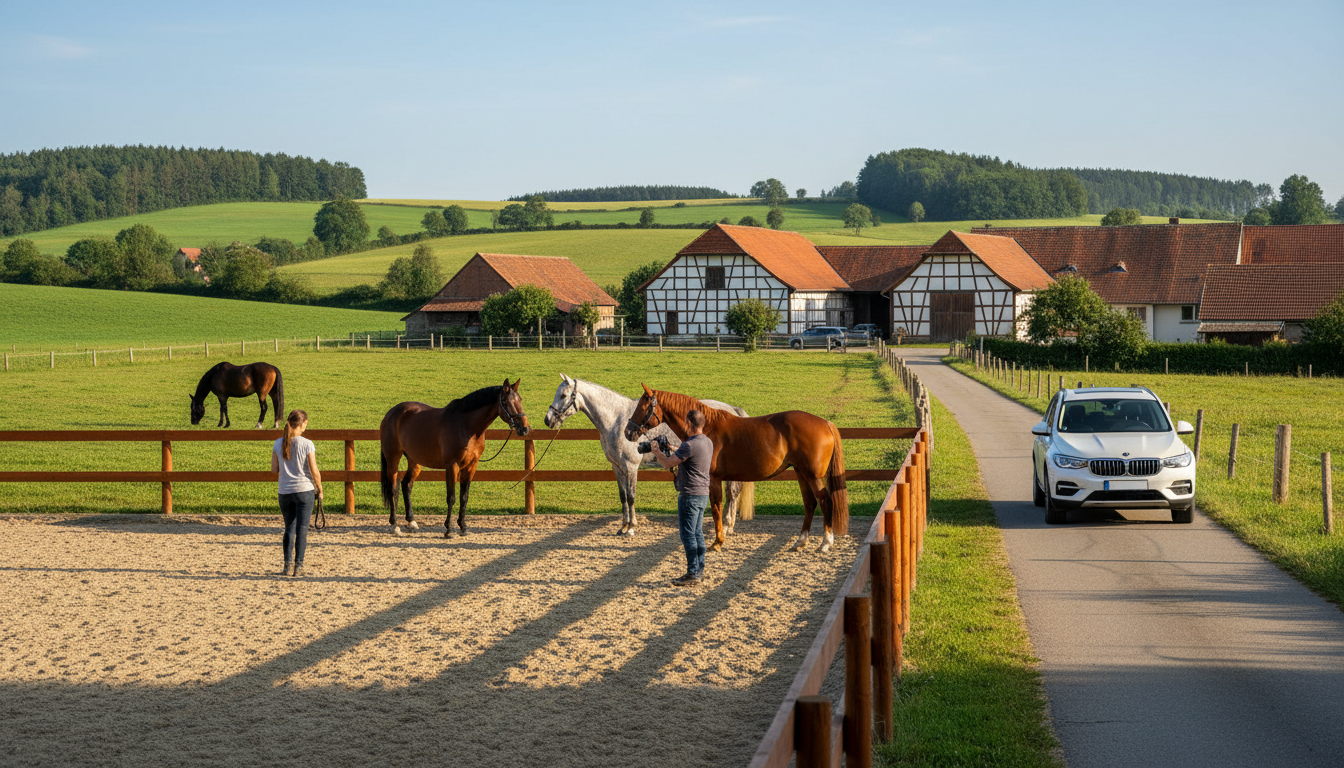
Photos open up an ad, but the video is what makes someone pick up the phone. Both can be done with a modern smartphone. It's rarely a technical issue, but almost always comes down to lighting, distance, and background.
What Buyers Expect to See
Experienced prospective buyers expect a certain set of shots. If any are missing, it can give the impression that something is being concealed.
- Conformation shot at a standstill, strictly from the side. The horse should be square, with all four legs visible, head slightly forward, ears attentive, and the camera perpendicular to the horse's longitudinal axis. This shot will be scrutinized the most.
- Headshot. Taken from a slight angle or in a semi-profile, with a clean halter, and sharp focus on the eye and nostrils.
- Movement in all three gaits, filmed perpendicular to the camera, so that rhythm and ground cover can be assessed. Include a sequence from the front and from behind to show straightness.
- Under saddle. Uncut passages on a circle or along the entire track, including transitions. If the horse jumps, show two to three consecutive jumps.
- Free schooling/lunging. In a paddock or arena, without excessive chasing. This demonstrates natural movement that can often be lost when the horse is on the lead.
Additionally, everyday moments can be helpful: mounting, loading, picking up hooves, or in the barn aisle.
Lighting: The Most Common Mistake
Direct midday sun is the primary reason for unusable footage. It creates harsh shadows under the belly, blows out light areas, and turns dark coat colors into featureless black patches.
Late morning, early evening, or an overcast sky are much better. Cloud cover acts like a giant diffuser: the light becomes soft, musculature remains defined, and both grey and black horses show up beautifully. The sun should be behind the camera, not behind the horse. Backlighting will turn your warmblood into a silhouette.
Artificial light in an indoor arena often casts a yellowish or greenish tint. Use an open doorway as a light source, or simply go outside. Flash photography is a no-go: it blinds the horse and makes its coat appear flat.
Background, Ground, Distance
A background should be unobtrusive. Manure piles, parked trailers, flapping tarps, other horses, or spectators will distract from your subject. Look for a quiet area: a hedge, a plain wall, or an empty field. The ground should be level; otherwise, the horse will appear to be standing uphill or downhill in the picture, which will be interpreted as a conformation fault.
Distance determines proportions. Shooting up close with a wide-angle lens will make the head appear large and the hindquarters small. Step further back and zoom in slightly to maintain accurate proportions. The camera should be at shoulder height or slightly below, not at the eye level of a standing person: photographed from above, every horse will look short-legged.
The Video
Film horizontally, never vertically. Portrait mode will cut off exactly what you want to see when the horse is trotting: the forehand and hindquarters in the same frame.
Two to four minutes is sufficient. Each gait should have several consecutive seconds on both reins. Edit out any waiting times, but not within a gait sequence: choppy half-second clips will raise suspicion that something is being hidden. Skip the music; buyers want to hear breathing, hoofbeats, and the horse's reaction to aids.
Use a tripod or a steady hand, avoid zoom-ins and outs, and keep the entire horse in the frame. And if you edit out a stiff side, you'll only encounter it again during the trial ride, along with a disappointed prospective buyer.
For Remote Buyers
Anyone buying sight unseen will need more: an uncut video of the entire process, including saddling and mounting, a clip of the horse walking on a hard surface, photos of the hooves, and, if requested, a short video of loading. This isn't a lack of trust, but rather a substitute for an in-person impression. What needs to be secured in the contract is covered in the article on Buying Without a Trial Ride.
What You Should Not Do
Avoid brightening photos excessively, swapping out backgrounds, or retouching body parts. Aside from being obvious once the horse is seen in person, a doctored presentation can be considered misrepresentation in a legal dispute. Cropping, straightening, and moderately adjusting brightness are fine. Anything that alters the impression of the horse is not.
Common questions
What photos does a horse ad need at a minimum?
A conformation shot at a standstill from the side, a headshot, one shot each of walk, trot, and canter filmed perpendicular to the camera, a sequence under saddle, and one of free schooling. Everyday moments like loading or picking up hooves complete the set.
When is the best light for horse photos?
Late morning, early evening, or an overcast sky. Midday sun creates harsh shadows and blows out light areas. The sun should be behind the camera, flash is unsuitable, and in an indoor arena, it's best to use an open doorway as a light source.
Film vertically or horizontally?
Horizontally. In portrait mode, when trotting, you'll miss exactly what needs to be assessed: the forehand and hindquarters in the same frame. Two to four minutes is sufficient, with each gait shown on both reins and in continuous sequences.
Why does my horse look short-legged in photos?
Mostly due to distance and camera height. Up close with a wide-angle lens distorts proportions, and photographed from above, every horse appears stocky. Step further back, zoom in slightly, and keep the camera at about shoulder height.
Can I edit sales photos?
Cropping, straightening, and moderately adjusting brightness are common practice. Anything that alters the impression of the horse, such as retouched body parts or swapped backgrounds, can be considered misrepresentation in a legal dispute.
Sources
- § 434 BGB – Sachmangel und vereinbarte Beschaffenheit (gesetze-im-internet.de)
- § 123 BGB – Anfechtbarkeit wegen arglistiger Täuschung (gesetze-im-internet.de)
- § 5 UWG – Irreführende geschäftliche Handlungen (gesetze-im-internet.de)
Written by Equidara editorial team. Last checked: 8 October 2026.
- Crafting Your Horse Ad: Structure, Honest Descriptions, and Phrases to Avoid — Potential buyers decide in mere seconds whether to read on. You won't capture their attention with superlatives, but with immediately visible key data and verifiable qualities. Here's a five-block structure, complete with a copy-and-paste template.
- Selling Your Horse: The Order That Saves Time and Trouble — Ten steps from decision to handover. Following them in this sequence will help you craft better ads, receive more suitable inquiries, and avoid being caught without essential documents during viewings.
- Auction or Private Sale: Which Suits Which Horse — An auction promises pace and competition; a private sale gives you control over price and buyer. Which route pays off depends less on the horse than you might think, and more on time, nerves and your willingness to accept a fixed date.
- What is my horse worth? How to arrive at a justifiable price — A horse's value isn't determined by what you've invested. It's shaped by training, health, character, documentation, and demand. Learn how to evaluate these points individually, back them up with comparable listings, and create a price range that buyers will take seriously.
Related
- Buy horses — Horses for sale from all over Europe, with transport search.
- Purchase contract template — Template for horse and saddle to fill out.
- List your horse internationally — Post your horse distributes the listing to many portals.