
breeds
Buying a Quarter Horse: Breed, AQHA, and Essential Documents
The American Quarter Horse is bred for pleasure riding, competition, and racing. Here, you'll learn what makes this breed special and which documents are crucial for purchase and breeding.
Equidara editorial team · 6 October 2026 · 4 min read
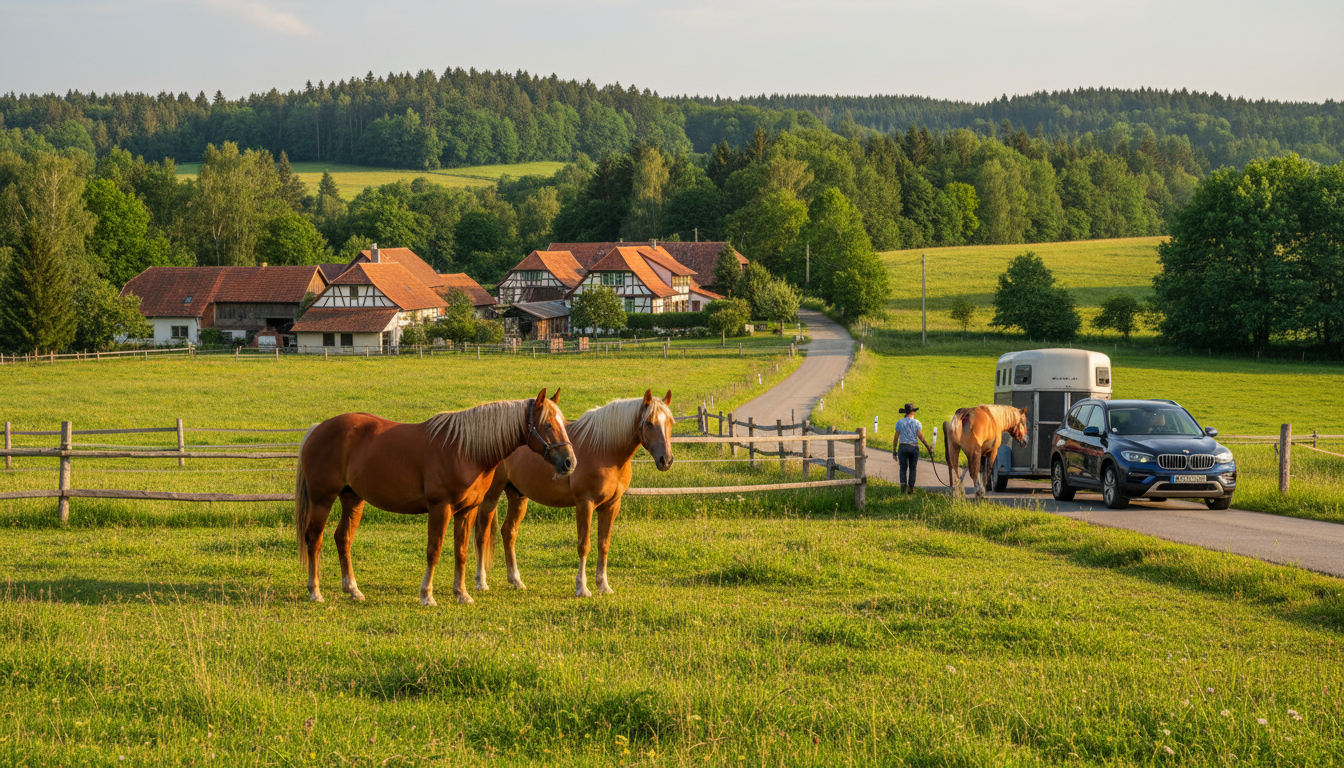
If you're looking to buy a Quarter Horse, understanding the breed standard and the necessary paperwork will guide you. The DQHA describes the American Quarter Horse as a versatile equine suitable for pleasure riding, competitive events, and racing. If you intend to use the horse for breeding in Germany later on, you must distinguish between three key documents: the AQHA Certificate of Registration, the equine passport, and the breeding certificate. They each serve distinct purposes.
The American Quarter Horse: A Breed Profile
According to the Deutsche Quarter Horse Association, the average height at the withers ranges from approximately 1.45 to 1.65 meters. The association describes typical breed characteristics as a compact, rectangular build, a short, wedge-shaped head, and powerful muscles, particularly in the hindquarters. The DQHA highlights these traits in relation to the breed's suitability for all disciplines of Western riding.
The permissible coat colors, according to the DQHA, are determined by the regulations outlined in REG114 of the AQHA rulebook.
Conformation and Temperament in the Breed Standard
The breed standard encompasses more than just conformation and movement. The DQHA emphasizes a hardy constitution, stamina, good health, and an easy-keeping nature. They particularly highlight positive character traits and a good-natured temperament.
When making your selection, it's important to differentiate between the breed standard and an individual horse. A breed standard outlines the characteristics breeders aim for. It does not describe every horse offered for sale.
AQHA and DQHA: The Connection Between Associations
The American Quarter Horse Association, or AQHA for short, is headquartered in Amarillo, Texas, USA. In Germany, the DQHA states it is the sole state-recognized breeding association for American Quarter Horses, holding full AQHA affiliate status, meaning it is an affiliated association of the AQHA.
This status forms the basis of a data exchange agreement, which enables the DQHA to continuously exchange breeding-relevant data with its American parent association. According to their own figures, the DQHA oversees more than 40,000 horses, making it the largest population of registered American Quarter Horses outside the American continent.
For a purchase with breeding intentions in Germany, registration with the DQHA is as important as the AQHA registration.
Understanding Your Documents
The DQHA's guidelines on purchase documents clearly distinguish between the AQHA Certificate of Registration and the breeding certificate.
- According to the DQHA's statutes and breeding program, the AQHA Certificate of Registration serves as a certificate of ownership. It is not a breeding certificate. It is required for the creation of a DQHA equine passport.
- The breeding certificate, according to the DQHA, is the only valid proof of pedigree for a purebred horse under European animal breeding regulations. It is an integral part of the equine passport and a mandatory prerequisite for entry into the DQHA studbook.
- If a horse only possesses a pleasure horse passport without a breeding certificate, it will require an equine passport with a valid animal breeding certificate if it is to be regularly used for breeding by the DQHA.
Therefore, the AQHA certificate does not replace the proof of pedigree in the equine passport. If you have any legal questions regarding the documents or the purchase agreement, you should have them reviewed by an attorney.
Check Studbook Registration Before Breeding or Futurity
According to DQHA guidelines, foals with a passport issued by the DQHA have been automatically entered into the Destination or Basic Studbook since 2022. Horses with a passport issued before 2022 can be entered at any time upon application, provided this has not already occurred.
Horses active in breeding and those competing in the DQHA Futurity must be recorded in the DQHA studbook. The DQHA advises owners to verify this before the first breeding or Futurity start.
Change of Ownership: Pay Attention to the Passport Issuer
For a change of ownership in the DQHA equine passport, the DQHA states you should send the passport, if available, to their office. You must also include a copy of both sides of the already transferred AQHA Certificate of Registration or a copy of a Transfer Report, which is the form for change of ownership.
If the equine passport was issued by the DQHA, the new owner does not need to be a DQHA member for the entry. However, if the DQHA is to process an equine passport that they did not issue themselves, the owner must be a DQHA member, and the horse must be entered into the DQHA studbook. This may include adding the breeding certificate if necessary.
Purchase Advice from Austria
The Austrian Quarter Horse Association is the recognized affiliate organization of the AQHA for Austria and maintains an approved branch studbook there. The following advice comes from this Austrian association and pertains to purchases made in Austria.
Accordingly, the purchase agreement does not replace the Transfer Report for a change of ownership. The seller must provide the buyer with the signed Transfer Report, including horse and seller details, the original Certificate of Registration, and the equine passport.
If the seller cannot produce or hand over one of these documents, the Austrian association advises caution or contacting the association. This can help prevent issues during the transaction or clarify the underlying reason.
Common questions
How tall does an American Quarter Horse get?
The DQHA states a height at the withers of approximately 1.45 to 1.65 meters.
What disciplines is the Quarter Horse bred for?
According to the DQHA, it is bred for pleasure riding, competition, and racing. The breed description also mentions its use in all Western riding disciplines.
Is the AQHA Certificate of Registration a breeding certificate?
No. According to the DQHA, it serves as a certificate of ownership as per their statutes and breeding program. The breeding certificate is an integral part of the equine passport and a prerequisite for entry into the DQHA studbook.
Do I need to be a DQHA member for a change of ownership?
Not for an entry in an equine passport issued by the DQHA. However, if the DQHA is to process a passport they did not issue themselves, DQHA membership and the horse's entry into the DQHA studbook are required, potentially including the addition of the breeding certificate.
Sources
- Deutsche Quarter Horse Association e. V. – Rasse, Zuchtziel und Verbindung zur AQHA: dqha.de
- Deutsche Quarter Horse Association e. V. – Kaufunterlagen, Certificate of Registration und Eigentumswechsel: dqha.de
- Austrian Quarter Horse Association – Equidenpass, Originalpapiere und Transfer Report beim Kauf: aqha.at (17.03.2025)
Written by Equidara editorial team. Last checked: 6 October 2026.
- Buying a Haflinger: Studbook, Character, and Uses — The Haflinger is bred for versatile use in riding and driving. Here, you'll learn what the breeding principles stipulate regarding lineage, temperament, size, and areas of use.
- Buying a Lusitano: PSL or Cruzado, Studbook & Prices — Puro Sangue Lusitano, Lusitano, Cruzado – these terms often cause confusion. Learn what they mean, which papers are important, and what prices to expect.
- Buying an Andalusian (PRE): ANCCE Studbook, Difference from Lusitano, Prices — A PRE is more than an Andalusian: the ANCCE studbook, the split from the Lusitano, and what to look for when buying.
- Buying a Friesian: KFPS Studbook, Predicates, Health, Prices — When buying a Friesian, paperwork, predicates, and a careful look at breed-specific health issues are key. Here's how to check the studbook, chip, and findings.
Related
- Buy horses — Horses for sale from all over Europe, with transport search.
- HorseFinder — Browse horses for sale by swiping, on your phone.
- Wanted — Who is currently looking for something — from horse to stall.