
breeds
Buying a Haflinger: Studbook, Character, and Uses
The Haflinger is bred for versatile use in riding and driving. Here, you'll learn what the breeding principles stipulate regarding lineage, temperament, size, and areas of use.
Equidara editorial team · 6 October 2026 · 4 min read
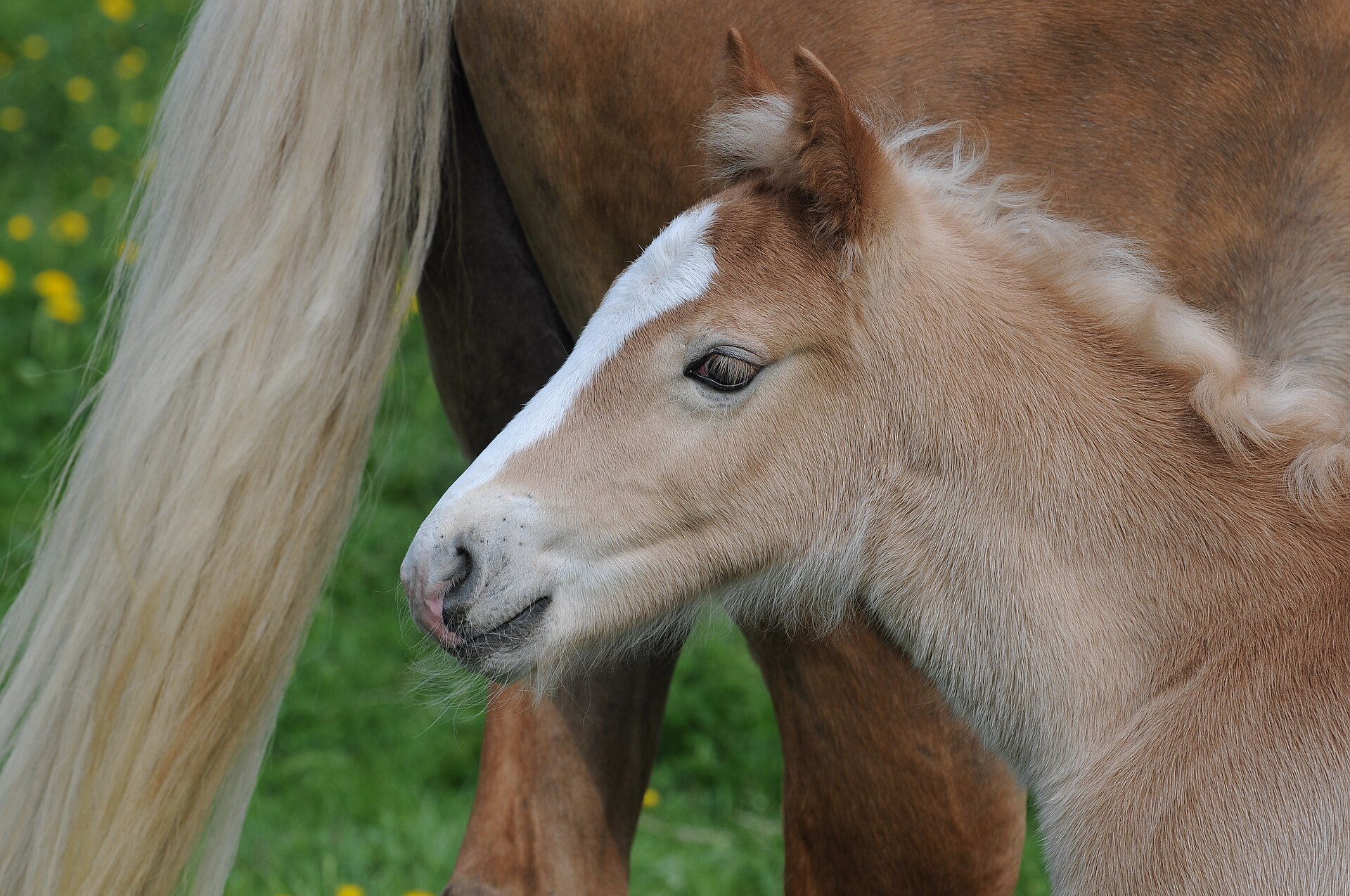
If you're looking to buy a Haflinger, pay attention to three key aspects: its lineage, its registration in the studbook, and the intended use you have in mind. The breeding principles describe a friendly, agreeable horse suited for a variety of tasks in both riding and driving. These characteristics are breeding goals; they outline what the breed strives for, not necessarily the traits of every individual horse.
Origin and Appearance
The historical origin region of the Haflinger is South Tyrol, the area of the Autonomous Province of Bolzano-South Tyrol in Italy. According to the breeding principles of Original Haflinger Pferde Deutschland e. V., the chestnut stallion 249 Folie is considered the foundation sire of the breed. He was born in 1874 in Schluderns in Vinschgau. The breed was officially recognized under the name “Haflinger” by decree on May 2, 1898.
The breed description outlines a medium-sized, expressive, and noble horse with a chestnut coat and flaxen mane and tail. The desired color ranges from light chestnut to liver chestnut. A clear, uniform base color is preferred, along with abundant, silky, and smooth long hair, ideally in a lighter shade. A facial marking is desirable, while leg markings should ideally be absent.
For height, the principles state target ranges in the third year of life:
- Stallions: 148 to 152 cm, maximum 155 cm.
- Mares: 147 to 150 cm, maximum 155 cm.
These figures describe the breeding goal for this age, not the size of every Haflinger offered for sale.
Character: What the Breeding Aims For
The breeding goal is a versatile, friendly, expressive, and agreeable horse. The principles place particular emphasis on health, hardiness, and a robust constitution. Additionally, a good-natured disposition, pleasant temperament, strong nerves, and intelligence are desired.
Words like “friendly” and “strong-nerved” describe desired traits of the breed. How a specific horse behaves, you can only observe in the horse itself.
Areas of Use and Desired Gaits
The breeding principles of Original Haflinger Pferde Deutschland e. V. describe the Haflinger as versatile, capable, and willing in all disciplines of riding and driving. They list the following areas of use:
- Riding and driving sports.
- Competitive sport.
- Recreational riding.
- Agriculture.
- Tourism.
Thus, the breed profile is not limited to a single purpose. When making your purchase, you can use these areas of use as a guide.
The desired gaits are also specified. The walk should be even, moderately elevated, and adaptable to the terrain. In the trot, impulsion, elasticity, and strong push from the hindquarters are sought. The canter should be ground-covering and show a clear uphill tendency. Short, flat, inelastic, and forehand-heavy movements are considered undesirable.
Understanding the Studbook and Lineage
According to the Haflinger World Breeding and Sports Federation, the Haflinger Pferdezuchtverband Tirol and the Associazione Nazionale Allevatori Cavalli di Razza Haflinger in Italia are considered reference organizations for the breed's subsidiary studbooks. This status is based on an international agreement reached with the founding of the federation on February 1, 2013.
According to the breeding principles of Original Haflinger Pferde Deutschland e. V., the Haflinger studbook is closed. The breeding method is pure breeding. Paternal lines must trace back to the foundation sires mentioned in the breeding principles. The studbook records at least six generations of ancestors, on both the paternal and maternal sides.
There is a main section for mares and one for stallions. Both comprise at least three classes each. Classification is based on characteristics and performance. Established requirements for conformation (the external build), temperament or disposition, performance, and potentially other criteria are considered. Entry into the mare studbook or stallion studbook occurs after a positive conformation assessment.
What Information the Papers Must Contain
The pedigree certificate and birth certificate must include, among other things, the following information:
- Breeding association.
- Studbook and its section.
- Date and place of issue.
- Life number (UELN).
When you review the documents of a horse offered for sale, you can specifically look for this information. It indicates which studbook the horse belongs to and verifies its identity.
Arabian Blood Percentage and Exceptions
For purebred Haflinger breeding stock, both parents must be registered in a Haflinger studbook. A maximum additional genealogical Arabian blood percentage, or 'ox' percentage, of 1.56% is permissible. It is calculated to two decimal places over six generations on both the paternal and maternal sides.
According to the breeding principles, the 'ox' percentage is reduced to 0% from the fifth generation onwards, starting from 1.56%, or from a percentage of 0.09%. It then no longer needs to be declared or calculated. However, 'ox' percentages that must be declared must appear in all official documents along with the name and studbook number.
An exception applies to horses with more than 1.56% genealogical 'ox' percentage: If they were registered under previously applicable regulations, they may remain in the respective Haflinger studbook. However, this does not create a legal claim for registration in another Haflinger studbook.
Common questions
How tall should a Haflinger be?
In their third year of life, the breeding principles state 148 to 152 cm for stallions and 147 to 150 cm for mares as the desired height. For both, a maximum of 155 cm applies.
What character is aimed for in the Haflinger?
The breeding goal describes a friendly, agreeable horse with a good-natured disposition, pleasant temperament, strong nerves, and intelligence. These are breeding goals, not a guarantee for every individual horse.
What areas of use are described for the Haflinger?
The breeding principles list riding and driving sports, competitive sport, recreational riding, agriculture, and tourism.
How many generations does the Haflinger studbook record?
It records at least six generations of ancestors of the breed, on both the paternal and maternal sides.
Sources
- Haflinger Welt-Zucht- und Sportvereinigung – Rassegrundsätze, Zuchtbuch und zulässiger Vollblutaraberanteil (haflinger-world.com)
- Original Haflinger Pferde Deutschland e. V. – Zuchtgrundsätze zu Zuchtbuch, Charakter und Einsatzgebieten; original-haflinger.de (02.12.2019)
- Titelfoto: Böhringer Friedrich, Wikimedia Commons
- Lizenz des Fotos: CC BY-SA 2.5

Written by Equidara editorial team. Last checked: 6 October 2026.
- Buying a Lusitano: PSL or Cruzado, Studbook & Prices — Puro Sangue Lusitano, Lusitano, Cruzado – these terms often cause confusion. Learn what they mean, which papers are important, and what prices to expect.
- Buying a Quarter Horse: Breed, AQHA, and Essential Documents — The American Quarter Horse is bred for pleasure riding, competition, and racing. Here, you'll learn what makes this breed special and which documents are crucial for purchase and breeding.
- Commission on Horse Purchases: When it Arises, Who Pays It, and When It's Forfeited — A commission isn't simply earned because someone offered assistance. It requires a brokerage agreement, a clear link between the activity and the successful sale, and a contract that is actually concluded. If you're working for both parties, you must disclose this, or your claim to the commission is at risk.
- Rescinding a Horse Purchase: Deadlines, Burden of Proof, and How the Reversal Process Works — Rescinding a contract requires a defect that was already present at the time of handover. This is almost always preceded by a deadline for the seller to remedy the defect, followed by a reversal process where the buyer doesn't just return the horse. Learn what applies when, and which mistakes can cost you your claim.
Related
- Buy horses — Horses for sale from all over Europe, with transport search.
- HorseFinder — Browse horses for sale by swiping, on your phone.
- Wanted — Who is currently looking for something — from horse to stall.