
Transport
Cross-Border Horse Transport: Paperwork, Haulers, and Liability in Case of Damage
Transporting a horse across an internal EU border requires an equine passport, an animal health certificate, and a TRACES entry. Equally important is your choice of hauler, as legal liability only covers a fraction of a valuable horse's worth.
Equidara editorial team · 4 October 2026 · 3 min read
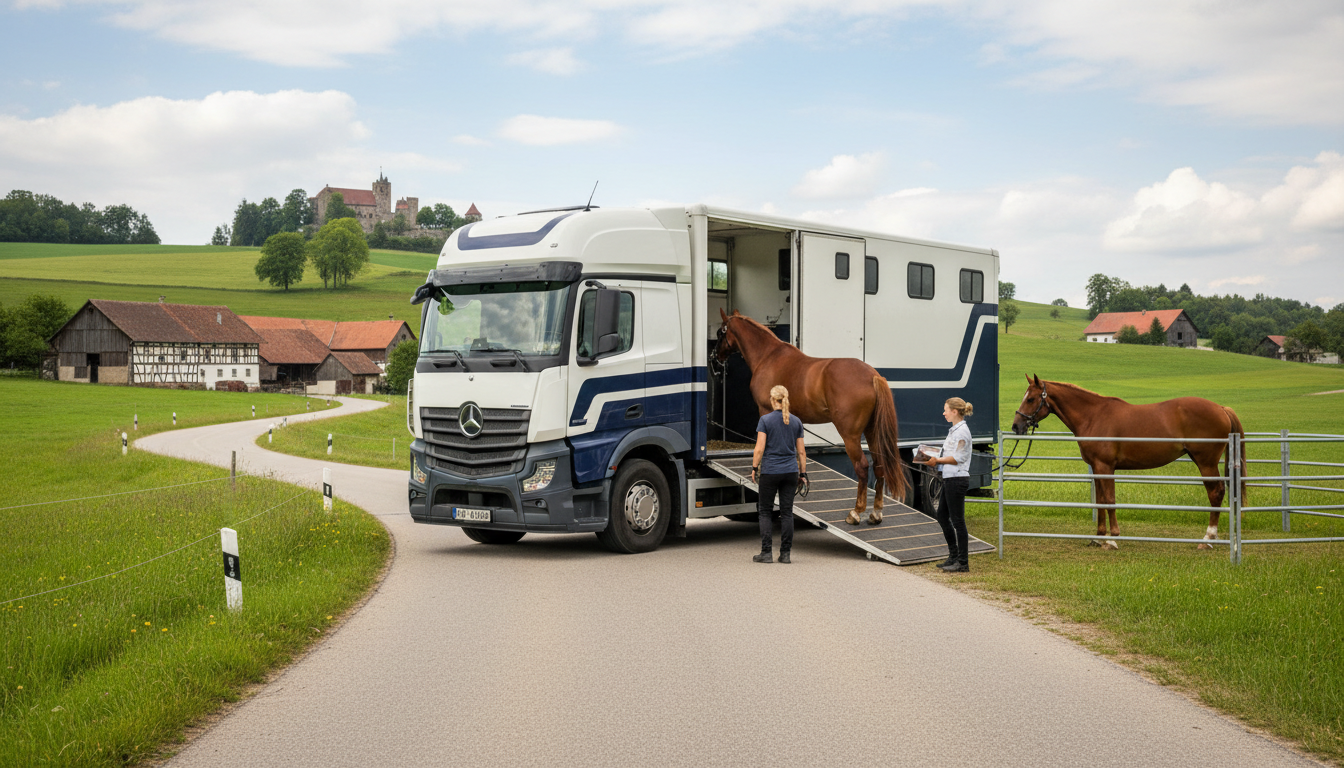
Transporting a horse across a border isn't rocket science, but it's also not the same as a short trip to a show. Three key elements determine whether the journey goes smoothly: the paperwork, the transporter, and what happens if something goes wrong.
The Paperwork
- Your horse's equine passport (original) with up-to-date vaccinations. The influenza vaccination is often the most common hurdle for transport and competitions, as it frequently falls just outside the required timeframe.
- An animal health certificate from an official veterinarian. This is issued after an examination and is only valid for a short period, so the examination and departure dates must align.
- A TRACES entry. The EU Trade Control and Expert System records every cross-border shipment of live animals. Typically, the official veterinarian creates the entry, and the transporter carries the reference number.
- Sales contract and proof of ownership, if the horse has been sold.
Plan ahead for this: Depending on the region, an appointment with the veterinary office can take several days to secure, and the certificate cannot be issued too far in advance.
A practical tip from many transport experiences: photograph all relevant pages of the equine passport before handing it over.
The Hauler: What Matters
Commercial animal transport within the EU is regulated. Anyone transporting animals over long distances requires a license as a transport operator, suitable vehicles, and qualified personnel. For long journeys, additional requirements apply to the vehicle and journey log. The basis for these regulations is Regulation (EC) No 1/2005 on the protection of animals during transport.
Questions you should ask before booking:
- Their license number and for what duration of transport it is valid.
- How many horses will be transported simultaneously and whether they will be stalled separately.
- How the route is planned, where breaks are scheduled, and who will water the horses.
- Whether the transporter has their own transport insurance, and for what sum.
- Whether you will receive location updates during the journey.
Shared transports are more economical but take longer because multiple stops are made. For a young or anxious horse, the more expensive direct transport might be the better choice.
Liability: The Point Almost Everyone Overlooks
The carrier's liability is legally limited. According to § 431 HGB, they are liable for loss or damage up to a maximum of 8.33 Special Drawing Rights (SDR) per kilogram of gross weight; for cross-border road transport, the same limit applies via the CMR Convention.
For a horse, this means the liability amount is based on weight, not value. For a valuable sport horse, it will only cover a fraction of the purchase price.
This leads to two consequences. Firstly, for valuable horses, it's worth investing in your own transport insurance that covers the actual value. Secondly, the sales contract should clearly state who pays for the transport and when the risk transfers, as this determines who has claims in the event of damage.
Before Loading
- Check vaccinations and passport, scan microchip.
- Only use shipping boots or bandages if your horse is accustomed to them.
- Provide hay and familiar feed, discuss watering arrangements en route.
- No strenuous work the day before, offer water right up until departure.
- Exchange phone numbers, including for emergencies or breakdowns.
After Arrival
Have the arrival confirmed with a date and a brief description of the horse's condition. A few photos during unloading cost nothing and are the only basis if an injury is disputed later.
Afterward: Rest. Horses need time to recover after long journeys, and a fever in the first few days post-transport is a serious sign. If you've just purchased the horse, don't fill the first week with training plans; instead, focus on observation.
What This Article Cannot Cover
Transport prices vary greatly depending on the distance, season, demand, and type of transport. Get two or three quotes for your specific route, asking about licensing, insurance, and route planning, and don't make your decision based solely on price. The cheapest transport rarely results in a relaxed horse upon arrival.
Common questions
What paperwork does a horse need for transport across an EU border?
The original equine passport with up-to-date vaccinations, an animal health certificate from an official veterinarian, and an entry in the EU TRACES system. Additionally, a sales contract and proof of ownership if the horse has been sold.
How much lead time is needed for international horse transport?
Allow several days to up to two weeks: appointments with the veterinary office require advance booking, the health certificate is only valid for a short period, and popular transport dates get booked up quickly. Both need to align chronologically.
How much liability does a transporter have if something happens to the horse?
Limited: According to § 431 HGB and the CMR Convention, a maximum of 8.33 Special Drawing Rights (SDR) per kilogram of gross weight. The sum is therefore based on the horse's weight, not its value. For valuable horses, it's worth getting your own transport insurance.
What should I look for when choosing a hauler?
Look for their license as a transport operator and for what duration of transport it is valid, their route and break planning, the number of horses in the vehicle, and their insurance coverage. The requirements are based on Regulation (EC) No 1/2005.
Shared transport or direct journey?
Shared transports are more economical but take longer because multiple stops are made. For young, anxious, or ill horses, a direct journey is often the better choice, even if it costs more.
Sources
- Verordnung (EG) Nr. 1/2005 über den Schutz von Tieren beim Transport (EUR-Lex)
- Verordnung (EU) 2016/429 zu Tierseuchen („Tiergesundheitsrecht") (EUR-Lex)
- Durchführungsverordnung (EU) 2021/963 zur Identifizierung und Registrierung von Equiden (EUR-Lex)
- § 431 HGB – Haftungshöchstbetrag des Frachtführers (gesetze-im-internet.de)
- § 447 BGB – Gefahrübergang beim Versendungskauf (gesetze-im-internet.de)
Written by Equidara editorial team. Last checked: 7 October 2026.
- Buying a Horse Abroad: Essential Questions to Ask Before Your Deposit — Within the EU, the paperwork is straightforward: an equine passport, health certificate, and TRACES. But the questions you ask *before* that are far more critical. Clarifying who is selling you the horse, which legal jurisdiction applies, who arranges the pre-purchase exam, and the payment schedule will determine your legal standing should a dispute arise.
- Loading Your Horse: Avoiding Stress and Training Safely — Loading training works best in short, calm steps. Preparation, the right equipment, and knowing your horse's limits are key.
- Your Horse Purchase Agreement: What to Include and Where Templates Fall Short — Even a verbal agreement is legally binding when buying a horse. But putting it in writing is crucial for proving what was agreed upon later. We'll cover the eight essential points for every horse purchase agreement, explain why a warranty disclaimer isn't a catch-all, and when it's smart to consult an attorney.
- Equine Passport: Who Issues It for Sport Horses, Breeding Stock, and Leisure Horses — Every horse kept in the EU requires registration and an equine passport. The issuing authority depends on whether your horse is registered as a breeding animal or a sport horse. This also includes transponders and entry into the database.
Related
- Request horse transport — Route, horse, date: carriers send you a quote.
- Find animal transport — Move your animal arranges transports in Europe.
- Trailers and transporters — Horse trailers, trucks, carriages and accessories.