
Transport
Loading Your Horse: Avoiding Stress and Training Safely
Loading training works best in short, calm steps. Preparation, the right equipment, and knowing your horse's limits are key.
Equidara editorial team · 30 September 2026 · 3 min read
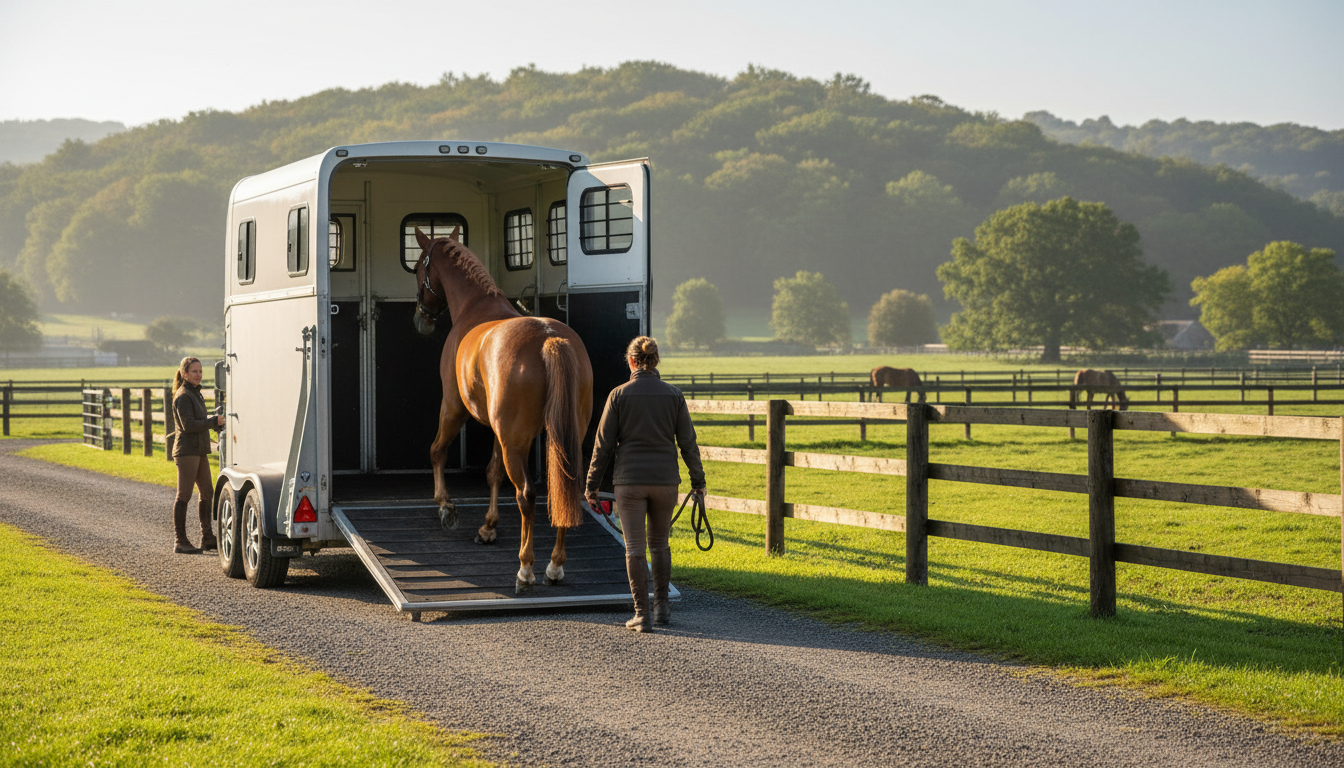
You can get your horse used to loading by working calmly, taking your time, and making the environment safe. What's safe around horse transport is shown in the film series by the Deutsche Reiterliche Vereinigung.
Before any practice session, fitness to travel comes first: Only a healthy horse belongs in a trailer. If in doubt, call your vet. Regulation (EC) No 1/2005 generally classifies injured or sick animals as unfit for transport; exceptions apply only for minor injuries or illness if the transport does not cause additional suffering.
The national Tierschutztransportverordnung implements this framework in Germany.
Preparation: Check horse, trailer, and loading area
Loading is the most stressful phase of transport for many horses. Calm handling makes a big difference. Your horse should be familiar with people; this keeps the stress of loading low.
Check before every practice session: doors, lighting, ventilation, cleanliness, and floor condition of the loading area must be in order. The area must be free of obstacles, including visual distractions. Ramps and floors need a non-slip surface; metal surfaces should be covered with bedding or sawdust to prevent glare. Sharp edges and defective gates can cause slipping, falls, or crushing injuries. The trailer itself must also be suitable and intact.
Water should be available before loading. Don't mix unfamiliar horses to avoid dominance disputes.
Safe handling when loading
Work calmly and avoid loud, hurried driving. Horses don't understand shouting. Stressful situations can trigger fear and attempts to flee; stressed horses often refuse to move. This can also become dangerous for you as the handler. Subdued colors are sensible for the people involved.
Don't load under time pressure. Keep the transport as short as possible and avoid unnecessary delays.
When tying up, make sure the horse can lower and raise its head. A horse tied too tightly is more susceptible to respiratory disease. Use a quick-release knot and a suitably loose lead rope. Equids are best transported individually; compatible groups are possible, ideally without horseshoes. For long journeys, individual stalls are mandatory.
People handling animals during transport must be adequately trained or qualified under EU regulations. This includes loading, care, and first aid.
Check fitness to travel before every journey
Before every loading, check the horse's condition. Injured animals are considered unfit for transport unless they are only slightly injured and the transport causes no additional suffering. The assessment should include animal-based health and welfare indicators, such as wounds, swelling, colic, joint changes, or umbilical diseases. In any doubtful case, consult a vet.
Sick or injured animals must never be transported for slaughter. One exception remains: transporting sick or injured animals for veterinary treatment.
When professional help makes sense
Get support if your horse refuses to load, reacts with panic, tries to escape, or if you become unsure. Forced loading increases stress and the risk of accidents. An experienced horse trainer or trained transporter can assess the situation and break the training down into smaller steps.
Important: Anyone handling animals during transport must be trained or qualified. In Switzerland, only skilled or sufficiently instructed people may lead, drive, load, and unload animals. Acceptable proof includes a vocational qualification in the field, a brevet or license in an equestrian discipline, confirmed years of experience in horse keeping, or basic training in horse transport.
Keep the process calm and stop before the horse panics.
Common questions
How often should I practice loading?
Several short, calm sessions are better than rare long ones. End the training while your horse is relaxed, and increase the demands only once the previous step works reliably.
How can I tell if a horse is unfit for transport?
Signs may include wounds, swelling, severe lameness, colic, or joint changes. Injured or sick horses are generally considered unfit for transport. When in doubt, the vet decides.
Can I transport a slightly sick horse?
Only if the illness or injury is minor and the transport won't cause additional suffering. Transport is possible for veterinary treatment. If you're unsure, always ask your vet beforehand.
What equipment reduces stress when loading?
An intact trailer, non-slip ramps, good lighting, no sharp edges, and bedding against glare and slipping. Your horse should be tied loosely with a quick-release knot so it can lower its head.
Sources
- Pferde sicher transportieren: Tipps für den Pferdetransport | FN
- Verordnung zum Schutz von Tieren beim Transport und zur Durchführung der Verordnung (EG) Nr. 1/2005 des Rates (Tierschutztransportverordnung - TierSchTrV) (2009-02-11)
- Transportfähigkeit von Equiden (2024-07)
- Handbuch Tiertransporte (2025-12)
- Leitfaden für einen optimierten Kurzstrecken-Tiertransport
- Merkblatt Pferdetransporte
Written by Equidara editorial team. Last checked: 6 October 2026.
- Cross-Border Horse Transport: Paperwork, Haulers, and Liability in Case of Damage — Transporting a horse across an internal EU border requires an equine passport, an animal health certificate, and a TRACES entry. Equally important is your choice of hauler, as legal liability only covers a fraction of a valuable horse's worth.
- Electric Car as a Towing Vehicle for Your Horse Trailer: Technology, Range, and Charging — Modern electric cars are capable of towing heavy horse trailers. Whether one is right for your hauling needs depends on the vehicle's towing limits, its range with a trailer, and available charging options on your route.
- Visiting an Equestrian Fair: Exhibitors, Demonstrations, and Preparation — An equestrian fair can combine shopping, expert knowledge, and captivating demonstrations. Discover what's on offer and how to plan your visit according to your interests.
- Long-Distance Horse Transport: Watering, Travel Duration, and Rest Periods under EU Law — Eight hours is the basic limit. Longer journeys are subject to specific conditions. Find out about the watering intervals and rest periods for unregistered domestic equids, and the special rules for foals, rail, and sea transport.
Related
- Request horse transport — Route, horse, date: carriers send you a quote.
- Find animal transport — Move your animal arranges transports in Europe.
- Trailers and transporters — Horse trailers, trucks, carriages and accessories.