
Law & Safety
Private Horse Sale Agreement: Template and Key Clauses Explained
What should a private horse purchase contract include? We'll cover the key contract points, limitations on disclaiming warranties, and the significance of the pre-purchase exam (PPE), delivery, and retention of title.
Equidara editorial team · 28 November 2026 · 5 min read
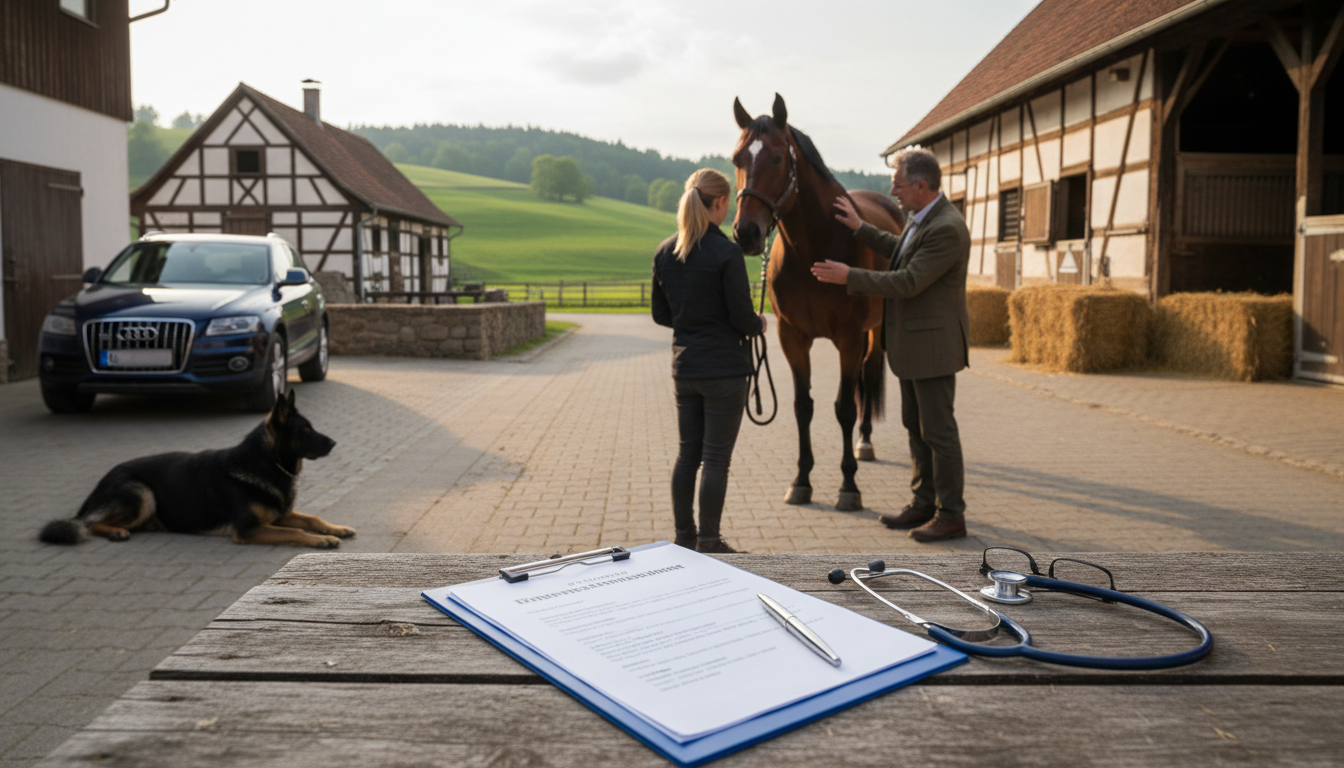
A private horse purchase contract should clearly describe the horse. It should also specify its condition, purchase price, payment terms, pre-purchase exam (PPE), warranty, and delivery. You can use Equidara's free sample purchase agreement as a basis and adapt it to your specific purchase. In Germany, a disclaimer of warranty does not protect the seller if they maliciously concealed a defect or provided a guarantee for the horse's condition. The legal explanations refer to German law. Information regarding Austria is provided in a separate section. Different rules apply in other countries.
Horse Purchase Contract: Filling Out the Template Point by Point
The veterinary portal Go4Vet advises reviewing a contract template before use and adapting it to your specific horse purchase. Therefore, use the template as a basis for your actual agreements, not as a substitute. The following contract points serve as a practical checklist. You'll find the legal limitations in the sections on German law.
1. Naming the Buyer and Seller
Enter the names and addresses of both contracting parties. Also, specify whether the seller is acting privately or as a commercial entity. According to Go4Vet, this information belongs in the contract. This distinction is particularly important for warranty purposes.
2. Clearly Describing the Horse
Equidara's contract template includes, among other things, the horse's name, UELN (Unique Equine Life Number), transponder number, breed, year of birth, sex, color, and markings. These details allow for clear identification of the horse being sold.
3. Agreeing on Condition and Use
In the Equidara template, you specify the horse's training level and intended use as its agreed-upon condition. Clearly describe which characteristics are part of your agreement.
What is not in the contract is often difficult to prove in a later dispute. Therefore, you should expressly agree in writing on any characteristics you need for the intended use.
4. Including Health Information and PPE
According to Go4Vet, the seller's information regarding pre-existing conditions, surgeries, medications, and vices should be included in the contract. This also includes a reference to the pre-purchase examination, or PPE, and its date.
According to Go4Vet, the PPE documents the horse's health status on the day of the examination. It guarantees neither future health nor that every condition will be detected.
According to Go4Vet, the buyer typically commissions the examination. The portal recommends an equine veterinarian independent of the seller. The terms "basic PPE" and "extensive PPE" are not officially defined. Therefore, discuss the scope of the examination with your veterinarian.
5. Specifying Purchase Price and Payment
According to Go4Vet, the purchase price and payment method should also be included in the contract. Clearly describe the agreed-upon payment. If a retention of title is to apply, explicitly state it in the contract.
6. Documenting Delivery, Accessories, and Papers
Record the delivery date. According to Go4Vet, the contract should also regulate any included accessories and the handover of the horse's passport (Equidenpass) and other documents.
7. Explicitly Regulating Warranty
According to Go4Vet, the warranty should also be regulated in the contract. Distinguish between a private sale and a consumer goods purchase, where a commercial seller sells to a consumer. Under German law, the same limitations do not apply to both cases.
Horse Purchase Contract Without Warranty: Limitations in Germany
An agreed exclusion of defect rights has its limits. According to § 444 BGB, the seller cannot invoke this if they maliciously concealed a defect or provided a guarantee for the horse's condition. This also applies to any limitation of defect rights.
In consumer goods purchases in Germany, § 476 BGB protects the consumer from disadvantageous agreements. The commercial seller cannot invoke any deviation from the provisions mentioned therein to the detriment of the consumer, if agreed upon before notification of a defect.
Even a deviation from the objective requirements for the horse in a consumer goods purchase is subject to conditions. The consumer must be specifically informed about it before making their contractual declaration. Furthermore, the deviation must be expressly and separately agreed upon.
Distinguishing Between Delivery and Retention of Title
An agreed retention of title, according to § 449 BGB, implies that ownership is transferred only upon full payment of the purchase price. Therefore, the delivery of the horse and the transfer of ownership are two different things.
Due to the retention of title, the seller can only demand the return of the horse under German law if they have withdrawn from the contract.
Notes on Austria
For Austria, the Landwirtschaftskammer Oberösterreich (Chamber of Agriculture Upper Austria) recommends documenting horse purchase contracts in writing for evidentiary purposes, even if they can be concluded orally. According to the Chamber, there is no general right of withdrawal. It advises contractually regulating the horse's characteristics, time and place of delivery, and the bearing of costs and risks during transport.
If no payment deadline is agreed upon, payment is generally made upon delivery, according to the Chamber. For later payment, it recommends a retention of title until full payment. The risk of accidental loss passes to the buyer only upon delivery. If the seller undertook the transport and the horse accidentally dies during it, the seller cannot demand the purchase price.
This guide is not a substitute for legal advice. Have your contract reviewed by a lawyer if you are legally uncertain, if you wish to exclude warranty, if there is a dispute over defects, payment, or surrender, or if the purchase has a connection to another country.
Common questions
Where can I find a free template for a horse purchase contract?
Equidara offers a free sample purchase contract with explanations on contracting parties, condition, PPE, warranty, delivery, and retention of title. Adapt the template to your specific purchase.
What are the limitations of a warranty exclusion in a private horse sale?
In Germany, according to § 444 BGB, the seller cannot invoke an exclusion or limitation of defect rights if they maliciously concealed a defect or provided a guarantee for the horse's condition.
Does a PPE guarantee that the horse will remain healthy?
No. According to Go4Vet, the PPE documents the horse's health status on the day of the examination. It guarantees neither future health nor that every condition will be detected.
When does ownership transfer with a retention of title?
Under German law, with an agreed retention of title, ownership generally transfers only upon full payment of the purchase price. This is regulated by § 449 BGB.
Sources
- Equidara: kostenloser Musterkaufvertrag mit Erläuterungen zu Vertragsparteien, Beschaffenheit, AKU, Gewährleistung, Übergabe und Eigentumsvo
- Bundesministerium der Justiz und Bundesamt für Justiz: § 444 BGB – Grenzen des Haftungsausschlusses bei arglistig verschwiegenen Mängeln und
- Bundesministerium der Justiz und Bundesamt für Justiz: § 476 BGB – Grenzen abweichender Vereinbarungen beim Verbrauchsgüterkauf, wichtig zur
- Bundesministerium der Justiz und Bundesamt für Justiz: § 449 BGB – Eigentumsvorbehalt bis zur vollständigen Kaufpreiszahlung – gesetze-im-in
- Landwirtschaftskammer Oberösterreich: Pferde und Recht – Kauf und Verkauf von Pferden; schriftliche Vereinbarungen, Eigenschaften, Übergabe, (28.05.2026)
- Pferd kaufen: Worauf achten? Mit AKU und Recht | Go4Vet (14. Oktober 2026)
Written by Equidara editorial team. Last checked: 28 November 2026.
- Buying a Horse Online: What Your Contract Must Include When No One Has Test Ridden — A right of withdrawal is almost never applicable when buying a horse. If you're buying or selling without an in-person viewing, your contract is your safeguard. Four key points truly mitigate the risk: defining the intended use, a pre-purchase examination with a clear deadline, staggered payments, and an honest video.
- Selling a Horse on Installments: What Retention of Title Achieves and Where Its Gaps Lie — The horse moves to its new home, but the payments trickle in over months. While retention of title keeps ownership with you until the final installment, it doesn't protect against every resale. Plus, there's the question of liability, as the keeper and owner are not always the same.
- Your Horse Purchase Agreement: What to Include and Where Templates Fall Short — Even a verbal agreement is legally binding when buying a horse. But putting it in writing is crucial for proving what was agreed upon later. We'll cover the eight essential points for every horse purchase agreement, explain why a warranty disclaimer isn't a catch-all, and when it's smart to consult an attorney.
- Insuring Your Horse After Purchase: What to Prioritize — Equine liability insurance for the handover, then surgical or health insurance, and if your horse is valuable, life insurance. What to consider regarding waiting periods and pre-existing conditions.
Related
- Purchase contract template — Template for horse and saddle to fill out.
- Buy and pay safely — How to recognize fraud schemes.
- Buy horses — Horses for sale from all over the world, with transport search.