
Sport & Results
Doma Vaquera: Equipment, Disciplines, and Competitions of Spanish Working Equitation
Spanish Cultural Heritage and Competitive Sport: Doma Vaquera combines cattle work with demanding equestrian maneuvers. Discover the equipment, disciplines, and competitions involved.
Equidara editorial team · 6 October 2026 · 3 min read
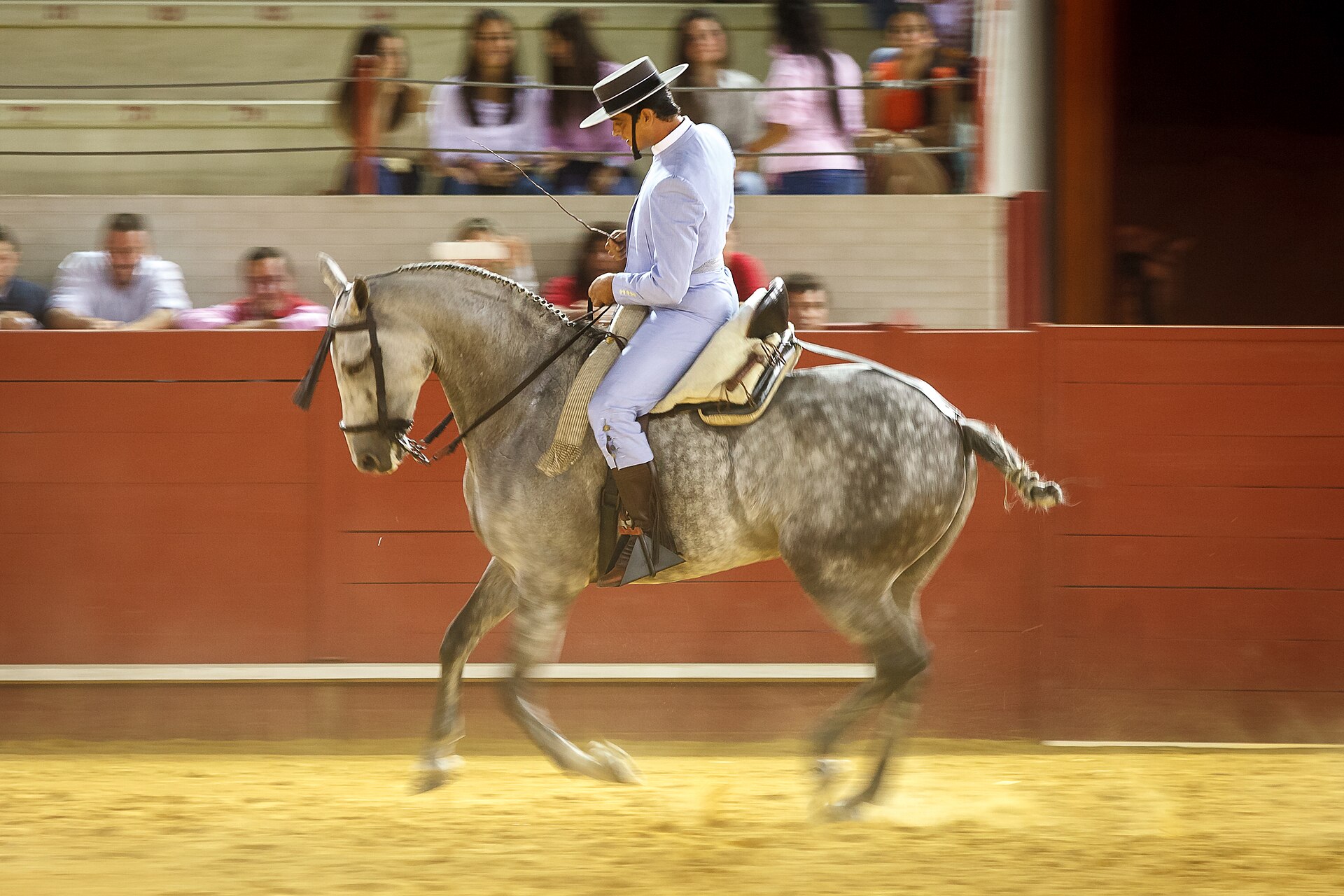
Doma Vaquera is a riding style originally developed for working with cattle, which has now evolved into an independent competitive sport. In May 2026, the Spanish government officially recognized it as intangible cultural heritage, according to the Spanish Official State Gazette BOE.
History and Origins
Its roots trace back to the Moorish era. At that time, 'monta a la jineta' emerged, where the horse was ridden one-handed to allow the rider to carry weapons in the other hand. The nobleman Hernán Ruiz de Villegas from Burgos described this technique in the 16th century in his 'Tratado de cavallería a la gineta'. Later, with the rise of cattle breeding for bullfighting, shepherds and mounted herdsmen adopted this riding style to control cattle across the vast landscapes. From this work, an independent discipline was formed, with its first competitive event, the Spanish Championship in Acoso y Derribo, starting in 1970 in Ciudad Rodrigo.
The Three Competitive Disciplines
Today, Doma Vaquera is contested in three forms of competition recognized by the Real Federación Hípica Española (RFHE):
- Doma Vaquera de Competicón: In the arena, riders perform movements that emulate cattle work – including changes of pace, pirouettes, half-turns, and stops. The tests are graded by difficulty and are ridden one-handed.
- Faenas y Doma de Campo: This discipline originates from Acoso y Derribo, the pursuit and bringing down of a cattle beast with a long pole. Today, it is contested in various age and performance classes and tests the partnership of rider and horse in field situations.
- Equitación de Trabajo: This combines dressage, cattle work, a speed test, and an obstacle course. The RFHE regulations detail the technical requirements.
Equipment for Rider and Horse
The RFHE regulations prescribe specific equipment for Doma Vaquera that combines a secure seat with a traditional appearance.
- Saddle and Bridle: The Montura vaquera is the centerpiece. It is characterized by a high pommel and, crucially, very large stirrups that allow for a stable leg position and ample leg room. The bridle consists of a cavesson or bit, always ridden one-handed.
- Attire: Riders typically wear the Traje corto andaluz, consisting of a short jacket, Charro shirt, close-fitting trousers with tall boots or half-chaps with leather protectors (Zahones), and a wide-brimmed Sombrero. In Castile and León, the Traje charro, an older regional variant, is sometimes common.
Training and Courses
An official training pathway for coaches was established by the Consejo Superior de Deportes with the Plan formativo de nivel I y II BOE. The total of 130 hours (Level I) covers areas such as horse transport, hippology, methodology, and competition preparation. The practical entrance exam requires, among other things, correctly leading, grooming, and saddling the horse, riding a young horse test, and a slalom course.
Additionally, the Real Escuela Andaluza del Arte Ecuestre regularly offers intensive courses for riders who want to specifically prepare for competitions. These courses cover the training scale, exercises such as flying changes or pirouettes, and the judging criteria.
Competitions and Championships
The national pinnacle is found at the Campeonatos de España organized by the RFHE. Since the first championship in 1970 in Ciudad Rodrigo, the sport has continuously evolved. The tests are governed by the current Regllamento Doma Vaquera, which, among other things, defines the categorization of horses (young horses, amateurs, professionals) and the scoring. The strong connection to cattle breeding is still reflected today in many competitions held in Dehesas, the typical pasturelands.
Common questions
What distinguishes Doma Vaquera from Working Equitation?
Doma Vaquera is the traditional working riding style of the Spanish cattle herder. Working Equitation is an independent, international discipline that combines elements of Doma Vaquera, classical dressage, and obstacle riding, but is judged according to its own regulations.
Which horse is suitable for Doma Vaquera?
There is no prescribed breed. Horses with good balance, courage, and composure when working with cattle are sought after. Traditionally, Spanish breeds such as the Pura Raza Española (PRE) are often used, but other agile horses with a suitable temperament are also suitable.
Do you need a special saddle?
Yes. The Montura vaquera is mandatory. It has a high pommel and large stirrups that support leg freedom for one-handed rein handling and a secure seat during quick turns. The RFHE regulations strictly require this type of saddle.
How can I start with Doma Vaquera?
The best way to start is through a riding school that offers courses in Spanish working equitation. Advanced riders can take an intensive course at the Real Escuela Andaluza. A license from the Real Federación Hípica Española (RFHE) is required for competition participation.
Sources
- BOE-A-2026-10737, Acuerdo 29/2026, de 7 de mayo, por el que se declara la Doma vaquera en Castilla y León como bien de interés cultural de carácter inmaterial (2026-05-07)
- Reglamento Doma Vaquera RFHE 2026 (2026)
- BOE-A-2025-18588, Plan formativo de nivel I y II de las especialidades deportivas de doma vaquera y equitación de trabajo (2025-09-04)
- Curso Formativo de Doma Vaquera 2025 (2025-06-18)
- Titelfoto: Manuel Gómez, Wikimedia Commons
- Lizenz des Fotos: CC BY-SA 2.0

Written by Equidara editorial team. Last checked: 6 October 2026.
- Equine herpes: what EHV-1 and EHV-4 cause and what to do if you suspect it — Many horses carry equine herpesvirus without showing it. We explain the forms of EHV-1, why the thermometer matters so much, how you can prevent infection and what the 2021 outbreak in Valencia showed.
- Competing in Germany: Entries, Licenses, and Timetables — From making your entry to post-competition care: Here's how to prepare for a competition in Germany according to FN rules, meet entry deadlines, and plan your arrival and warm-up.
- Germany Wins the Longines League of Nations in a Jump-Off in Barcelona — Richard Vogel and Cloudio secure the title for Germany in the 2026 Longines League of Nations Final. Brazil takes second place, with Belgium finishing third.
- The "HOYS Fairy" Sends Good Luck Charms to Nearly 200 Competitors — For ten years, Morean Hamilton from Ayrshire has been sending small browbands and cards to riders who have qualified for the Horse of the Year Show.
Related
- Buy horses — Horses for sale from all over Europe, with transport search.
- Auctions — Ongoing auctions and individual lots.
- Selling a horse — Post listings for free, visible in eight languages.