
Events
Stallion Show and Licensing: How it Works and What the Results Tell Buyers
Presented in-hand, free-moving, and free-jumping, plus a commission with scores: How a stallion show unfolds and what you, as a buyer, can glean from the results.
Equidara editorial team · 22 October 2026 · 4 min read
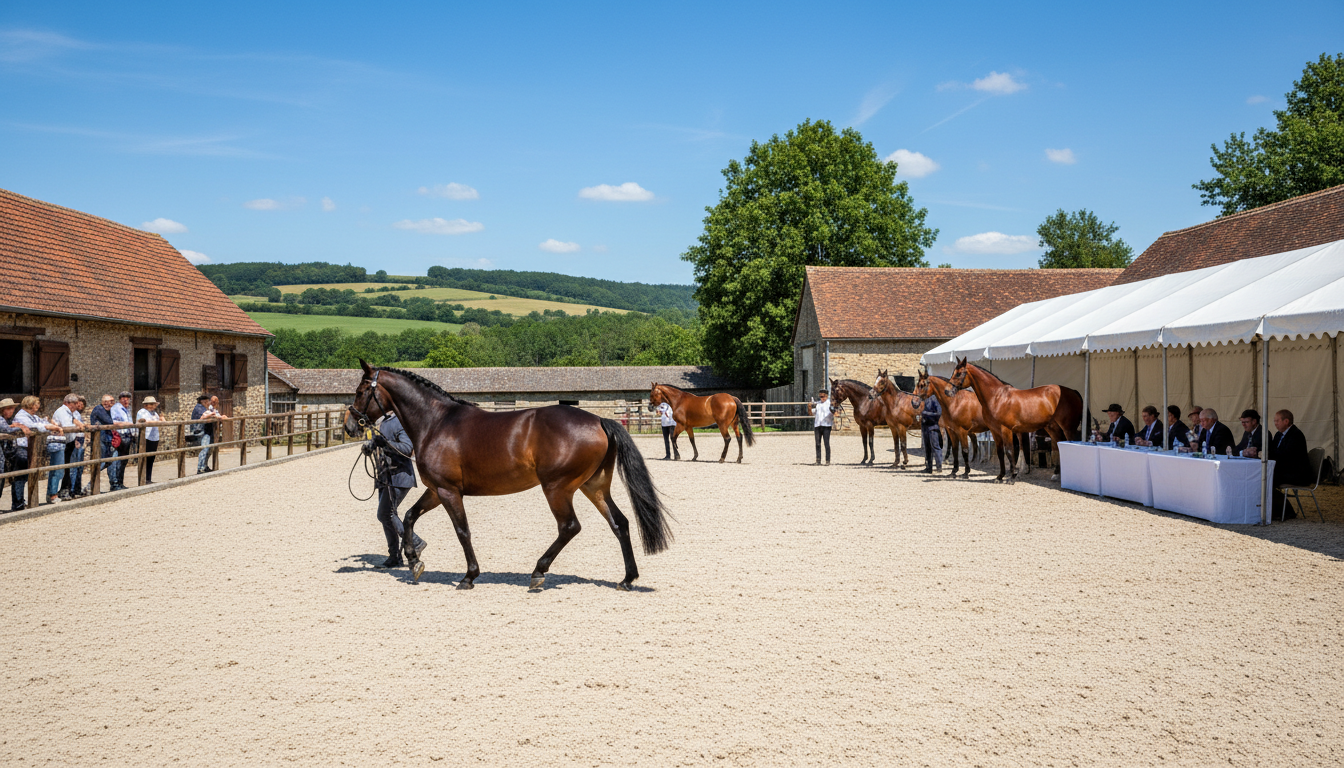
At a stallion show or licensing, the owner presents their stallion to a commission. This commission evaluates the stallion's type, conformation, and movement, assigning scores. As a buyer, what you primarily learn from this is how the stallion measures up against the breed association's breeding goals. However, the results are not a guarantee for future offspring or health.
The rules vary depending on the breed association and breeding program. The following information is drawn from the announcements and regulations of German associations. For any specific event, always check the official announcement.
The Process Before Evaluation
On the day of the licensing, you'll need to present a veterinary health certificate for each stallion, along with its equine passport. This is stipulated by the Licensing Regulations of the South German Associations. The requirements for the certificate depend on the specific breeding program.
Strict rules apply during the event. According to the regulations for stallion pre-selections and licensing events in German riding horse breeding, training and exercise are only permitted in designated areas and at specified times. A steward oversees this. Stallions wear a head number.
Before each evaluation, the steward inspects the stallion. They check the tack, ensuring the bridle is fitted correctly and humanely, and assess for lameness. In cases of blood in the mouth, on the body, or limbs, the steward, association veterinarian, and licensing commission jointly decide whether the stallion may continue to participate.
The Presentation
Stallions are first shown in-hand at walk and trot on a hard surface. Following this, they move to the arena. According to the announcement for a winter licensing on, the stallions are then presented free-moving at trot and canter. Younger stallions free-jump if the breeding program requires it. Older stallions may be shown under saddle.
In the South German Licensing Regulations, free-jumping is mandatory for all stallions.
Tack and Equipment
The rules are strict. From the announcement on pzvbw.de:
- Bridle with easily detachable reins
- For free-moving and free-jumping: boots and bells without fleece only on the front legs, no bandages
- Young stallions barefoot or with plain shoes only on the front
- No rattling whips
- Presenters in association attire, helmet recommended
The South German Licensing Regulations only permit white boots or bandages on the front legs for free-moving and free-jumping. So, even the equipment rules vary depending on the association.
The Commission and Its Evaluation
In the South German Licensing Regulations, the licensing commission consists of 9 members. Each participating association sends a breeding director or their representative. The commission is divided into three groups, whose scores count equally. A quorum is reached with six voting members.
Evaluated there are:
- Breed and sex type
- Quality of conformation
- Correctness of gaits
- Walk
- Trot
- Canter
- Free-jumping
- Overall impression
Scores are whole numbers, with half points possible. The overall score is the average and is given with two decimal places.
For the licensing decision, these regulations state:
- “South German Licensed” from an overall score of 7.0, no individual score below 5.0
- “South German Licensed and Premium” from 7.5, no individual score below 5.0
- “Not Licensed” with an overall score below 7.0 or an individual score below 5.0
The decision is announced verbally on the day of the licensing. The owner then receives a written protocol with the individual scores and the overall score. A positive licensing is entered into the equine passport.
What Buyers Can Take Away from the Results
Don't just rely on the overall score; examine the protocol with the individual scores. It shows where a stallion is strong and where it might be weaker. A stallion with a good overall score could still be weaker in canter or free-jumping.
Pay attention to these points:
- What decision is recorded in the equine passport, and who entered it?
- How are conformation, gaits, and jumping individually assessed?
- Does the association's breeding program align with your plans for the stallion?
- Is the evaluation comparable? Scores from different associations and years are only comparable to a limited extent.
A licensing evaluates the stallion on a single day. It does not replace a pre-purchase examination. For health and findings, consult your veterinarian.
Form on the Day Also Plays a Role
According to the information sheet on presenting horses on, the cooperation between presenter and horse influences the comparative evaluation. The form of both human and horse on the day also affects the placement. A single result is therefore a snapshot in time.
If the Result Isn't Favorable
In the South German Licensing Regulations, a stallion that was “not licensed” can be presented again no earlier than 3 months later. An exception applies to stallions that couldn't complete the process due to an injury. In such cases, the association requires a certificate from the licensing veterinarian.
An owner can appeal a licensing decision within four weeks of the written notification. The appeal must be submitted in writing with justification to the office of the sending association. For legal questions, consult an attorney.
Common questions
What is the difference between licensing and a breeding show?
At a licensing, a commission decides whether a stallion is approved for breeding. At breeding shows, according to the information sheet on aqha.de, foals and breeding horses are presented to a commission for conformation evaluation.
What documents does a stallion need on licensing day?
According to the South German Licensing Regulations, a veterinary health certificate meeting the requirements of the breeding program and the equine passport.
Can I appeal a licensing decision?
According to the South German Licensing Regulations, an appeal is possible within four weeks of written notification, submitted in writing with justification to the office of the member association. For legal questions, an attorney can help.
Can a non-licensed stallion be presented again?
Yes, in the South German regulations, no earlier than 3 months later. If the process was interrupted due to an injury, this period does not apply, but a certificate from the licensing veterinarian is required.
Sources
- Regelungen für Hengstvorauswahlen und Körveranstaltungen in den Populationen der deutschen Reitpferdezucht (2025-06)
- Ausschreibung Winterkörung, Gomadingen-Marbach (2025)
- Gut vorbereitet auf die Zuchtschau (2010)
Written by Equidara editorial team. Last checked: 24 October 2026.
Fachlich geprüft von Melissa Hinze, Pferdezüchterin und Pferdehändlerin, Gründerin von Equidara.
- Breeding Show and Studbook Entry: Process, Evaluation, and Breeding Potential — What is evaluated at a breeding show, what are the requirements for studbook entry, and what does the result tell you about breeding potential? We'll use two association procedures as examples.
- As a Spectator or Companion at a Show: Access and Conduct in the Warm-Up Arena — Not every warm-up arena is accessible to pedestrians. Here's what you should clarify before entering and how to be considerate as a spectator or companion.
- Equestrian Federations in Germany: How the FN, State Associations, and Clubs are Connected — The FN is the umbrella organization for equestrian sport in Germany. Its federation includes the state associations, which advise clubs and equestrian businesses. Here, you'll learn how these levels are connected and what responsibilities the FN takes on.
- Stallion Licensing and Horse Purchase: What Breeding Value, Registration, and Papers Tell You — In Germany, a licensed riding horse stallion is not yet definitively approved for breeding. Here's how to understand licensing, studbook registration, performance tests, breeding certificates, and breeding value when buying a stallion.
Related
- Auctions — Ongoing auctions and individual lots.
- Riding holidays and courses — Trail rides, clinics, farm holidays.