
Sport & Results
Offering a Sport Horse Internationally: The Information Buyers Abroad Need
German competition classes mean little outside German-speaking countries. If you state jump heights in metres, write results so they can be checked and supply the right video material, your horse will be found and taken seriously abroad.
Equidara editorial team · 4 October 2026 · 3 min read
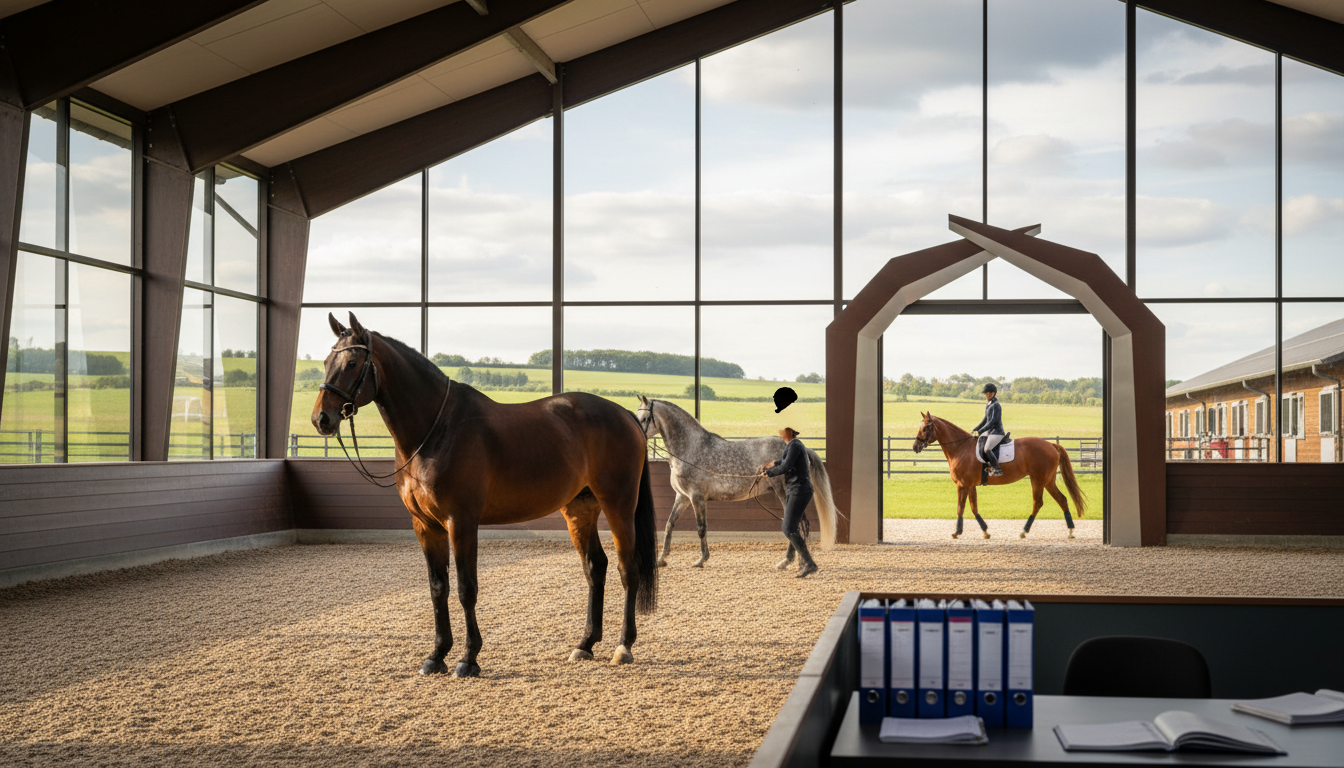
A horse that is “M-erfolgreich" in Germany means almost nothing at first to a buyer in Ireland, Sweden or California. Not because the level is unclear, but because the abbreviation exists only in the German system. Most listings fail internationally not because of the horse, but because of the description.
Translate heights and levels
State the jump height in metres as well as the class. “Jumping up to 1.15 m" everyone understands, “L-class" they do not. In English-speaking countries feet and inches are also common, and France uses its own class names.
In dressage there are no heights but movements. List what the horse reliably shows: flying changes, travers, collected canter. That tells buyers more than any class label and can be translated into any language.
In eventing, give the cross-country height and the type of competitions the horse has entered.
Write results so they can be checked
Every result needs four details: date, place, class or height of the test, and placing. “Placed several times" is worthless; “12.04.2026, show in X, jumping class 1.15 m, 3rd place" can be verified and therefore reads very differently.
If you compete regularly, refer to the results database of the relevant federation. International buyers expect that because they know it from their own systems.
Papers for sport
Besides the passport and studbook papers, registration with the world federation FEI is necessary for international shows. Whether it matters to the buyer depends on their plans: it’s irrelevant for national amateur sport but essential for international entry.
Clarify before the sale which registrations exist, in whose name they are held and what needs to be changed when ownership transfers. That takes time and belongs in the planning, not the week of handover.
Video: different expectations than the leisure market
Sport buyers want continuous work shown, not highlight reels:
- complete rounds instead of single jumps, ideally several in a row
- in dressage whole sequences of movements, not the best half minute
- footage from multiple days so the impression isn’t based on one good day
- additional material from shows, if available, including spectator-perspective clips
Almost always buyers will also ask for x-rays and veterinary records. Having these ready digitally speeds up the sale considerably because buyers overseas can have their vet review them in advance.
Markets differ — each one individually
There is no universal ranking of which country pays best. Demand shifts between disciplines, types and years. What you can reliably determine: look at comparable horses in the destination country itself, using the same criteria you would at home — age, level of training, results.
This research replaces any rule of thumb. How you derive a justified price from it is discussed in the article Was ist mein Pferd wert.
What to clarify additionally when selling internationally
- Contract and law. Which legal system applies, which language version is authoritative, is the CISG excluded? See the article on the zweisprachigen Kaufvertrag.
- Pre-purchase exam over distance. Who commissions it, what scope, what deadline.
- Transport and paperwork. Within the EU it’s straightforward; outside you face tests and quarantine: see Transport über die Grenze and Verkauf in ein Drittland.
- Payment. Deposit and balance before departure, reservation of title until full payment.
A note on abbreviations
“AKU Klasse 1" still appears in many sport-horse ads. Those classes haven’t existed since the radiography guideline 2018, and international buyers don’t know them anyway. Instead state when the exam was done, which images are available and that the records are available on request. That is understandable in any language and will stand up to review by the buyer’s vet.
Common questions
Wie gebe ich das Niveau meines Sportpferdes international verständlich an?
In show jumping give the height in metres instead of German class letters, in dressage list the movements the horse reliably performs, in eventing give the cross-country height and the types of tests. Class labels like “L" or “M" exist only in the German system.
Wie schreibe ich Turnierergebnisse auf?
With date, place, the test including height or class, and the placing. “Placed several times" says nothing; a concrete line can be checked and therefore reads differently. If possible, refer to the federation’s results database.
Brauche ich für den Verkauf eine FEI-Registrierung?
Only if the buyer intends to compete internationally. For national amateur sport it does not matter. Clarify before the sale which registrations exist, in whose name they are held and what needs to be changed on transfer.
Welches Videomaterial erwarten sportliche Käufer?
Continuous work instead of highlight reels: complete rounds, whole sequences of movements, footage from multiple days and, if available, show videos. Also digital x-rays and veterinary records for remote review.
In welchem Land bekomme ich den besten Preis?
You can’t say that in general; any rule of thumb is unreliable. The only reliable method is your own research: view comparable horses in the destination country with the same criteria you’d use at home and base the price on that.
Sources
- Fédération Equestre Internationale (FEI), Weltverband für den Pferdesport
- Deutsche Reiterliche Vereinigung (FN), pferd-aktuell.de
- Röntgenleitfaden-2018 bringt einige Neuerungen (Bundestierärztekammer) (26.10.2017)
- Durchführungsverordnung (EU) 2021/963 zur Identifizierung und Registrierung von Equiden (EUR-Lex)
Written by Equidara editorial team. Last checked: 5 October 2026.
- What is my horse worth? How to arrive at a justifiable price — A horse's value isn't determined by what you've invested. It's shaped by training, health, character, documentation, and demand. Learn how to evaluate these points individually, back them up with comparable listings, and create a price range that buyers will take seriously.
- Selling Your Foal: Timing, Preparation, and What Buyers Really Look For — Weanling, yearling, or just before breaking? Each stage has its own buyer demographic and associated costs. Plus: what potential buyers look for in a young horse, how to prepare your foal, and why paperwork is even more crucial here.
- Competing in Germany: Entries, Licenses, and Timetables — From making your entry to post-competition care: Here's how to prepare for a competition in Germany according to FN rules, meet entry deadlines, and plan your arrival and warm-up.
- Germany Wins the Longines League of Nations in a Jump-Off in Barcelona — Richard Vogel and Cloudio secure the title for Germany in the 2026 Longines League of Nations Final. Brazil takes second place, with Belgium finishing third.
Related
- Buy horses — Horses for sale from all over Europe, with transport search.
- Auctions — Ongoing auctions and individual lots.
- Selling a horse — Post listings for free, visible in eight languages.