
Events
Live Horse Auction: From Viewing to Collection
First, get informed and view the horses, then watch their presentation and place your bid. This is how a live horse auction unfolds. Using the Verdener Auction as an example, you'll see the rules for preparation, bidding, and collection.
Equidara editorial team · 24 November 2026 · 4 min read
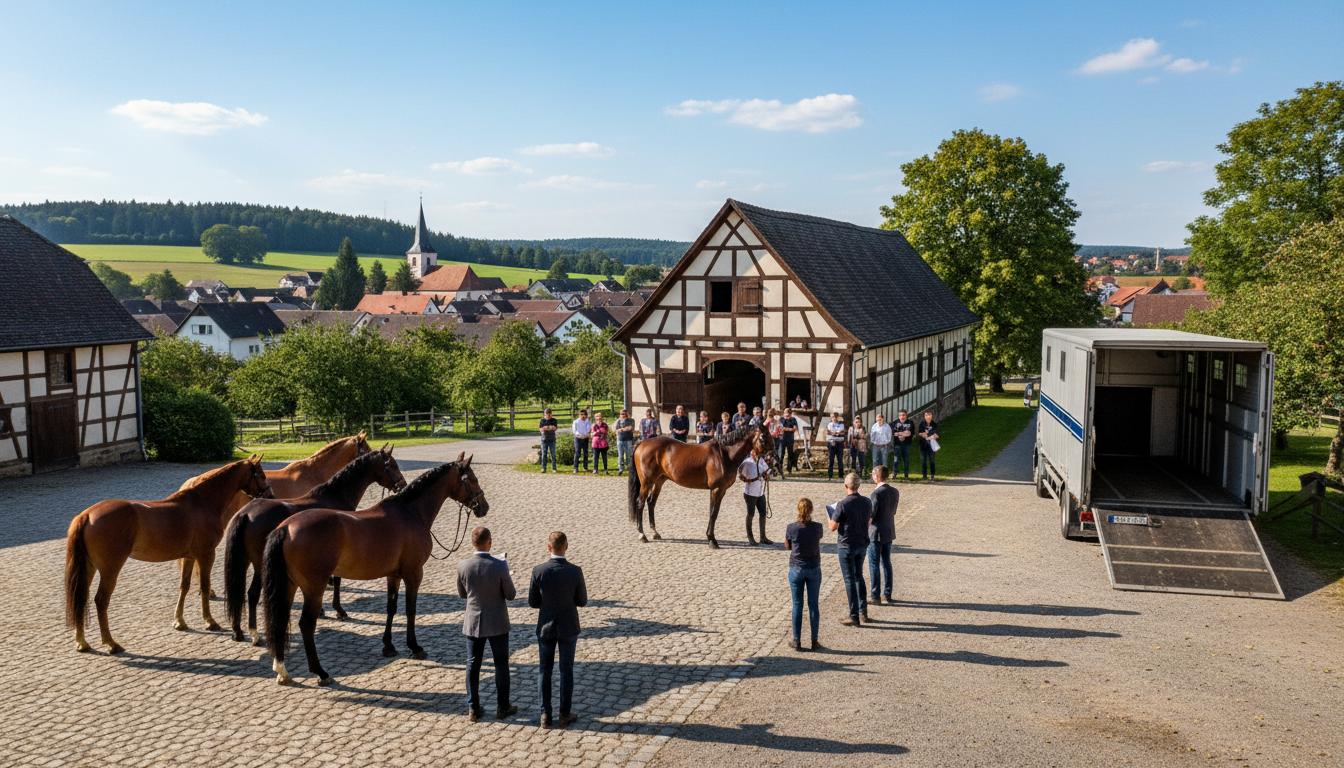
At a live horse auction, you first gather information about the horses, view them, and watch their presentation. Afterward, you can bid. With the fall of the hammer, your bid is accepted. Then it's time for invoicing and collection. This guide illustrates the specific procedures using the Verdener Auction in Germany as an example. Its dates, bidding rules, and insurance conditions apply specifically to this auction, not automatically to others.
Before the Auction: Selecting and Viewing Horses
The first step is to select the horses you'd like to get to know better. According to the Hannoveraner Verband, for the Verdener Auction, you'll find general horse data, sport successes, and information on successful related horses in the catalog and on the website. Videos are also available. This allows you to prepare for your viewing and make notes on which horses you'd like to learn more about.
Customer advisors are available in Verden for further information and to arrange trial appointments. You can try out horses by appointment from Tuesday of the first auction week until the auction day. Viewing and trying out are two distinct steps: when viewing, you observe the horse; when trying out, you get to know it yourself.
Reviewing Examination Documents
For every Verdener auction horse, examination protocols and X-rays are available on the website. You need to register beforehand to access the X-rays. You can present these images to your own veterinarian. They are your point of contact for medical assessment.
Preparation for the Verdener Auction includes:
- Reviewing horse data, sport successes, information on related horses, and videos.
- Requesting further information from customer advisors.
- Arranging an appointment to try out a horse.
- Reviewing examination protocols and, after registration, having your veterinarian check the X-rays.
Presentation in the Ring: Showcase and Trial
During the presentation in the ring, the horse is showcased to the auction audience. This is different from personally trying out a horse. At the Verdener Auction, there are several presentations. The first takes place on Saturday of the first auction week. A recording of it is available on the website during the second auction week.
Further presentations are held on Wednesday of the second week and on the morning of the auction day. The Hannoveraner Verband broadcasts both via livestream on its website. So, the presentation on the auction day is not the only opportunity to see the horses showcased.
Verdener foals have their own rule: For live auctions, there is an additional presentation after selection. For online auctions, no further presentation is scheduled after selection. This only applies to foal auctions, not to the process for riding horses.
Bidding and Acceptance: Bidding Live On-Site
By placing a bid, you offer to purchase the presented horse for a specific price. With the fall of the hammer, the auctioneer accepts a bid. Presentation, bidding, and acceptance are therefore distinct steps.
According to the Hannoveraner Verband, you do not need to register in advance to bid at Verdener live auctions. Yellow bidding cards are available on-site for you to use. Registration for X-rays is separate: it applies to viewing these documents, not to bidding on-site.
After Acceptance: Invoicing and Collection
After the purchase, invoicing and collection are next. The Hannoveraner Verband provides information on its Verdener Auction page, including details on invoicing, training plans, travel arrangements, and the auction brochure.
Purchased horses can remain with the association for one week free of charge after the Verdener Auction. During this time, they are exercised by the riding team. If the horse stays longer than one week, 22 Euros per day plus VAT will be charged, retroactively from the day after the auction.
Insurance for Verdener Riding Horses
For Verdener riding horses, the seller's insurance becomes the buyer's insurance upon acceptance of the bid. It covers 80 percent compensation for death, emergency slaughter, and permanent unsuitability for six months after the auction, as well as transport to the first buyer's stable.
The insured sum corresponds to the settlement price but is limited to 175,000 Euros. As a buyer, you can increase the insured sum or extend the insurance.
Collecting Foals on an Agreed Date
Verdener auction foals have their own insurance coverage: a purchased foal is insured from the fall of the hammer at the settlement price, up to a maximum of 25,000 Euros. Coverage lasts until October 31st or at least until the foal is six months old.
Verdener auction foals are usually collected during specified collection weeks in the autumn. The timeframes are stated in the auction documents. The auction office will contact you in good time to arrange the exact date.
Collection usually takes place in Verden. On the collection day, a contract veterinarian will conduct another clinical examination of the foal. Afterward, you can take it with you.
Common questions
Do I need to register in advance to bid on-site?
No prior registration is required for Verdener live auctions. Yellow bidding cards are available on-site for you to bid.
Can I try out a Verdener auction horse beforehand?
Yes, by appointment from Tuesday of the first auction week until the auction day. Customer advisors will arrange appointments and provide further information.
Can my veterinarian view the X-rays?
At the Verdener Auction, the X-rays for each horse are available on the website. After prior registration, you can view them and present them to your own veterinarian.
Do I have to collect the purchased horse immediately?
After the Verdener Auction, purchased horses can remain with the association for one week free of charge and are exercised by the riding team. If the horse stays longer, 22 Euros per day plus VAT will be charged from the day after the auction. Foals are usually collected during specified collection weeks in the autumn.
Sources
- Hannoveraner Verband – FAQ zu Besichtigung, Ausprobieren und Präsentation: hannoveraner.com
- Verdener Auktion | Hannoveraner Verband (2026/2027)
Written by Equidara editorial team. Last checked: 24 November 2026.
- As a Spectator or Companion at a Show: Access and Conduct in the Warm-Up Arena — Not every warm-up arena is accessible to pedestrians. Here's what you should clarify before entering and how to be considerate as a spectator or companion.
- Visiting an Equestrian Fair: Exhibitors, Demonstrations, and Preparation — An equestrian fair can combine shopping, expert knowledge, and captivating demonstrations. Discover what's on offer and how to plan your visit according to your interests.
- Selling Your Horse: The Order That Saves Time and Trouble — Ten steps from decision to handover. Following them in this sequence will help you craft better ads, receive more suitable inquiries, and avoid being caught without essential documents during viewings.
- Buying a Horse Online: Process, Deposit, Bids, and Fees — Looking to buy a horse through an online auction? We'll walk you through the entire process – from registration and deposit to bidding, the hammer price, and any applicable fees.
Related
- Auctions — Ongoing auctions and individual lots.
- Riding holidays and courses — Trail rides, clinics, farm holidays.